
Marcel Huijser Photography Home
This is where I show the most recent images and talk about how they were made. The images typically relate to landscapes and wildlife, but I also blog about photos of highways and mitigation measures for wildlife or road ecology in general. Please contact me if you would like to use any of the images.
All content © Marcel Huijser
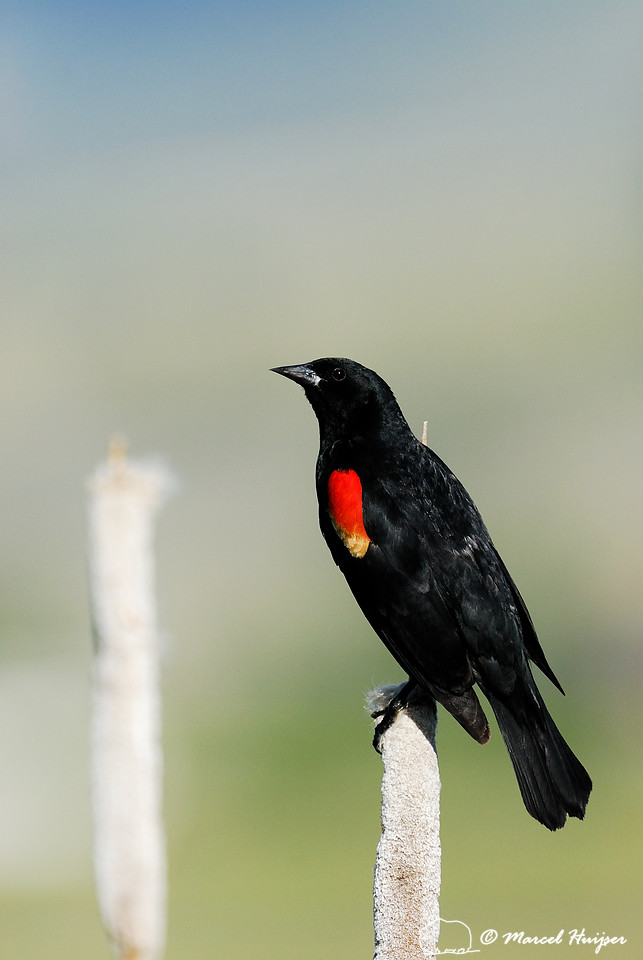
Montana wildlife: Red-winged blackbird (Agelaius phoeniceus)
Red-winged blackbirds (Agelaius phoeniceus) are relatively common throughout much of North America. In western Montana red-winged blackbirds are present year-round whereas they are migratory on the plains. Click here for another image of a red-winged blackbird.
Like Marcel Huijser Photography on Facebook: http://www.facebook.com/marcelhuijserphotography
All content © 2012 Marcel Huijser

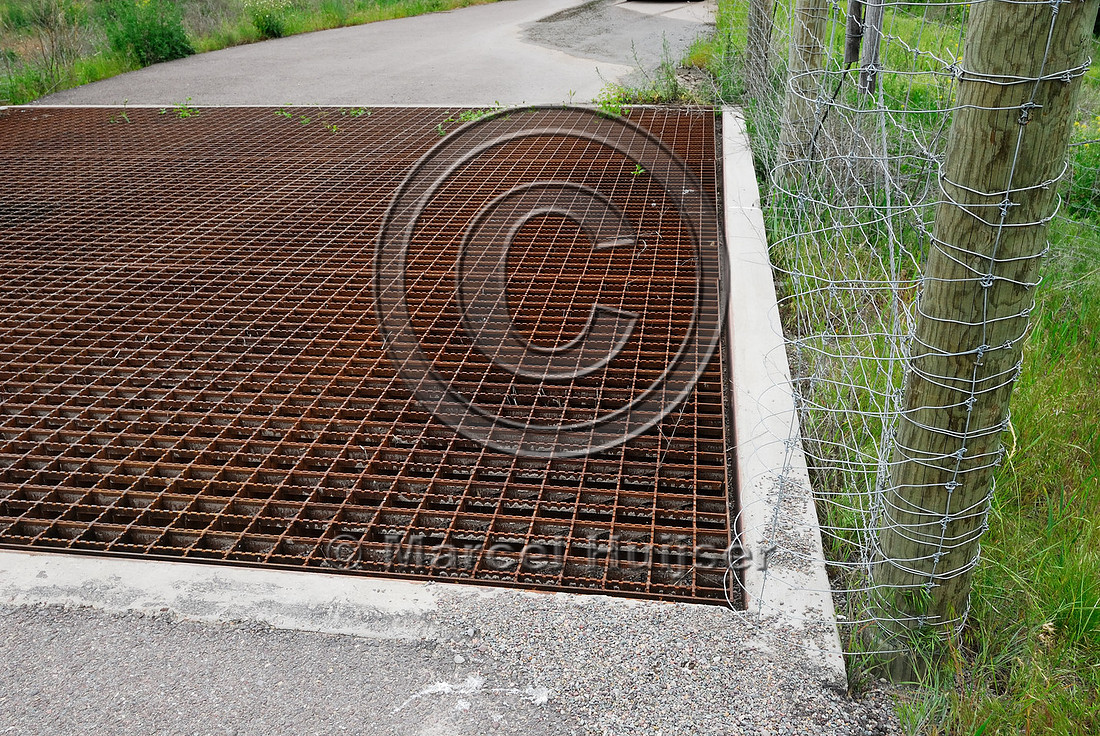
Road ecology blog: modification to wildlife guard at access road
Last month I wrote about wildlife guards with standard bars and modified bridge grate, and I also reported on a modification to make it more difficult for wildlife to gain access to the fenced highway along the concrete edges of the guard. One of the solutions that is being tried is rubber strips attached to the fence post. Another solution is to have bulbouts of the fence. It is currently unknown how effective these barriers are in reducing access to wildlife to the fenced right-of-way. Nonetheless, these types of measures measures may very well make the wildlife guards be more effective. Click here for additional images of the fence bulbouts at a wildlife guard.
Like Marcel Huijser Photography on Facebook: http://www.facebook.com/marcelhuijserphotography
All content © 2012 Marcel Huijser
Montana wildlife: portrait of ruminating pronghorn
Pronghorns (Antilocapra americana) are presumably the second-fastest land animal in the world; only the cheetah is faster. Pronghorns have been reported to have top speeds anywhere between 70-100 km/h (43-62 mi/h). The buck in the image is taking some time to ruminate though. Click here for other images of the pronghorn.
Like Marcel Huijser Photography on Facebook: http://www.facebook.com/marcelhuijserphotography
All content © 2012 Marcel Huijser

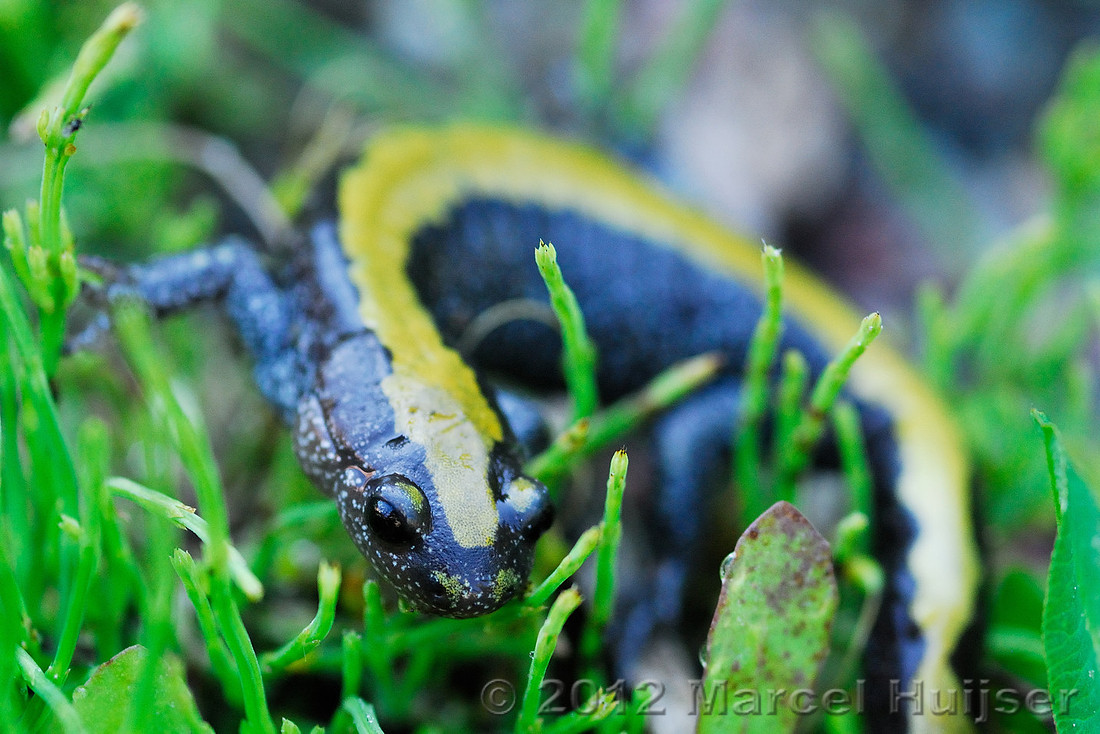
Montana wildlife: Long-toed salamander (Ambystoma macrodactylum)
We don't really think much about salamanders in Montana; we rarely see one. Nonetheless, there are three confirmed salamander species in Montana. This is a long-toed salamander (Ambystoma macrodactylum), the most common of the three species. An identifying characteristic of this species is that one of their toes on their back foot is longer than the others. Click here for another image of the long-toed salamander.
Like Marcel Huijser Photography on Facebook: http://www.facebook.com/marcelhuijserphotography
All content © 2012 Marcel Huijser
Backyard wildlife in Missoula: American goldfinch (Carduelis tristis)
A portrait of an American goldfinch (Carduelis tristis).
Like Marcel Huijser Photography on Facebook: http://www.facebook.com/marcelhuijserphotography
All content © 2012 Marcel Huijser

Backyard wildlife in Missoula: fighting pine siskins
Pine siskins (Carduelis pinus) are by far the most numerous species at the feeder. At times there may be between 30 and 40 individuals in the yard! They form loose colonies when nesting and continue foraging in a group during the nesting season. The birds are not always nice to each other though... there are regular fights over food and perches both between pine siskins and between pine siskins and other species. I was photographing a pine siskin sitting on a branch when a house finch landed close by. I happened to capture the immediate reaction of the pine siskin on the image below. I am not sure though if this behavior is plain aggression or perhaps a defensive display at a perceived threat from a larger sized bird. Click here for other recent images of pine siskins.
Like Marcel Huijser Photography on Facebook: http://www.facebook.com/marcelhuijserphotography
All content © 2012 Marcel Huijser

Backyard wildlife in Missoula: young house finch (Carpodacus mexicanus) with tufts
A male house finch (Carpodacus mexicanus) is bringing a young to the feeder. The begging behavior is pretty obvious and indicative of it being a young; the fledgling is very vocal and it raises its wings halfway and flaps them. What I did not know is that fledgling house finches can keep some white feathers on their head for a while. I did not even notice these tufts until I looked through the telephoto lens at close range. Click here for another image of the house finch fledgling with tufts.
Like Marcel Huijser Photography on Facebook: http://www.facebook.com/marcelhuijserphotography
All content © 2012 Marcel Huijser

Abstracts: red colored back of male house finch (Carpodacus mexicanus)
If you can get close enough to birds it is possible to photograph parts of their body. Sometimes this can even become close to an abstract like this photo of the red colored back of a male house finch (Carpodacus mexicanus). I photographed the animal as it flew away. These types of images are hard to create; you need to be above the animal, you need to be close, and you need to be very quick! Nonetheless, I hope the bird feeder allows me additional opportunities over the coming weeks. Click here for additional new images of house finches.
Like Marcel Huijser Photography on Facebook: http://www.facebook.com/marcelhuijserphotography
All content © 2012 Marcel Huijser

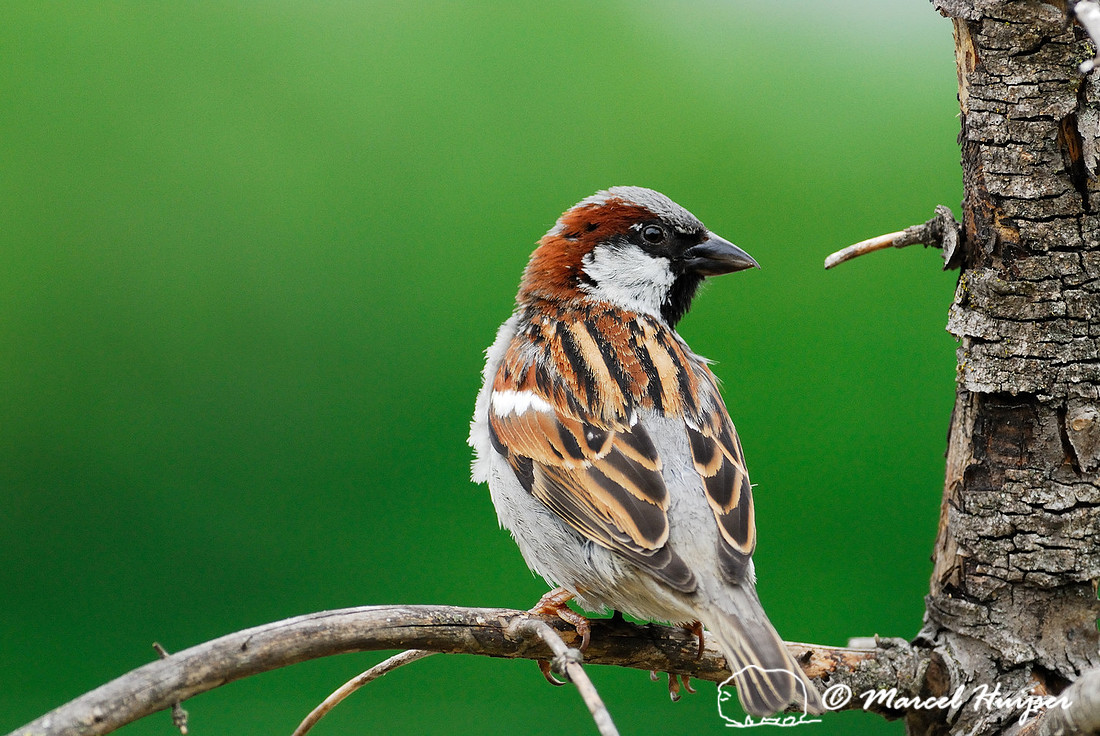
Backyard wildlife in Missoula, Montana: House sparrow (Passer domesticus)
House sparrows (Passer domesticus) are not native to North America. House sparrows from England were set free in New York City in 1852. Now it is one of the most abundant and widespread species in North America. The species is also abundant in Missoula and last week they discovered our bird feeder. Click here for the other images of house sparrows in our backyard.
Like Marcel Huijser Photography on Facebook: http://www.facebook.com/marcelhuijserphotography
All content © 2012 Marcel Huijser
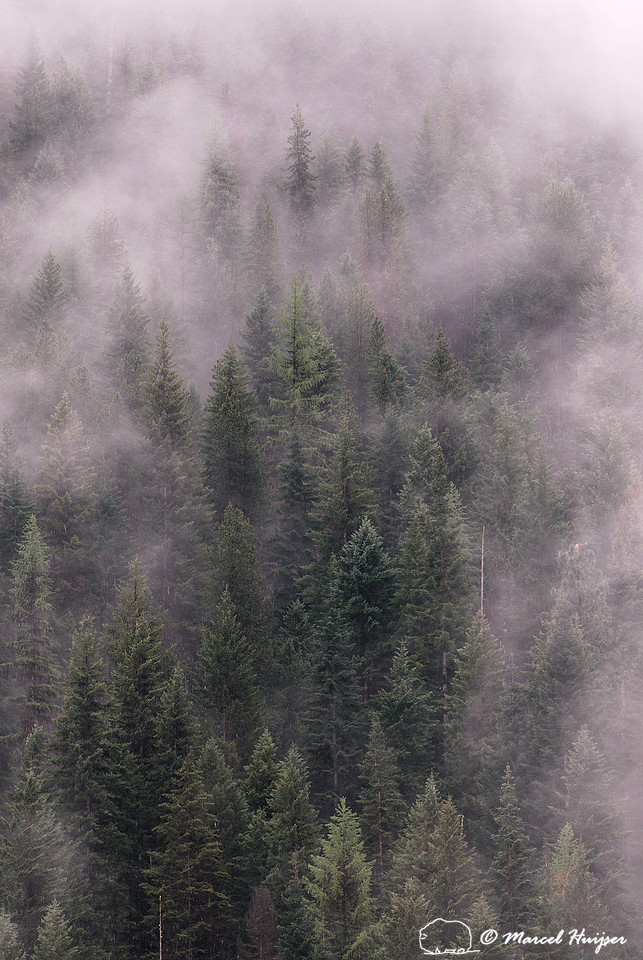
Misty forest, Clearwater National Forest, Idaho, USA
A cold and rainy spring day allowed for low clouds in between the trees on a slope in the Clearwater National Forest. The clouds came and went because of the high humidity and some wind. This particular image shows a nice pattern of the fog with the dark green trees.
Like Marcel Huijser Photography on Facebook: http://www.facebook.com/marcelhuijserphotography
All content © 2012 Marcel Huijser
Cedar grove along tributary of Lochsa River, Idaho, USA
This beautiful grove of western red cedars (Thuja plicata) is situated along Weir Creek, a tributary of the Lochsa River, Idaho. The overcast sky and light rain made for beautiful soft light on the trees and the slow shutter speed emphasized the flow of the water. The scene is what I would expect a fairy tale forest to look like...
Like Marcel Huijser Photography on Facebook: http://www.facebook.com/marcelhuijserphotography
All content © 2012 Marcel Huijser

Abstracts: waves of the Lochsa River, Idaho, USA
The Lochsa River is designated as a National Wild and Scenic River and is located in northern Idaho. The river has no dams and is known for having world class continuous whitewater. The name of the river refers to this: "Lochsa" is a Nez Perce word that translates into "rough water". I photographed several waves in a rapid from the bank during spring runoff. It was interesting to me that the composition is not necessarily clear when you look though the viewfinder. Not only does the water change continuously, but if you use a slow shutter speed, like I did, the different flows that determine the composition become far more pronounced. This meant that I needed to make adjustments to the composition based on what the previous photo showed me. Click here for the other abstract images of waves in the Lochsa River.
Like Marcel Huijser Photography on Facebook: http://www.facebook.com/marcelhuijserphotography
All content © 2012 Marcel Huijser

Backyard wildlife in Missoula, Montana: Pine siskins (Carduelis pinus)
Pine siskins (Carduelis pinus) are by far the most abundant species on the bird feeder over the past few weeks. I have counted as many as 25 individual birds feeding on the feeder or on the ground below the feeder at the same time. They will fight each other for a position on the bird feeder, and they will also take on slightly larger species such as the American goldfinch and try and scare them from the bird feeder by flying towards them. Over the past few weeks some of the pine siskins have become much more accepting of me. Most of them still fly away as soon as I get within 7-8 yards or so, but some individuals are fine with me walking by at about 4 yards; they will look at me to make sure I am do not develop into a threat but they won't fly away. Click here for the most recent images of pine siskins in our backyard.
Like Marcel Huijser Photography on Facebook: http://www.facebook.com/marcelhuijserphotography
All content © 2012 Marcel Huijser

Road ecology blog: Air quality sign at construction site, British Columbia, Canada
This is a road construction site in British Columbia, Canada. Motorists are asked to turn off the car engine as they wait for the light to turn green. Idle-Free BC is an initiative hosted by the BC Climate Exchange in an effort to improve air quality, reduce health risks for humans, reduce fuel consumption, and reduce engine maintenance. It is a partnership between the Fraser Basin Council, the British Columbia Ministry of the Environment, and Biofleet. Click here for more information on the "Idle-free" initiative. Click here for another image of the sign.
Like Marcel Huijser Photography on Facebook: http://www.facebook.com/marcelhuijserphotography
All content © 2012 Marcel Huijser

Road ecology blog: of turtle hats and bullet holes
This is no ordinary turtle crossing sign! Someone went through the trouble of making the turtles little hats in different colors. Click here for another image of this wildlife warning sign. While this does represent a type of vandalism I think the action is mostly humorous and it does not encourage people to ignore the sign or any regulation. This anthropomorphism is perhaps even a bit endearing... and you are perhaps also more likely to pay attention to animals on the road that are considered cute, or made to be cute, however subjective this may be. I was thinking about these types of things because of another vandalized sign I photographed earlier that day. The other sign stated that snowmobile access was not allowed beyond the sign because of possible disturbance to the endangered woodland caribou. This time though the sign was bullet hole ridden... While this is also vandalism I think the message is entirely different from that of the turtle hats. The bullet holes suggest no respect for the regulation through an act of violence with a lethal weapon, and thus this can also be interpreted as intimidation to anyone trying to protect these last few animals or officers charged with enforcing the regulation.
Like Marcel Huijser Photography on Facebook: http://www.facebook.com/marcelhuijserphotography
All content © 2012 Marcel Huijser
