
Marcel Huijser Photography Home
This is where I show the most recent images and talk about how they were made. The images typically relate to landscapes and wildlife, but I also blog about photos of highways and mitigation measures for wildlife or road ecology in general. Please contact me if you would like to use any of the images.
All content © Marcel Huijser
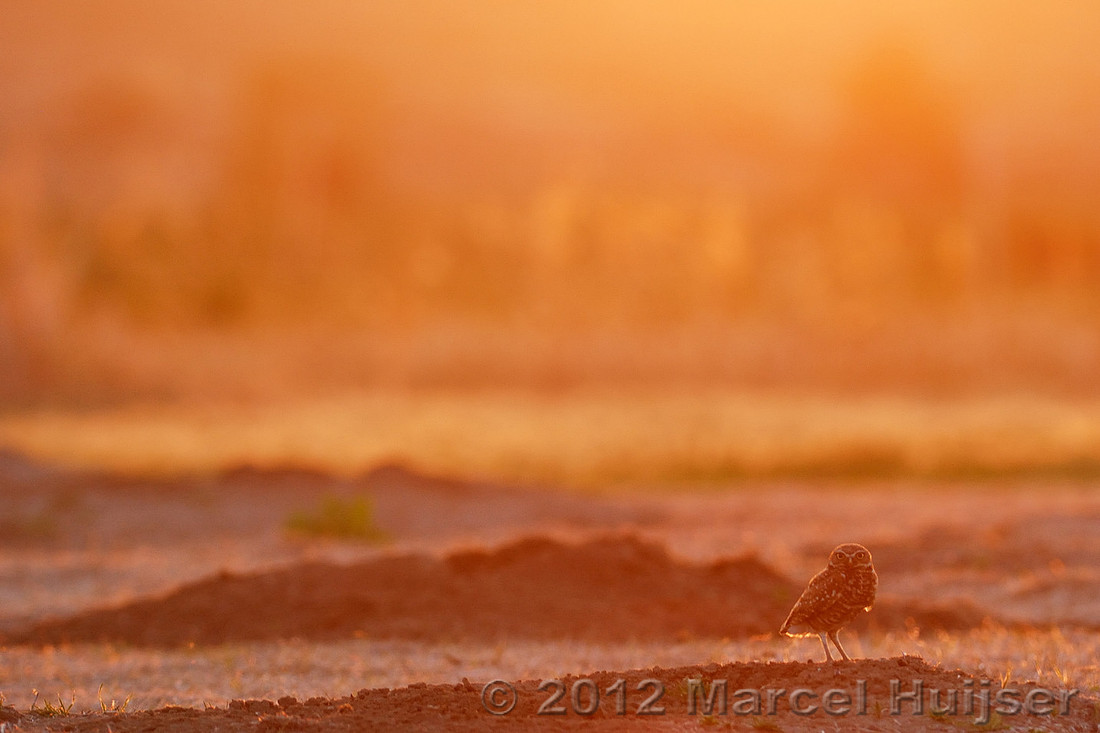
Montana wildlife: Burrowing owl (Athene cunicularia) at sunset
Burrowing owls (Athene cunicularia) use prairie dog burrows to nest and roost. They often use the mounds of dirt around the burrows to perch when they hunt for invertebrates and small mammals. I was walking back from my blind to the car in the last bit of sunlight as I saw this burrowing owl against the rays of orange sunlight. Click here to see additional images of burrowing owls.
Like Marcel Huijser Photography on Facebook: http://www.facebook.com/marcelhuijserphotography
All content © 2012 Marcel Huijser

Montana wildlife: red foxes (Vulpes vulpes) at the den
Here are additional images of the red foxes (Vulpes vulpes) at the den. I didn't have a chance to process these earlier, but they are from about 2 weeks ago. There are images of the kits as as well as an adult.
Like Marcel Huijser Photography on Facebook: http://www.facebook.com/marcelhuijserphotography
All content © 2012 Marcel Huijser

Montana wildlife: red foxes (Vulpes vulpes) kit portraits
Not much to say other than that red fox (Vulpes vulpes) kits are very cute. Click here for a series of portraits, some of them in golden light as the sun sets. There is also a new more experimental photo of a kit at dusk with lots of movement and unsharpness.
Like Marcel Huijser Photography on Facebook: http://www.facebook.com/marcelhuijserphotography
All content © 2012 Marcel Huijser

Montana wildlife: red foxes (Vulpes vulpes) kits at play
The red fox (Vulpes vulpes) kits do a lot of waiting for the adults to return with food to the den. In the early evening some sleep in the burrows while others hang out on the surface. The do play quite a bit; they will chase each other, wrestle, and bite. Click here for a series of images of red fox kits playing and greeting an adult that returned to the den.
Like Marcel Huijser Photography on Facebook: http://www.facebook.com/marcelhuijserphotography
All content © 2012 Marcel Huijser

Montana wildlife: red foxes (Vulpes vulpes) at dusk
Shooting under low light conditions with high ISO settings can sometimes generate interesting results with movement, unsharpness and noise. This adult red fox (Vulpes vulpes) has just delivered another columbian ground squirrel to one of the five kits. The image shows the adult taking off again, presumably to continue hunting. Interestingly the behavior of the kits changes substantially after dark. During the day they pretty much stick to the area immediately around the burrows. Under the cover of darkness they venture away from the den up to at least 100 m or so. They are also very curious.... one kit investigated me and two other photographers standing next to me at less than 2 meters.... but it was quite dark already. Click here for more images of the red foxes at dusk.
Like Marcel Huijser Photography on Facebook: http://www.facebook.com/marcelhuijserphotography
All content © 2012 Marcel Huijser
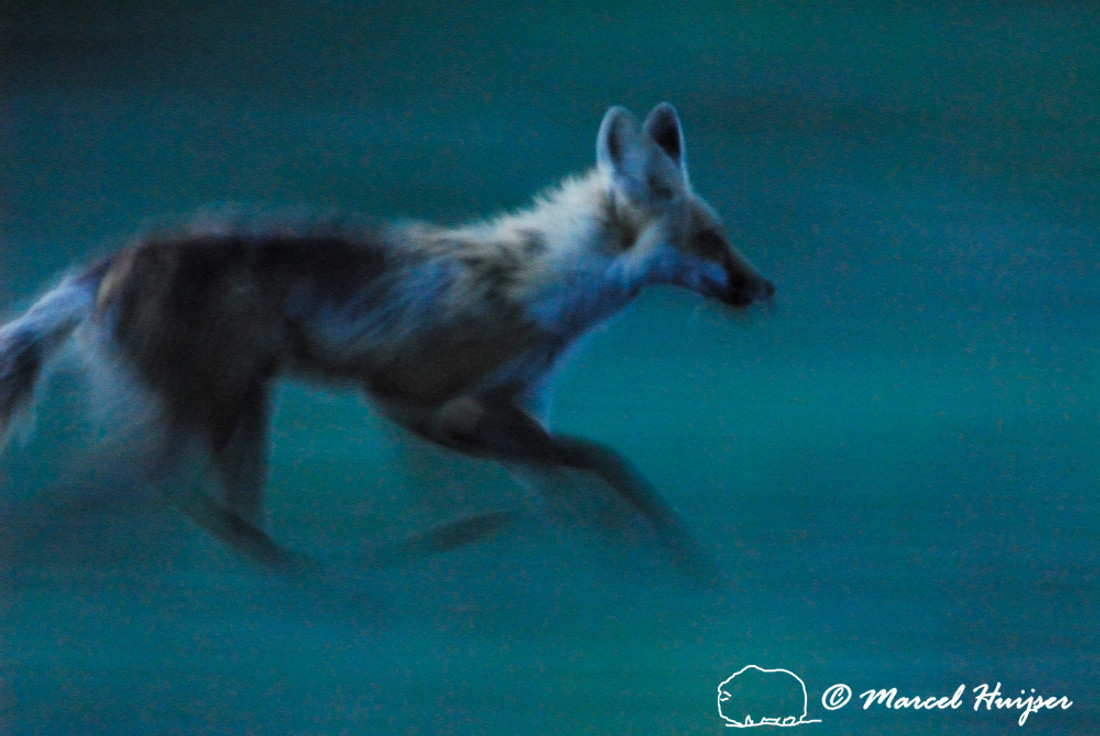
Montana wildlife: red fox (Vulpes vulpes) kit carrying away and hiding prey
After having been given a columbian ground squirrel by the adult, the red fox (Vulpes vulpes) kit ran off with it and hid the prey somewhere away from the den. Coincidentally I received the latest issue of BBC Wildlife Magazine (July 2012) last week with lots of information about red foxes and how they rear their young. The larger male cubs receive more food than their smaller sisters. Interestingly, size matters for male foxes a great deal when it comes to successful reproduction later in life; large males can drive off competitors far better than small males. Weight does not affect female red foxes very much over the course of their lives though, provided they have enough food to live, of course. The kits are very possessive about food. Not only will they fight over it, but they will also run off with it and hide it, not sharing it with their siblings even after they may have had enough themselves. It appears the images capture this behavior. Click here to view more images of the kit carrying away the prey.
Like Marcel Huijser Photography on Facebook: http://www.facebook.com/marcelhuijserphotography
All content © 2012 Marcel Huijser

Wildflowers: Camas in full bloom at Packer Meadows right now!
The camas (Camassia quamash) at Packer Meadows is in full bloom right now! If you live in the area check it out one of the following days. Evening light is excellent. For directions to Packer Meadows at Lolo Pass on the border of Idaho and Montana click here. More images will follow later.
Like Marcel Huijser Photography on Facebook: http://www.facebook.com/marcelhuijserphotography
All content © 2012 Marcel Huijser

Road ecology blog: roadkilled red fox (Vulpes vulpes) kits, Montana, USA
Last weekend I found two dead red fox (Vulpes vulpes) kits on a road in central Montana. These are not the same red fox kits I have photographed earlier. This is around the time the adults stop feeding the young red foxes and the kits start venturing away from the den to feed for themselves. There are lots of dangers to young animals that are newly independent, and roads and cars are obviously among them. In this situation it appears that two siblings got killed by a car on the same spot, probably at the same time. Click here for more images of the two roadkilled red fox kits.
Like Marcel Huijser Photography on Facebook: http://www.facebook.com/marcelhuijserphotography
All content © 2012 Marcel Huijser

Road ecology blog: red fox (Vulpes vulpes) crossing a road, Montana, USA
An adult red fox (Vulpes vulpes) crossing a road. This is the same individual that fed the ground squirrel to a kit at the den. Click here to see those images.
Like Marcel Huijser Photography on Facebook: http://www.facebook.com/marcelhuijserphotography
All content © 2012 Marcel Huijser

Montana wildlife: red fox (Vulpes vulpes) returning to the den with prey 2
Click here to view a series of images of a red fox (Vulpes vulpes) returning to the den with prey. Note the kit that is given the ground squirrel. The body language of the juvenile red fox is submissive. The young red fox has a low position, body pressed against the ground, looking up to the adult red fox, and it is wagging its tail.
Like Marcel Huijser Photography on Facebook: http://www.facebook.com/marcelhuijserphotography
All content © 2012 Marcel Huijser

Montana wildlife: Red fox (Vulpes vulpes) returning to the den with prey
I returned to the red fox (Vulpes vulpes) den. An adult interacted with two of the kits and then left the den. It seems that the same individual returned perhaps 45 minutes later with prey. The prey looks like a columbian ground squirrel. I took quite a few images, of course, but I did not have time to process them yet, except for this one photo.
Like Marcel Huijser Photography on Facebook: http://www.facebook.com/marcelhuijserphotography
All content © 2012 Marcel Huijser

Montana wildlife: Red fox (Vulpes vulpes) kit at the den
My friend Adam told me about a red fox (Vulpes vulpes) den right on the edge of town, just off the road. I stopped by there around mid-day and found a young red fox hanging out around the burrow. It knows I am there, but it is used to people as people stop there all the time to look at the red foxes. I plan to be back when the light is different and perhaps I will be able to capture some interesting behavior. Click here for additional images of the red fox kit.
Like Marcel Huijser Photography on Facebook: http://www.facebook.com/marcelhuijserphotography
All content © 2012 Marcel Huijser

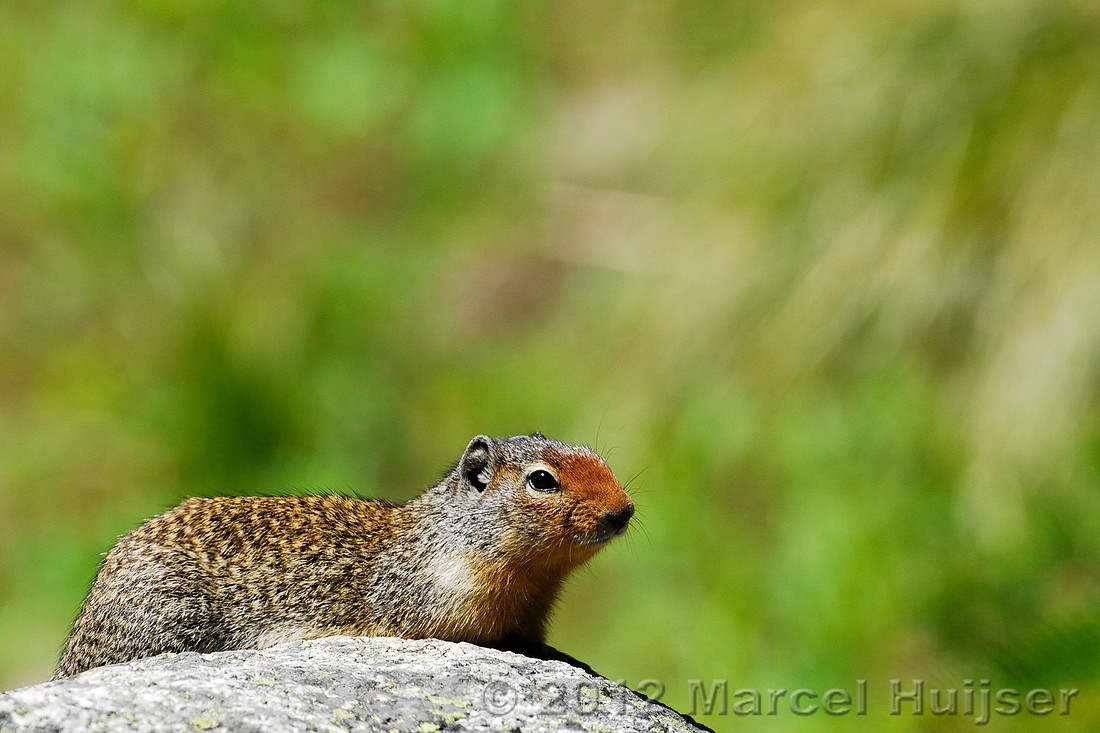
Wildlife: Columbian ground squirrel (Spermophilus columbianus), Idaho, USA
Columbian ground squirrels (Spermophilus columbianus) are only active for about 90-100 days per year. They have a very long hibernation. I photographed this individual near Lolo Pass, just on the Idaho side. Click here for another image of the Columbian ground squirrel.
Like Marcel Huijser Photography on Facebook: http://www.facebook.com/marcelhuijserphotography
All content © 2012 Marcel Huijser
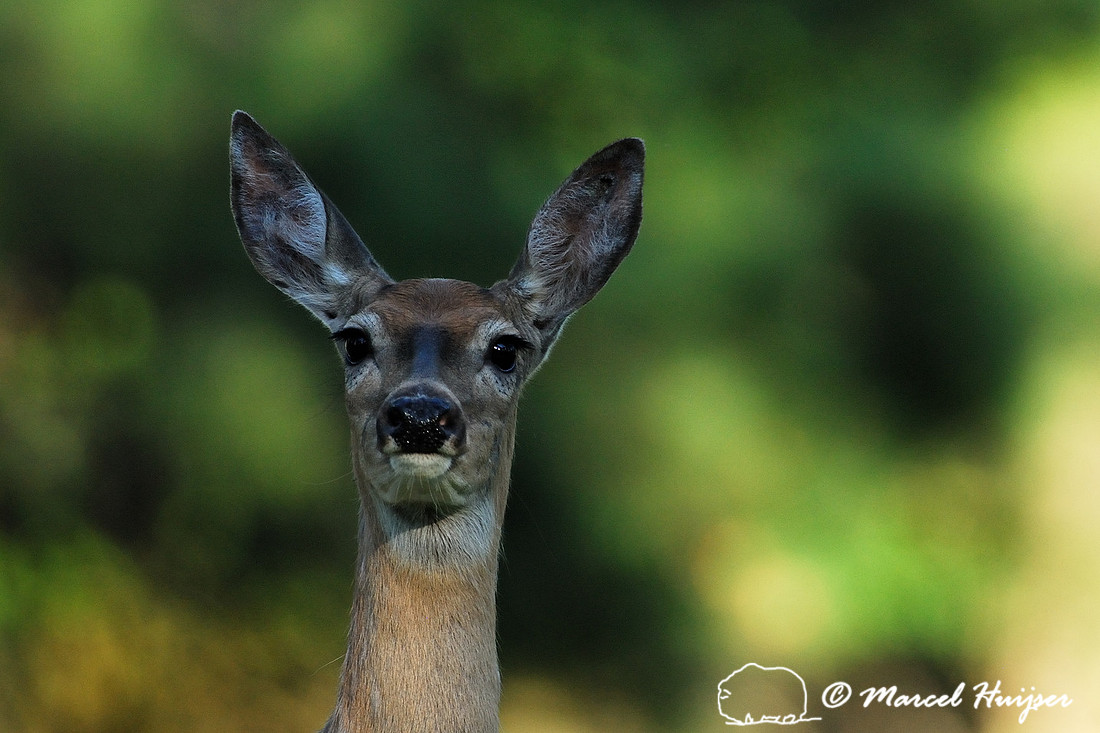
Montana wildlife: White-tailed deer (Odocoileus virginianus)
This white-tailed deer (Odocoileus virginianus) wandered closer to me and only realized I was there when she was perhaps 30 yards away. She is looking at me and trying to figure out what I am exactly. I really like the background of this image. Normally high contrast doesn't work well in photos but when the contrast is in patches and when you open up the aperture it can be quite beautiful. Click here for another image of the white-tailed deer.
Like Marcel Huijser Photography on Facebook: http://www.facebook.com/marcelhuijserphotography
All content © 2012 Marcel Huijser
Montana wildlife: Yellow-headed blackbird (Xanthocephalus xanthocephalus)
I always look for yellow-headed blackbirds (Xanthocephalus xanthocephalus) when I see stands of cattail (Typha spp.). They often stand out with their yellow heads among the brown and green colors of the vegetation. This particular individual allowed me to get pretty close. In this black and white image the bird is stretching its wing and it almost looks like a cord dancer on the cattail stem. Click here for another image of the yellow-headed blackbird.
Like Marcel Huijser Photography on Facebook: http://www.facebook.com/marcelhuijserphotography
All content © 2012 Marcel Huijser
