
Marcel Huijser Photography Home
This is where I show the most recent images and talk about how they were made. The images typically relate to landscapes and wildlife, but I also blog about photos of highways and mitigation measures for wildlife or road ecology in general. Please contact me if you would like to use any of the images.
All content © Marcel Huijser
Road ecology blog: warning sign "open range, livestock at large"
Yesterday I showed a picture of cows and calves on a dirt road. A bit further down the same road there was a warning sign warning drivers that this is an open range area where livestock can be on or near the road. Click here to see another image of this cattle warning sign.
Summer Sale through 31 August 2012
Like Marcel Huijser Photography on Facebook: http://www.facebook.com/marcelhuijserphotography
All content © 2012 Marcel Huijser


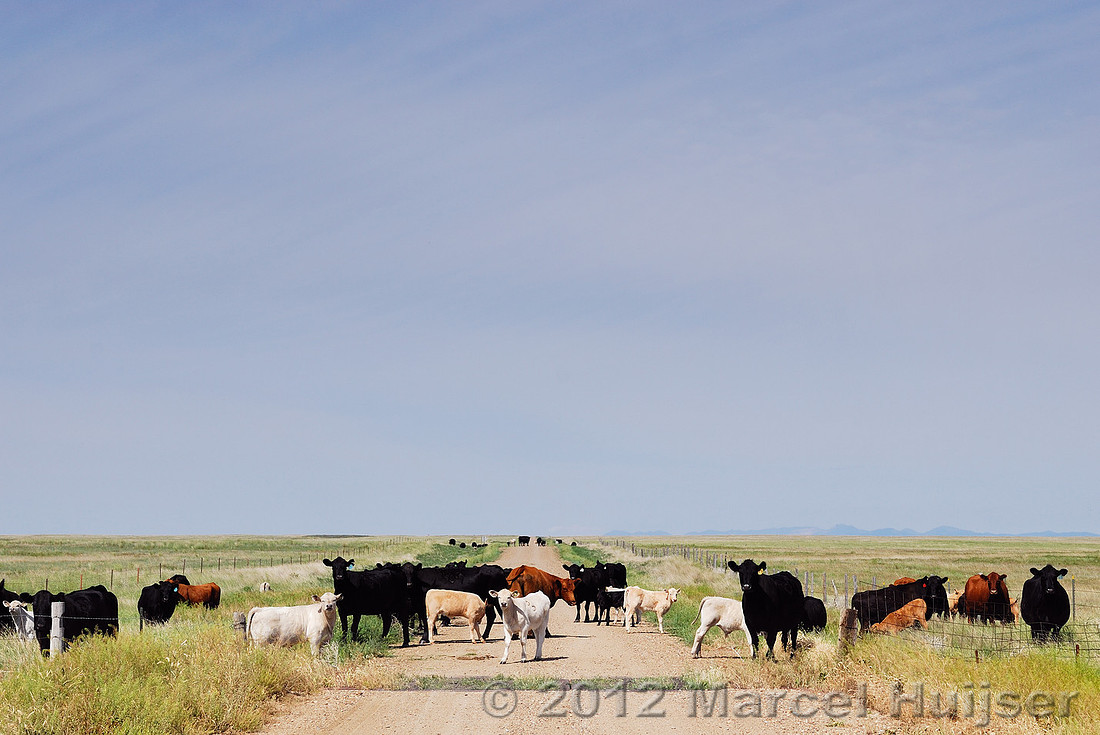
Road ecology blog: cattle blocking dirt road, Montana, USA
These cows and calves appear to be blocking a dirt road in central Montana. Many areas in the western United States have open range laws. Here livestock is allowed to roam free. The owner of the cattle does not have to erect a fence to keep the animals on their property; rather it is the responsibility of another landowner to erect a fence to keep someone else's cattle off their property. In some areas livestock is also allowed walk on and across some highways and dirt roads, so drivers have to pay close attention, especially in the dark.
Summer Sale through 31 August 2012
Like Marcel Huijser Photography on Facebook: http://www.facebook.com/marcelhuijserphotography
All content © 2012 Marcel Huijser
Americana: grain elevators, Hobson, Montana, USA
Old wooden grain elevators with railroad tracks in Hobson, central Montana. Converted to sepia tones. Click here for another image of the grain elevators.
Summer Sale through 31 August 2012
Like Marcel Huijser Photography on Facebook: http://www.facebook.com/marcelhuijserphotography
All content © 2012 Marcel Huijser

Road ecology blog: Roadkilled common raven (Corvus corax), Montana, USA
I saw this common raven (Corvus corax) along a road in central Montana a few weeks ago. I don't think I have seen a roadkilled raven before. Yet corvids are known to scavenge along roads and they also use utility poles and fence posts as a perch. Click here to see additional images of the roadkilled common raven.
Summer Sale through 31 August 2012
Like Marcel Huijser Photography on Facebook: http://www.facebook.com/marcelhuijserphotography
All content © 2012 Marcel Huijser

Wildflowers: camas (Camassia quamash) at Packer Meadows
I posted some new images from the camas (Camassia quamash) at Packer Meadows from a few weeks ago. Click here to see them.
Summer Sale through 31 August 2012
Like Marcel Huijser Photography on Facebook: http://www.facebook.com/marcelhuijserphotography
All content © 2012 Marcel Huijser

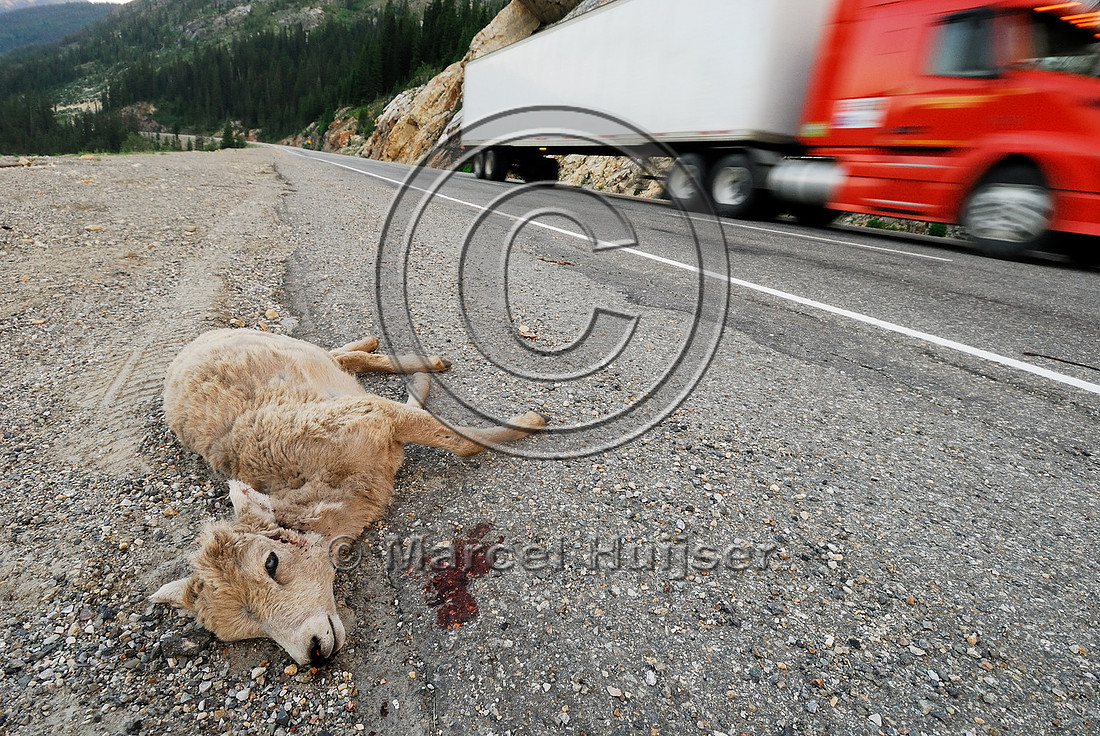
Road ecology blog: Bighorn sheep (Ovis canadensis) lamb roadkill
One of the bighorn sheep (Ovis canadensis) lambs I photographed earlier was hit by a vehicle. It was lying dead by the roadside the next morning. Looking back at the photographs of the previous day it is clear which of the two lambs was killed... the fuzzy one with the lighter coloration. A very sad thing, but also quite common. Vehicles regularly crash into bighorn sheep, sometimes whole groups, as the animals are licking road salt, and just a few days ago there was even a tragic human fatality in western Montana as a result of a collision with a bighorn sheep. To some degree animal-vehicle collisions are a logical consequence of us humans driving vehicles and animals crossing roads and wildlife-vehicle crashes will continue to happen for as long as humans drive vehicles and wildlife cross roads. However, with bighorn sheep there is a contributing factor. We apply road salt which we know is a strong attractant for many ungulates, including bighorn sheep. So we knowingly increase the probability of wildlife-vehicle collisions because the danger of snow and ice in winter may be greater and we find alternative de-icers too costly, impractical, or we find them to have other drawbacks. In addition, I was able to observe how some drivers behave around the bighorn sheep that were licking salt off the road surface. While some drivers slowed down and carefully manoeuvred around the animals I was stunned to see some very different driver behavior too. While it was still light and while the the animals were clearly visible on the road, and while I had parked my vehicle on the side of the road with flashers on near the bighorn sheep, indicating danger, some drivers simply chose to not slow down and pass by the animals at about 60 miles per hour (about 100 km/h). These cars passed the animals at only about 3 yards (3 meters)! I really wonder what these drivers were thinking and what triggered them to behave in this way. Is it that these drivers feel that it is their road and that they have the right to drive the speed limit no matter what the situation might be? Is it that they do not consider the possibility that the animals may walk or jump in front of their vehicle at the very last moment? Even if they do not care about the animals, don't they realize that hitting an adult bighorn sheep can cause serious damage to their vehicle, which can be a real hassle, or that in come cases humans get injured or killed too? It takes substantial time to get a vehicle towed from a remote mountain pass, and it takes money, perhaps on average a few thousand dollars, to repair the damages. Slowing down may only end up adding 30 seconds or so to their journey... not a big price to pay to substantially reduce the risk, I think. Apparently not everybody sees it this way; some people choose to behave in a very dangerous manner even when the danger is clearly visible right in front of them. This makes me wonder about the effectiveness of mitigation measures that aim to influence driver behavior rather than measures that physically separate traffic from wildlife. Mitigation measures that aim to influence driver behavior can reduce wildlife-vehicle collisions substantially, but measures that physically separate traffic from wildlife are likely more robust. Click here to see more images of the roadkilled bighorn sheep lamb.
Summer Sale through 31 August 2012
Like Marcel Huijser Photography on Facebook: http://www.facebook.com/marcelhuijserphotography
All content © 2012 Marcel Huijser
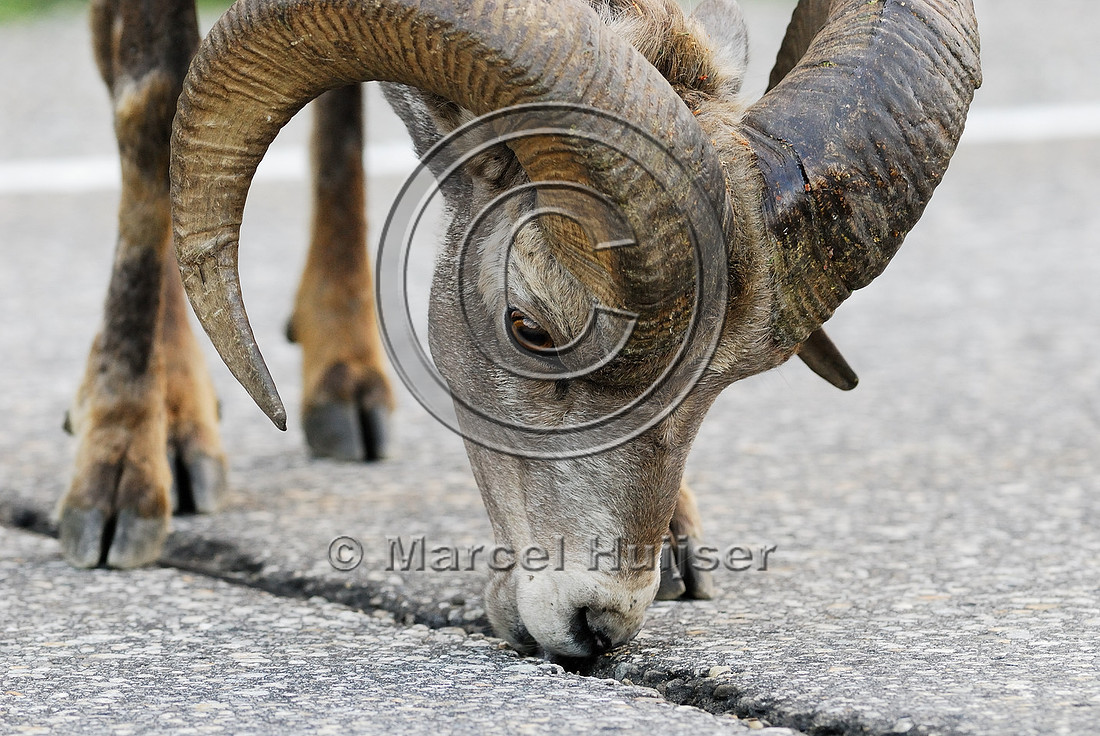
Road ecology blog: Bighorn sheep (Ovis Canadensis) ram licking road salt
Unfortunately some wildlife species get in the habit of licking road salt off the road or from the right-of-way. In the northern Rocky Mountains bighorn sheep (Ovis canadensis) display this behavior in many locations. Bighorn sheep and other species also use natural salt licks, but licking salt from the road surface also exposes the animals to toxins from oil, brake fluid, and tires. And then there is the obvious and immediate danger from traffic; the more time the animals spend on or near roads the more likely it is that they will eventually be hit by a vehicle. This ram is licking road salt from cracks in the pavement in July. He purposefully moved from one large crack in the asphalt to the next. I think that given the time of year (July) most of the road salt had already washed off the smooth pavement, but some road salt appears to have accumulated in the cracks. There are alternatives that are not only less harmful to wildlife but that are also less corrosive, but each de-icer has its advantages and disadvantages. Click here for a series of images of bighorn sheep ewes, lambs and a ram licking road salt off a road in British Columbia, Canada.
Summer Sale through 31 August 2012
Like Marcel Huijser Photography on Facebook: http://www.facebook.com/marcelhuijserphotography
All content © 2012 Marcel Huijser
Wildlife: Bighorn sheep (Ovis Canadensis)
Click here for a series of images of bighorn sheep (Ovis canadensis). They include photos of a ewe, lambs, and a ram.
Summer Sale through 31 August 2012
Like Marcel Huijser Photography on Facebook: http://www.facebook.com/marcelhuijserphotography
All content © 2012 Marcel Huijser

Summer Sale on selected large prints and canvas wraps
Summer Sale
Through 31 August 2012
For "favorite" large prints and canvas wraps (gallery wraps) only.
Examples:
Large print 16"x24" about 30% off
Large canvas wrap 16"x24": about 20% off
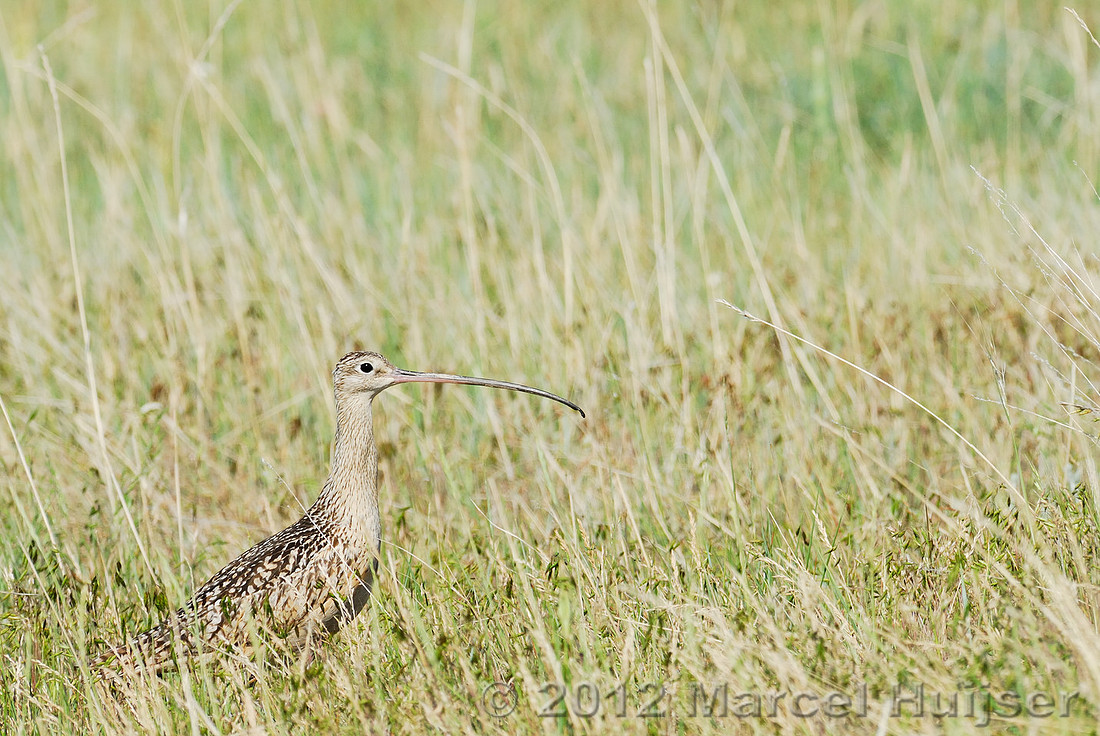
Montana wildlife: Long-billed curlew (Numenius americanus)
Long-billed curlew (Numenius americanus), Montana, USA
Like Marcel Huijser Photography on Facebook: http://www.facebook.com/marcelhuijserphotography
All content © 2012 Marcel Huijser
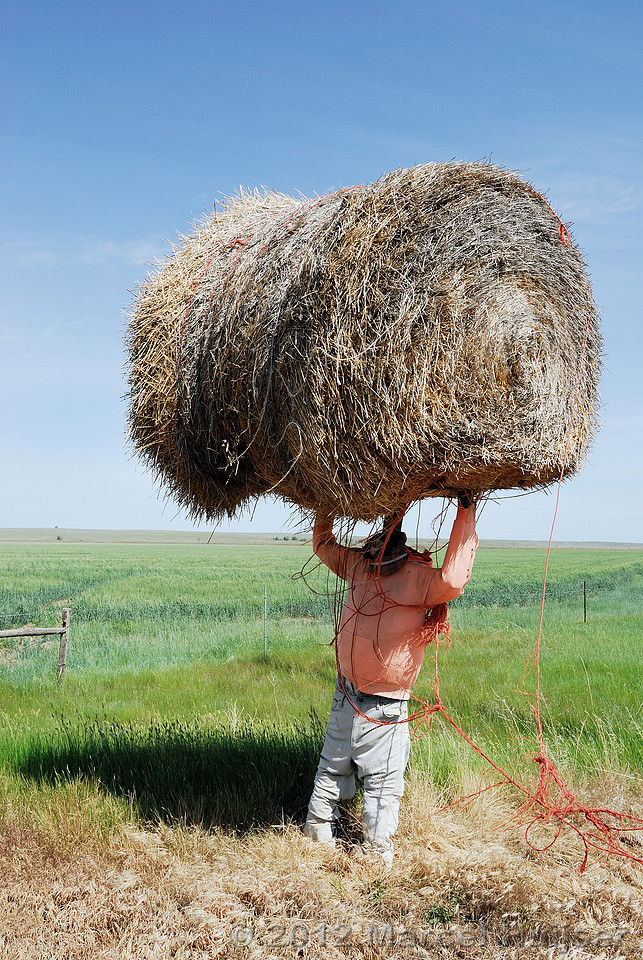
Americana: strong man hay bale sculpture, Montana
Strong man hay bale sculpture, Montana.
Like Marcel Huijser Photography on Facebook: http://www.facebook.com/marcelhuijserphotography
All content © 2012 Marcel Huijser
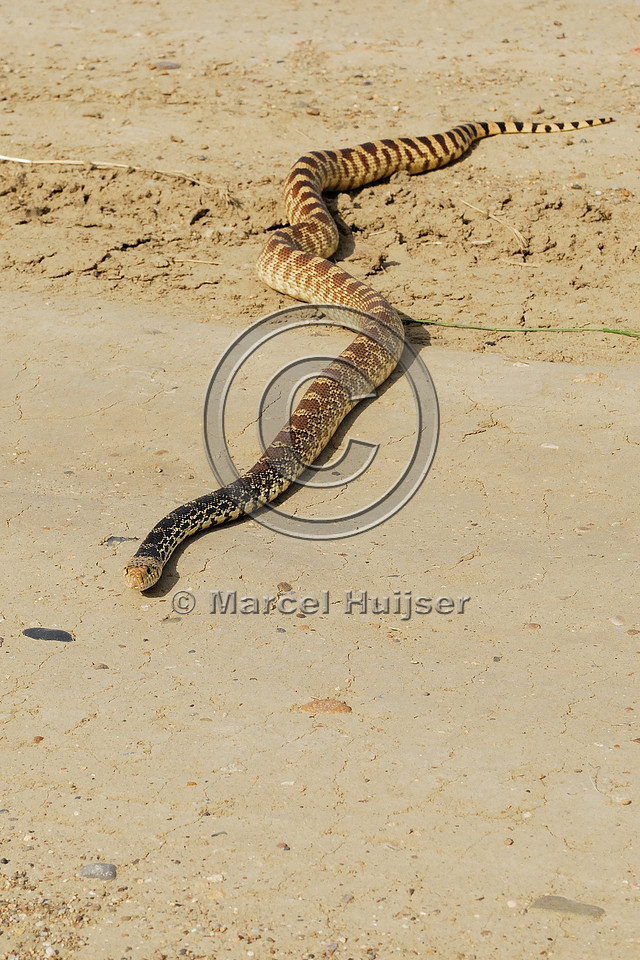
Road ecology blog: Gophersnake (Pituophis catenifer) on dirt road, Montana, USA
Gophersnake (Pituophis catenifer) on dirt road, Montana, USA.
Like Marcel Huijser Photography on Facebook: http://www.facebook.com/marcelhuijserphotography
All content © 2012 Marcel Huijser
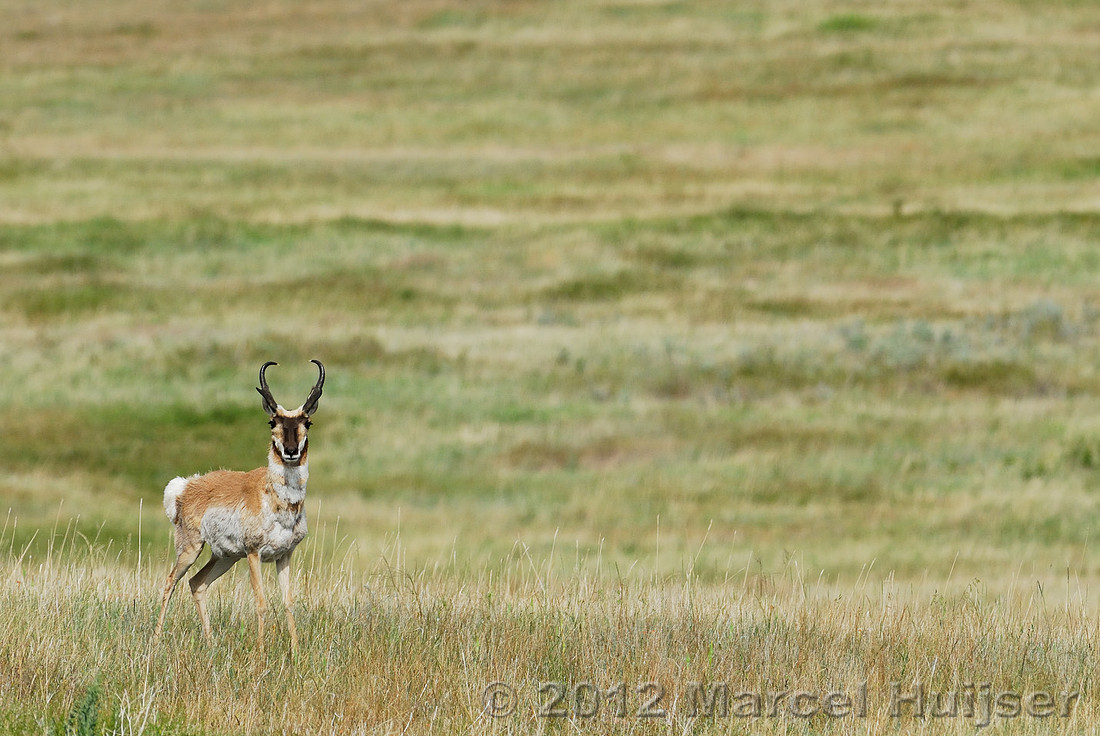
Montana wildlife: Pronghorn (Antilocapra americana) in grassland
This Pronghorn buck (Antilocapra americana) did not quite know what to think of us. The animal came closer and kept its eyes locked on us. In some of the images you can see how the white hairs on its rump are erected. This signals possible danger to other pronghorns in the herd. However, in this case the buck was on its own. Click here for additional images of the pronghorn buck in the prairie.
Like Marcel Huijser Photography on Facebook: http://www.facebook.com/marcelhuijserphotography
All content © 2012 Marcel Huijser
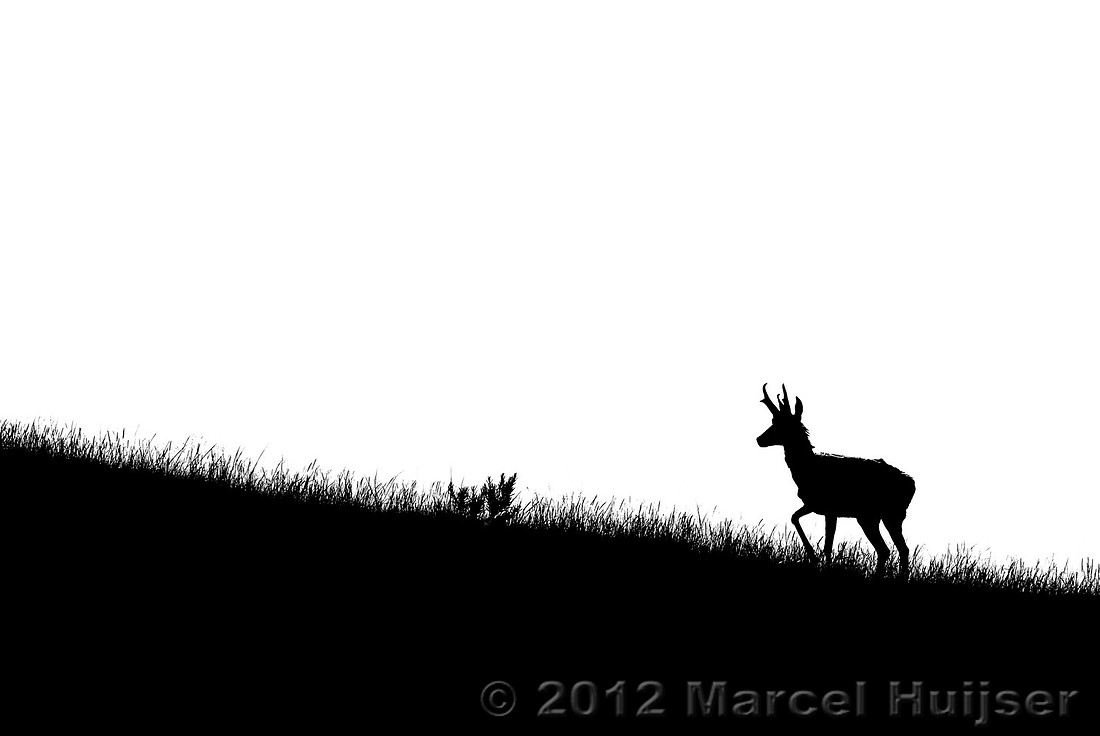
Montana wildlife: Pronghorn (Antilocapra americana) silhouette
I made this image of a pronghorn (Antilocapra americana) shooting against the light. Of course this makes the exposure challenging, but there can be strengths to such an image. I made it into a black and white image and increased the contrast. As a result there are barely any gray tones left. This image bears some resemblance to the steel cut signs of cowboys, cowgirls, livestock, and wildlife you sometimes see at entrance roads to ranches and other places in the western United States. Click here for an image of such a sign. This particular sign is at Sun Prairie in central Montana near the American Prairie Reserve.
Like Marcel Huijser Photography on Facebook: http://www.facebook.com/marcelhuijserphotography
All content © 2012 Marcel Huijser
Montana wildlife: black-tailed prairie dog (Cynomys ludovicianus)
Black-tailed prairie dogs (Cynomys ludovicianus) have declined in the last decades and are now considered a species of concern in Montana. Recent declines are the result of a combination of sylvatic plague, urbanization, and activities that aim for their extermination, including recreational shooting. There is an interesting documentary from High Plains Films on prairie dogs and their treatment as "varmints". Click here for more images of black-tailed prairie dogs.
Like Marcel Huijser Photography on Facebook: http://www.facebook.com/marcelhuijserphotography
All content © 2012 Marcel Huijser
