Marcel Huijser Photography   Home

This is where I show the most recent images and talk about how they were made. The images typically relate to landscapes and wildlife, but I also blog about photos of highways and mitigation measures for wildlife or road ecology in general. Please contact me if you would like to use any of the images.

All content © Marcel Huijser                             

Road ecology blog: Wildlife warning sign, near Hilversum, The Netherlands

March 26, 2014  •  Leave a Comment

Road ecology blog: Wildlife warning sign, deer crossing (roe deer Capreolus capreolus), near Hilversum, The Netherlands.

Note that studies suggest wildlife warning signs are not really effective in reducing wildlife-vehicle collisions.

Click here for images of other wildlife or livestock warning signs.

Like Marcel Huijser Photography on Facebook

All content © 2013 Marcel Huijser

Wildlife warning sign, deer crossing (roe deer Capreolus capreolus), near Hilversum, The NetherlandsWildlife warning sign, deer crossing (roe deer Capreolus capreolus), near Hilversum, The NetherlandsWildlife warning sign, deer crossing (roe deer Capreolus capreolus), near Hilversum, The Netherlands


European wildlife: Arctic ghost, Muskox in ice fog, Dovrefjell National Park, Norway

March 25, 2014  •  Leave a Comment

European wildlife: Arctic ghost, Muskox (Ovibos moschatus) in ice fog in winter, Dovrefjell National Park, Norway. We spent hours looking for the muskoxen on this particular morning... the ice fog was so thick we could not see 100 m in front of us. We had spent about 9 days already on this particular slope with the muskoxen, but we did not know exactly where we were for about 15 minutes. When everything around you is white and your sight distance is very, very limited you can fail to recognize things because the larger context of the landscape simply is not there. Fortunately our confusion did not last long. The ice fog started to lift allowing us to see further, but then the fog rolled back over the landscape. This allowed for the image below; a male muskox, barely visible in the ice fog.

Click here to view more images of muskoxen.

Click here to view more images of "the making of the muskoxen photos".

Click here to view more images of Norwegian landscapes and abstracts.

Like Marcel Huijser Photography on Facebook

All content © 2014 Marcel Huijser


LIMITED EDITION Arctic ghost, Muskox (Ovibos moschatus) in ice fog in winter, Dovrefjell National Park, NorwayLIMITED EDITION Arctic ghost, Muskox (Ovibos moschatus) in ice fog in winter, Dovrefjell National Park, NorwayArctic ghost, Muskox (Ovibos moschatus) in ice fog in winter, Dovrefjell National Park, Norway. Muskoxen evolved in Asia and adapted to arctic tundra environments. Muskoxen became extinct in Europe (last records are from Sweden about 9,000 years ago) and Asia (last records are from the Taymyr peninsula in Russia about 2,000 years ago), probably primarily as a result of over hunting by people. Muskoxen crossed into North America from Siberia between 200,000 and 90,000 years ago and they survived in Alaska, northern Canada and Greenland. Muskoxen were reintroduced in Europe and Asia relatively recently. Muskoxen were first reintroduced in Dovrefjell National Park in Norway in 1931-1932, but these animals were all killed during the second world war. A second reintroduction attempt (1947-1953) was successful though. The muskoxen population size in Dovrefjell National Park is currently estimated at several hundred individuals.


Large format prints (12"x18" and larger) of images in this folder are part of a limited edition. A maximum of 50 large format images will be printed, regardless of the medium (e.g. photo paper, canvas, aluminum).

If you are interested in a large format print of any of the images below, please contact me. The print will be signed and numbered by me before it is shipped to you.

Please contact me if you are interested in the purchase of a large format print: [email protected].


Pricing examples (excluding shipping):
Print of photo paper 12”x18” (excluding matt, frame and glass): $ 60.-
Canvas Gallery Wrap 16”x24” (ready to hang): $295.-
Canvas Gallery Wrap 24”x36” (ready to hang) : $500.-
Aluminum print 12”x18” (ready to hang): $145.-
Aluminum print 16”x24” (ready to hang) : $225.-

More sizes are available of course.


Road Ecology blog: Barriers to close road at high snow levels, Norway

March 25, 2014  •  Leave a Comment

Road Ecology blog: Barriers allowing the road to be closed at high snow levels, Hwy 27, south of Rondane National Park, Norway.

Click here for other images of roads and extreme conditions.

Like Marcel Huijser Photography on Facebook

All content © 2014 Marcel Huijser

Barriers to close road at high snow levels, Hwy 27, south of Rondane National Park, NorwayBarriers to close road at high snow levels, Hwy 27, south of Rondane National Park, NorwayBarriers to close road at high snow levels, Hwy 27, south of Rondane National Park, Norway


The making of the muskoxen images. Niels Kooijman and Marcel Huijser, Dovrefjell, Norway

March 24, 2014  •  Leave a Comment

The making of the muskoxen images. Niels Kooijman and Marcel Huijser, Dovrefjell National Park, Norway. This is on the second to last day of the expedition. We were very happy as we knew we had made the muskoxen images we were after. Dedication (13 days in the area), combined with Niels' knowledge and experience from earlier muskox expeditions, and some luck all came together on this trip!

Click here to view more images of muskoxen.

Click here to view more images of "the making of the muskoxen photos".

Click here to view more images of Norwegian landscapes and abstracts.

Like Marcel Huijser Photography on Facebook

All content © 2014 Marcel Huijser

The making of the muskoxen images. Niels Kooijman and Marcel Huijser, Dovrefjell National Park, NorwayThe making of the muskoxen images. Niels Kooijman and Marcel Huijser, Dovrefjell National Park, NorwayThe making of the muskoxen images. Niels Kooijman and Marcel Huijser in Dovrefjell National Park, Norway


The making of the muskoxen images, Niels Kooijman scans the slopes for muskoxen, Norway.

March 24, 2014  •  Leave a Comment

The making of the muskoxen images, Niels Kooijman scans the slopes for muskoxen (Ovibos moschatus) between camp 2 and base camp, Dovrefjell National park, Norway.


The making of the muskoxen images,Niels Kooijman scans the slopes for muskoxen (Ovibos moschatus) between camp 2 and base camp, Dovrefjell National park, Norway.The making of the muskoxen images,Niels Kooijman scans the slopes for muskoxen (Ovibos moschatus) between camp 2 and base camp, Dovrefjell National park, Norway.The making of the muskoxen images,Niels Kooijman scans the slopes for muskoxen (Ovibos moschatus) between camp 2 and base camp, Dovrefjell National park, Norway.


Image below: Niels Kooijman pulls his sled to camp 2, Dovrefjell National Park, Norway


The making of the muskoxen images, Niels Kooijman pulls his sled to camp 2, Dovrefjell National Park, NorwayThe making of the muskoxen images, Niels Kooijman pulls his sled to camp 2, Dovrefjell National Park, NorwayThe making of the muskoxen images. Niels Kooijman pulls his sled to camp 2, Dovrefjell National Park, Norway

Click here to view more images of muskoxen.

Click here to view more images of "the making of the muskoxen photos".

Click here to view more images of Norwegian landscapes and abstracts.

Like Marcel Huijser Photography on Facebook

All content © 2014 Marcel Huijser


Road Ecology blog: Street lighting to increase the visibility of moose to drivers, Norway

March 24, 2014  •  Leave a Comment

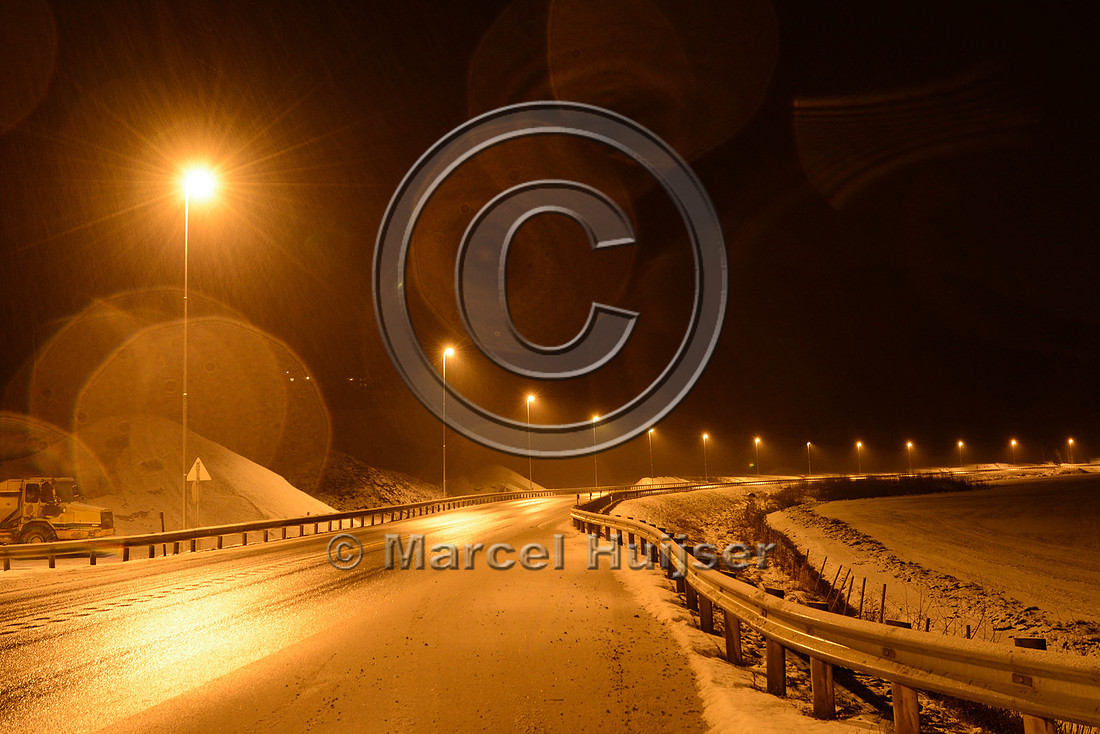
Road Ecology blog: Street lighting to increase the visibility of moose (Alces alces) to drivers, E6 highway, south of Ringebu, Norway. Drivers can see moose better at night when they come down to forage on the shrubs and trees along the river. I do not know how effective these lights have been in reducing collisions. However, a possible reduction in collisions may not only be the result of increased visibility. Wildlife, including moose, may also be deterred by the lights and may cross the road less frequently because of the lights. The wildlife warning sign states "particularly high danger for moose". The lines of lights in the first image are from a truck driving by as I used a long shutter speed.

Click here to view more images of street lights and lighting.

Like Marcel Huijser Photography on Facebook

All content © 2014 Marcel Huijser
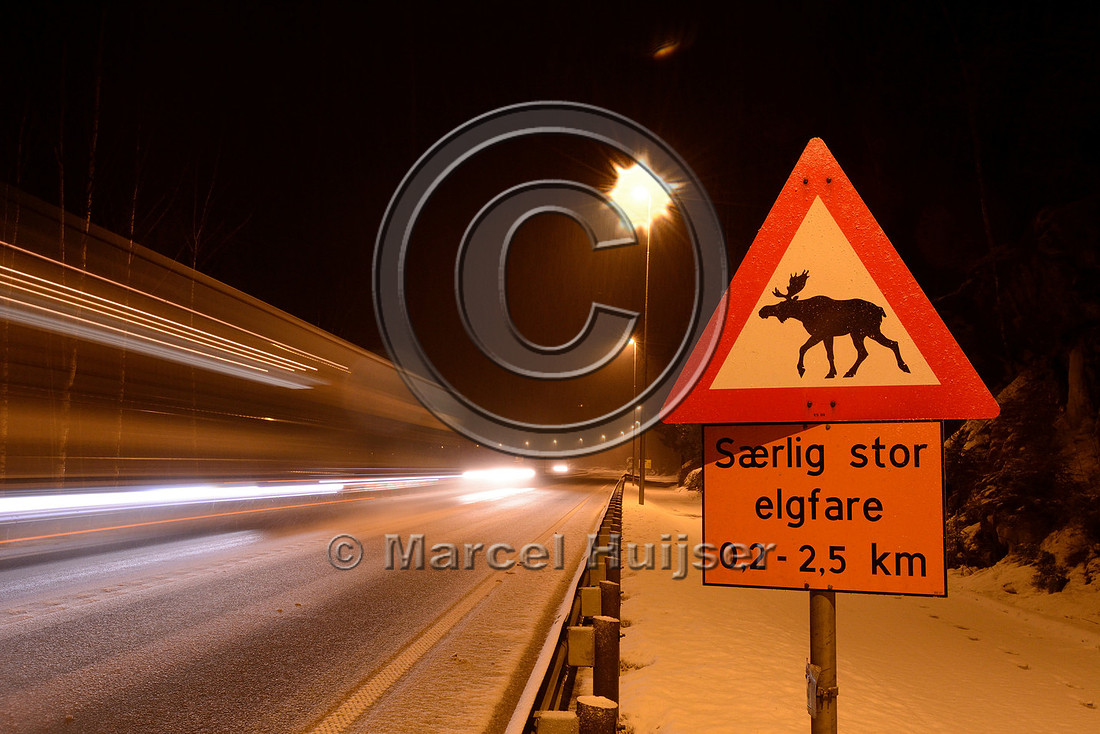
Street lighting to increase the visibility of moose (Alces alces) to drivers, E6 highway, south of Ringebu, NorwayStreet lighting to increase the visibility of moose (Alces alces) to drivers, E6 highway, south of Ringebu, NorwayStreet lighting to increase the visibility of moose (Alces alces) to drivers, E6 highway, south of Ringebu, Norway. Wildlife warning sign, particularly high danger for moose (Alces alces), E6 highway, Ringebu, Norway

Street lighting to increase the visibility of moose (Alces alces) to drivers, E6 highway, south of Ringebu, NorwayStreet lighting to increase the visibility of moose (Alces alces) to drivers, E6 highway, south of Ringebu, NorwayStreet lighting to increase the visibility of moose (Alces alces) to drivers, E6 highway, south of Ringebu, Norway


Hiking: Marcel Huijser and Piet Huijser having a snack while hiking, The Netherlands

March 23, 2014  •  Leave a Comment

Hiking: Marcel Huijser and his dad, Piet Huijser, having a snack while hiking in Kroondomein, Hoog Soeren, The Netherlands


Marcel Huijser and Piet Huijser having a snack while hiking in Kroondomein, Hoog Soeren, NetherlandsMarcel Huijser and Piet Huijser having a snack while hiking in Kroondomein, Hoog Soeren, NetherlandsMarcel Huijser and his dad, Piet Huijser, having a snack while hiking in Kroondomein, Hoog Soeren, Netherlands


European wildlife: Muskox in a snowy landscape, Dovrefjell National Park, Norway

March 22, 2014  •  Leave a Comment

European wildlife: Muskox (Ovibos moschatus) in a snowy landscape, Dovrefjell National Park, Norway.

This image is quite special... it looks like it was made in a studio as there are no distractions... just the animal with gorgeous detail in its fur in a white landscape... and it is looking at the viewer as if instructed by me, the photographer. But then there are the snow flakes in front of the animal and ice and snow clumps in its fur... a reminder we are still outside in the cold, wind and snow with real wildlife!

Background information on how the image was made: The animal was standing at a ridge on the edge of a snow field. The white background is the snow covered mountain across the valley. Because of the open aperture and the distance to the mountain, there is no detail visible of the mountain in the background... it has become an even smooth white canvas as a backdrop for the subject.

Click here to view more images of muskoxen.

Click here to view more images of "the making of the muskoxen photos".

Click here to view more images of Norwegian landscapes and abstracts.

Like Marcel Huijser Photography on Facebook

All content © 2014 Marcel Huijser
 

LIMITED EDITION Muskox (Ovibos moschatus) in a snowy lanscape, Dovrefjell National Park, NorwayLIMITED EDITION Muskox (Ovibos moschatus) in a snowy lanscape, Dovrefjell National Park, NorwayMuskox (Ovibos moschatus) in a snowy lanscape, Dovrefjell National Park, Norway. Muskoxen evolved in Asia and adapted to arctic tundra environments. Muskoxen became extinct in Europe (last records are from Sweden about 9,000 years ago) and Asia (last records are from the Taymyr peninsula in Russia about 2,000 years ago), probably primarily as a result of over hunting by people. Muskoxen crossed into North America from Siberia between 200,000 and 90,000 years ago and they survived in Alaska, northern Canada and Greenland. Muskoxen were reintroduced in Europe and Asia relatively recently. Muskoxen were first reintroduced in Dovrefjell National Park in Norway in 1931-1932, but these animals were all killed during the second world war. A second reintroduction attempt (1947-1953) was successful though. The muskoxen population size in Dovrefjell National Park is currently estimated at several hundred individuals.


Large format prints (12"x18" and larger) of images in this folder are part of a limited edition. A maximum of 50 large format images will be printed, regardless of the medium (e.g. photo paper, canvas, aluminum).

If you are interested in a large format print of any of the images below, please contact me. The print will be signed and numbered by me before it is shipped to you.

Please contact me if you are interested in the purchase of a large format print: [email protected].


Pricing examples (excluding shipping):
Print of photo paper 12”x18” (excluding matt, frame and glass): $ 60.-
Canvas Gallery Wrap 16”x24” (ready to hang): $295.-
Canvas Gallery Wrap 24”x36” (ready to hang) : $500.-
Aluminum print 12”x18” (ready to hang): $145.-
Aluminum print 16”x24” (ready to hang) : $225.-

More sizes are available of course.


Travel: Ringebu stave church, early 13th century, in winter with ice fog, Ringebu, Norway

March 22, 2014  •  Leave a Comment

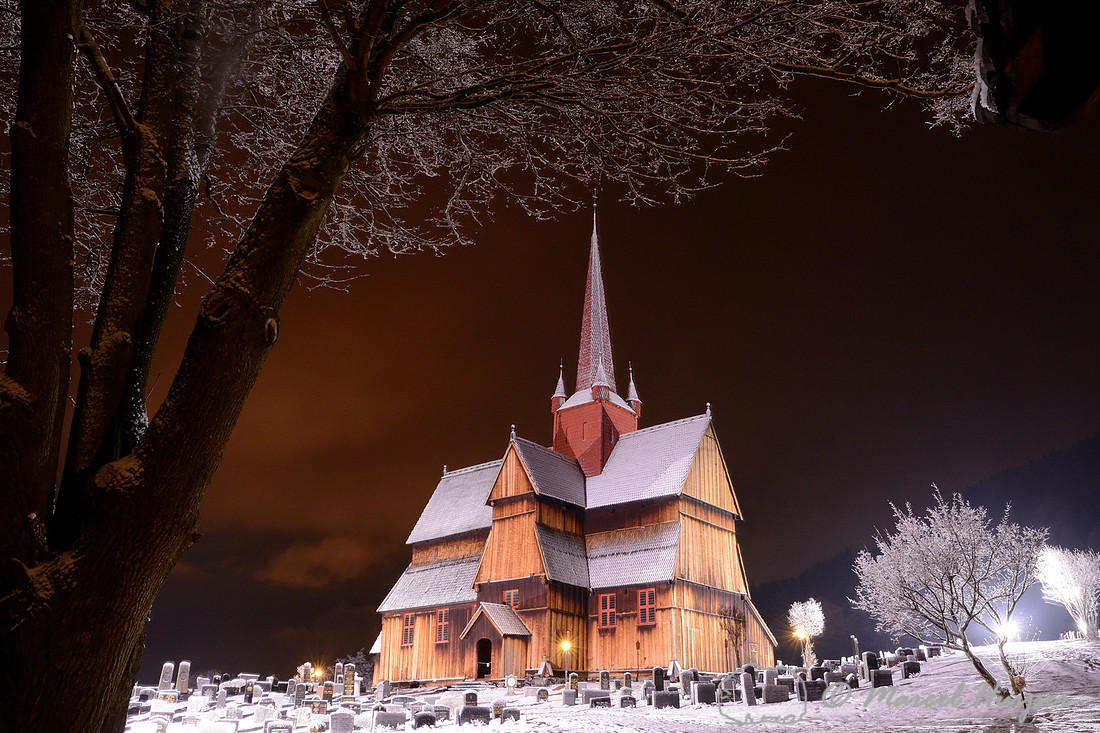
Travel: Ringebu stave church (stavkyrkje), early 13th century, in winter with ice fog, Ringebu, Norway.

This church is about 800 years old and it is a stone's throw from the cabin we stayed at before and after the muskoxen expedition. After leaving the muskoxen at Dovrefjell and having enjoyed a shower (the first one in two weeks!) and a good meal, Niels and I decided to go photograph, of course... until way after midnight! :)  It was a special situation with ice fog on the trees, light snow fall, and low clouds. The lights lighting up the church, as well as the lights from the village and nearby highway reflected orange against the clouds.

Click here to view more images of muskoxen.

Click here to view more images of "the making of the muskoxen photos".

Click here to view more images of Norwegian landscapes and abstracts.

Like Marcel Huijser Photography on Facebook

All content © 2014 Marcel Huijser

Ringebu stave church (stavkyrkje), early 13th century, in winter with ice fog, Ringebu, NorwayRingebu stave church (stavkyrkje), early 13th century, in winter with ice fog, Ringebu, NorwayRingebu stave church (stavkyrkje), early 13th century, in winter with ice fog, Ringebu, Norway


European wildlife: Muskoxen (Ovibos moschatus) ramming, Dovrefjell National Park, Norway

March 22, 2014  •  Leave a Comment

European wildlife: Muskoxen (Ovibos moschatus) ramming, Dovrefjell National Park, Norway.

The images below show two muskoxen ramming. The ritual typically starts with the animals swaying their heads from side to side. This is the signal to prepare for a fight. The animals then walk backwards (about 10-15 meters each) while continuing to sway their heads. When they stop walking backwards they also stop swaying their heads. After a brief pause they charge towards each other, gaining speed along the way. The sequence ends with ramming each other on the head, exactly on the horns. Afterwards they stand there for a while, perhaps a bit dazed by the impact. According to the Alaska Department of Fish and Game the impact is similar to that of a vehicle hitting a concrete wall at 17 mi/h (27 km/h). The horn and thick skull provide protection against the impact. 

I photographed the running animals at about 1/160-1/200 seconds and panned the camera along with the animal that is running towards the right. This allowed for some motion blur while also keeping some sharpness in the image. Interestingly, the animal lifts its front feet just before the impact. This may allow the animal to ram its opponent with even greater force. At this moment its opponent has just entered the frame. The opponent is particularly blurred because I am panning the camera in the opposite direction to keep track with the first animal. The moment of impact shows how precise the animals are with ramming each other exactly on the horns. My wife commented how it seems that the fur of the animals is smooth at the moment of impact, potentially because of the shock wave.

Click here to view more images of muskoxen.

Click here to view more images of "the making of the muskoxen photos".

Click here to view more images of Norwegian landscapes and abstracts.

Like Marcel Huijser Photography on Facebook

All content © 2014 Marcel Huijser
Muskoxen (Ovibos moschatus) in the process of charging another male, Dovrefjell National Park, NorwayMuskoxen (Ovibos moschatus) in the process of charging another male, Dovrefjell National Park, NorwayMuskoxen (Ovibos moschatus) in the process of charging another male, Dovrefjell National Park, Norway. Muskoxen evolved in Asia and adapted to arctic tundra environments. Muskoxen became extinct in Europe (last records are from Sweden about 9,000 years ago) and Asia (last records are from the Taymyr peninsula in Russia about 2,000 years ago), probably primarily as a result of over hunting by people. Muskoxen crossed into North America from Siberia between 200,000 and 90,000 years ago and they survived in Alaska, northern Canada and Greenland. Muskoxen were reintroduced in Europe and Asia relatively recently. Muskoxen were first reintroduced in Dovrefjell National Park in Norway in 1931-1932, but these animals were all killed during the second world war. A second reintroduction attempt (1947-1953) was successful though. The muskoxen population size in Dovrefjell National Park is currently estimated at several hundred individuals. Muskoxen (Ovibos moschatus) in the process of charging another male, Dovrefjell National Park, NorwayMuskoxen (Ovibos moschatus) in the process of charging another male, Dovrefjell National Park, NorwayMuskoxen (Ovibos moschatus) in the process of charging another male, Dovrefjell National Park, Norway. Muskoxen evolved in Asia and adapted to arctic tundra environments. Muskoxen became extinct in Europe (last records are from Sweden about 9,000 years ago) and Asia (last records are from the Taymyr peninsula in Russia about 2,000 years ago), probably primarily as a result of over hunting by people. Muskoxen crossed into North America from Siberia between 200,000 and 90,000 years ago and they survived in Alaska, northern Canada and Greenland. Muskoxen were reintroduced in Europe and Asia relatively recently. Muskoxen were first reintroduced in Dovrefjell National Park in Norway in 1931-1932, but these animals were all killed during the second world war. A second reintroduction attempt (1947-1953) was successful though. The muskoxen population size in Dovrefjell National Park is currently estimated at several hundred individuals. Muskox (Ovibos moschatus) getting ready for impact, Dovrefjell National Park, NorwayMuskox (Ovibos moschatus) getting ready for impact, Dovrefjell National Park, NorwayMuskox (Ovibos moschatus) getting ready for impact, Dovrefjell National Park, Norway. Muskoxen evolved in Asia and adapted to arctic tundra environments. Muskoxen became extinct in Europe (last records are from Sweden about 9,000 years ago) and Asia (last records are from the Taymyr peninsula in Russia about 2,000 years ago), probably primarily as a result of over hunting by people. Muskoxen crossed into North America from Siberia between 200,000 and 90,000 years ago and they survived in Alaska, northern Canada and Greenland. Muskoxen were reintroduced in Europe and Asia relatively recently. Muskoxen were first reintroduced in Dovrefjell National Park in Norway in 1931-1932, but these animals were all killed during the second world war. A second reintroduction attempt (1947-1953) was successful though. The muskoxen population size in Dovrefjell National Park is currently estimated at several hundred individuals. Muskoxen (Ovibos moschatus) ramming, moment of impact, Dovrefjell National Park, NorwayMuskoxen (Ovibos moschatus) ramming, moment of impact, Dovrefjell National Park, NorwayMuskoxen (Ovibos moschatus) ramming, moment of impact, Dovrefjell National Park, Norway. Muskoxen evolved in Asia and adapted to arctic tundra environments. Muskoxen became extinct in Europe (last records are from Sweden about 9,000 years ago) and Asia (last records are from the Taymyr peninsula in Russia about 2,000 years ago), probably primarily as a result of over hunting by people. Muskoxen crossed into North America from Siberia between 200,000 and 90,000 years ago and they survived in Alaska, northern Canada and Greenland. Muskoxen were reintroduced in Europe and Asia relatively recently. Muskoxen were first reintroduced in Dovrefjell National Park in Norway in 1931-1932, but these animals were all killed during the second world war. A second reintroduction attempt (1947-1953) was successful though. The muskoxen population size in Dovrefjell National Park is currently estimated at several hundred individuals. Muskoxen (Ovibos moschatus) just after impact, Dovrefjell National Park, NorwayMuskoxen (Ovibos moschatus) just after impact, Dovrefjell National Park, NorwayMuskoxen (Ovibos moschatus) just after impact, Dovrefjell National Park, Norway. Muskoxen evolved in Asia and adapted to arctic tundra environments. Muskoxen became extinct in Europe (last records are from Sweden about 9,000 years ago) and Asia (last records are from the Taymyr peninsula in Russia about 2,000 years ago), probably primarily as a result of over hunting by people. Muskoxen crossed into North America from Siberia between 200,000 and 90,000 years ago and they survived in Alaska, northern Canada and Greenland. Muskoxen were reintroduced in Europe and Asia relatively recently. Muskoxen were first reintroduced in Dovrefjell National Park in Norway in 1931-1932, but these animals were all killed during the second world war. A second reintroduction attempt (1947-1953) was successful though. The muskoxen population size in Dovrefjell National Park is currently estimated at several hundred individuals.


Base camp after a snow storm, Dovrefjell National Park, Norway

March 22, 2014  •  Leave a Comment

The making of the muskoxen images. Base camp after a snow storm, Dovrefjell National Park, Norway.

The sleds are almost completely covered under the snow.

Click here to view more images of muskoxen.

Click here to view more images of "the making of the muskoxen photos".

Click here to view more images of Norwegian landscapes and abstracts.

Like Marcel Huijser Photography on Facebook

All content © 2014 Marcel Huijser


The making of the muskoxen images, Niels Kooijman at base camp, Dovrefjell National Park, NorwayThe making of the muskoxen images, Niels Kooijman at base camp, Dovrefjell National Park, NorwayThe making of the muskoxen images, Niels Kooijman at base camp after a snowstorm, Dovrefjell National Park, Norway

The making of the muskoxen images, Base camp after a snow storm, Dovrefjell National Park, NorwayThe making of the muskoxen images, Base camp after a snow storm, Dovrefjell National Park, NorwayThe making of the muskoxen images, Base camp after a snow storm, Dovrefjell National Park, Norway


European wildlife: Muskoxen sparring in snow, Dovrefjell National Park, Norway

March 21, 2014  •  Leave a Comment

European wildlife: Muskoxen (Ovibos moschatus) sparring in snow, Dovrefjell National Park, Norway.

This is probably one of the best images I made of the muskoxen.

Click here to view more images of muskoxen.

Click here to view more images of "the making of the muskoxen photos".

Click here to view more images of Norwegian landscapes and abstracts.

Like Marcel Huijser Photography on Facebook

All content © 2014 Marcel Huijser

Muskoxen (Ovibos moschatus) about to spar, Dovrefjell National Park, NorwayMuskoxen (Ovibos moschatus) about to spar, Dovrefjell National Park, NorwayMuskoxen (Ovibos moschatus) about to spar, Dovrefjell National Park, Norway. Muskoxen evolved in Asia and adapted to arctic tundra environments. Muskoxen became extinct in Europe (last records are from Sweden about 9,000 years ago) and Asia (last records are from the Taymyr peninsula in Russia about 2,000 years ago), probably primarily as a result of over hunting by people. Muskoxen crossed into North America from Siberia between 200,000 and 90,000 years ago and they survived in Alaska, northern Canada and Greenland. Muskoxen were reintroduced in Europe and Asia relatively recently. Muskoxen were first reintroduced in Dovrefjell National Park in Norway in 1931-1932, but these animals were all killed during the second world war. A second reintroduction attempt (1947-1953) was successful though. The muskoxen population size in Dovrefjell National Park is currently estimated at several hundred individuals.


Road ecology blog: Warning sign for crossing skiers, Norway

March 21, 2014  •  Leave a Comment

Road ecology blog: Warning sign for crossing skiers, Hwy 27, south of Rondane National Park, Norway. Note the skier crossing the road in the background who happened to zip by as I pressed the shutter release button.

Click here to view more images of hiking, biking, skiing, horseback riding and trails.

Like Marcel Huijser Photography on Facebook

All content © 2014 Marcel Huijser

Warning sign for crossing skiers, Hwy 27, south of Rondane National Park, NorwayWarning sign for crossing skiers, Hwy 27, south of Rondane National Park, NorwayWarning sign for crossing skiers, Hwy 27, south of Rondane National Park, Norway. Note the skier crossing the road in the background.


European wildlife: Our first muskoxen tracks and pellets, Dovrefjell National Park, Norway

March 20, 2014  •  Leave a Comment

European wildlife: Our first muskoxen (Ovibos moschatus) tracks and pellets of the trip, Dovrefjell National Park, Norway.

Click here to view more images of muskoxen.

Click here to view more images of "the making of the muskoxen photos".

Click here to view more images of Norwegian landscapes and abstracts.

Like Marcel Huijser Photography on Facebook

All content © 2014 Marcel Huijser

Our first muskoxen (Ovibos moschatus) tracks and pellets of the trip, Dovrefjell National Park, NorwayOur first muskoxen (Ovibos moschatus) tracks and pellets of the trip, Dovrefjell National Park, NorwayOur first muskoxen (Ovibos moschatus) tracks and pellets of the trip, Dovrefjell National Park, Norway. Muskoxen evolved in Asia and adapted to arctic tundra environments. Muskoxen became extinct in Europe (last records are from Sweden about 9,000 years ago) and Asia (last records are from the Taymyr peninsula in Russia about 2,000 years ago), probably primarily as a result of over hunting by people. Muskoxen crossed into North America from Siberia between 200,000 and 90,000 years ago and they survived in Alaska, northern Canada and Greenland. Muskoxen were reintroduced in Europe and Asia relatively recently. Muskoxen were first reintroduced in Dovrefjell National Park in Norway in 1931-1932, but these animals were all killed during the second world war. A second reintroduction attempt (1947-1953) was successful though. The muskoxen population size in Dovrefjell National Park is currently estimated at several hundred individuals.

Our first muskoxen (Ovibos moschatus) tracks and pellets of the trip, Dovrefjell National Park, NorwayOur first muskoxen (Ovibos moschatus) tracks and pellets of the trip, Dovrefjell National Park, NorwayOur first muskoxen (Ovibos moschatus) tracks and pellets of the trip, Dovrefjell National Park, Norway. Muskoxen evolved in Asia and adapted to arctic tundra environments. Muskoxen became extinct in Europe (last records are from Sweden about 9,000 years ago) and Asia (last records are from the Taymyr peninsula in Russia about 2,000 years ago), probably primarily as a result of over hunting by people. Muskoxen crossed into North America from Siberia between 200,000 and 90,000 years ago and they survived in Alaska, northern Canada and Greenland. Muskoxen were reintroduced in Europe and Asia relatively recently. Muskoxen were first reintroduced in Dovrefjell National Park in Norway in 1931-1932, but these animals were all killed during the second world war. A second reintroduction attempt (1947-1953) was successful though. The muskoxen population size in Dovrefjell National Park is currently estimated at several hundred individuals.


Road Ecology blog: Sign: No stopping zone next 14 km. Sensitive wild reindeer area, Norway

March 20, 2014  •  Leave a Comment

Road Ecology blog: Sign: No stopping zone next 14 km. Sensitive wild reindeer (Rangifer tarandus tarandus) area, Hwy 27 at the edge of Rondane National Park, Norway. These signs aim to reduce human disturbance to wild reindeer in the winter months. Note that the signs have hinges halfway which allow them to fold during the summer months.

Click here for additional images of no stopping zone signs.

Like Marcel Huijser Photography on Facebook

All content © 2014 Marcel Huijser

Sign: No stopping zone next 14 km. Vulnerable wild reindeer (Rangifer tarandus tarandus) area, Hwy 27 at the edge of Rondane National Park, NorwaySign: No stopping zone next 14 km. Vulnerable wild reindeer (Rangifer tarandus tarandus) area, Hwy 27 at the edge of Rondane National Park, NorwaySign: No stopping zone next 14 km. Vulnerable wild reindeer (Rangifer tarandus tarandus) area, Hwy 27 at the edge of Rondane National Park, Norway

Sign, No stopping zone, Vulnerable wild reindeer (Rangifer tarandus tarandus) area, Hwy 27 at the edge of Rondane National Park, NorwaySign, No stopping zone, Vulnerable wild reindeer (Rangifer tarandus tarandus) area, Hwy 27 at the edge of Rondane National Park, NorwaySign, No stopping zone, Vulnerable wild reindeer (Rangifer tarandus tarandus) area, Hwy 27 at the edge of Rondane National Park, Norway


Archive
January February (6) March April May June July August September October November December
January February March April (9) May (1) June July August September October November December
January February March April May June July August September October November December
January February March (3) April (1) May June July August September October November December
January February March April May June July August September October November December