
Marcel Huijser Photography Home
This is where I show the most recent images and talk about how they were made. The images typically relate to landscapes and wildlife, but I also blog about photos of highways and mitigation measures for wildlife or road ecology in general. Please contact me if you would like to use any of the images.
All content © Marcel Huijser
European wildlife: Muskox charges another male, Dovrefjell National Park, Norway
European wildlife: Muskox (Ovibos moschatus) in the process of charging another male, Dovrefjell National Park, Norway.
It is hard to decide on the right shutter speed to capture some of the action of a charging muskox. It is trial and error and to some degree also about forcing luck by spending a lot of time and making lots of images. In this case I chose to slow the shutter speed down to 1/125 seconds and panned the camera and lens along with the fast moving animal. The rear of the animal is partially blurred because of the motion and kicked-up snow, while the head is still sufficiently sharp; exactly what I was looking for! ... and the white snow in foreground and background did the rest.
Click here to view more images of muskoxen.
Click here to view more images of "the making of the muskoxen photos".
Click here to view more images of Norwegian landscapes and abstracts.
Like Marcel Huijser Photography on Facebook
All content © 2014 Marcel Huijser


Road ecology blog: Challenging winter driving conditions, Hwy 27, Norway
Road ecology blog: Challenging winter driving conditions, Hwy 27, South of Rondane National Park, Norway.
Click here for other images of roads and extreme conditions.
Like Marcel Huijser Photography on Facebook
All content © 2014 Marcel Huijser
Image below: note that the snow level is well over the roof of the VW van. The road is down to one lane in places like this.

Image below: low visibility requires slow and careful driving.

The snow and the sky melt into a white canvas. Road markers are essential.

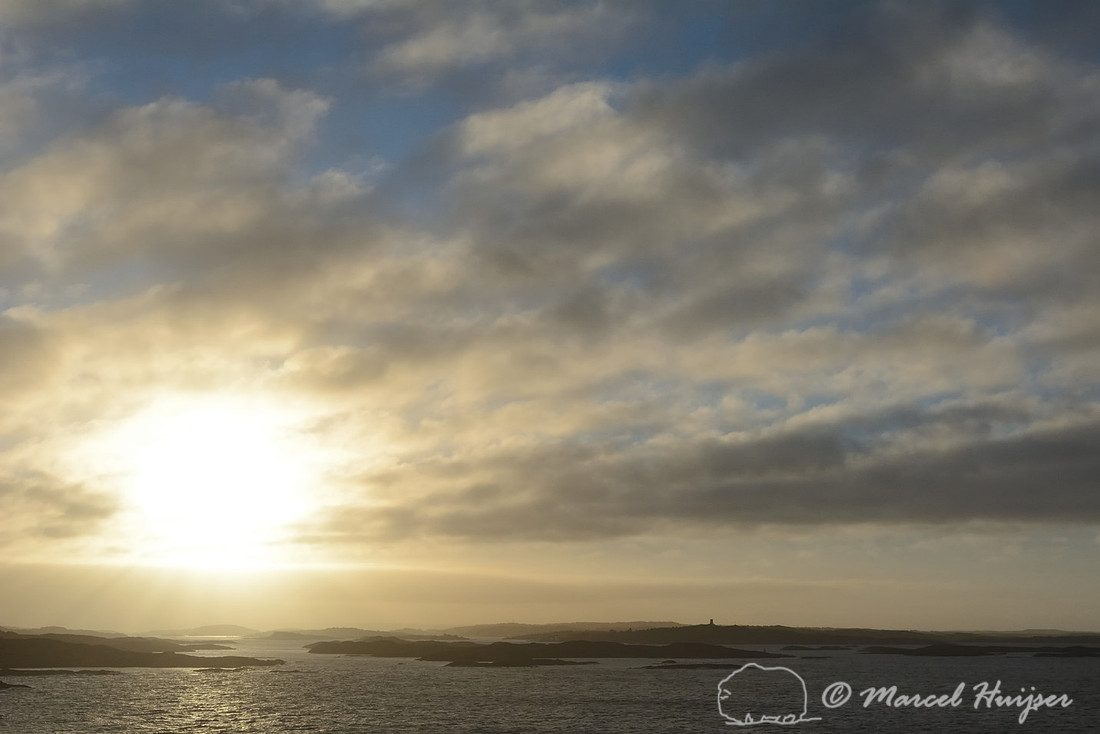
Scandinavian landscapes: Sunrise over Galterö, Sweden
Scandinavian landscapes: Sunrise over Galterö, Sweden.
Image made from the ferry as we approached Göteborg.
Click here to view images of muskoxen.
Click here to view images of "the making of the muskoxen photos".
Click here to view images of Scandinavian landscapes and abstracts.
Like Marcel Huijser Photography on Facebook
All content © 2014 Marcel Huijser
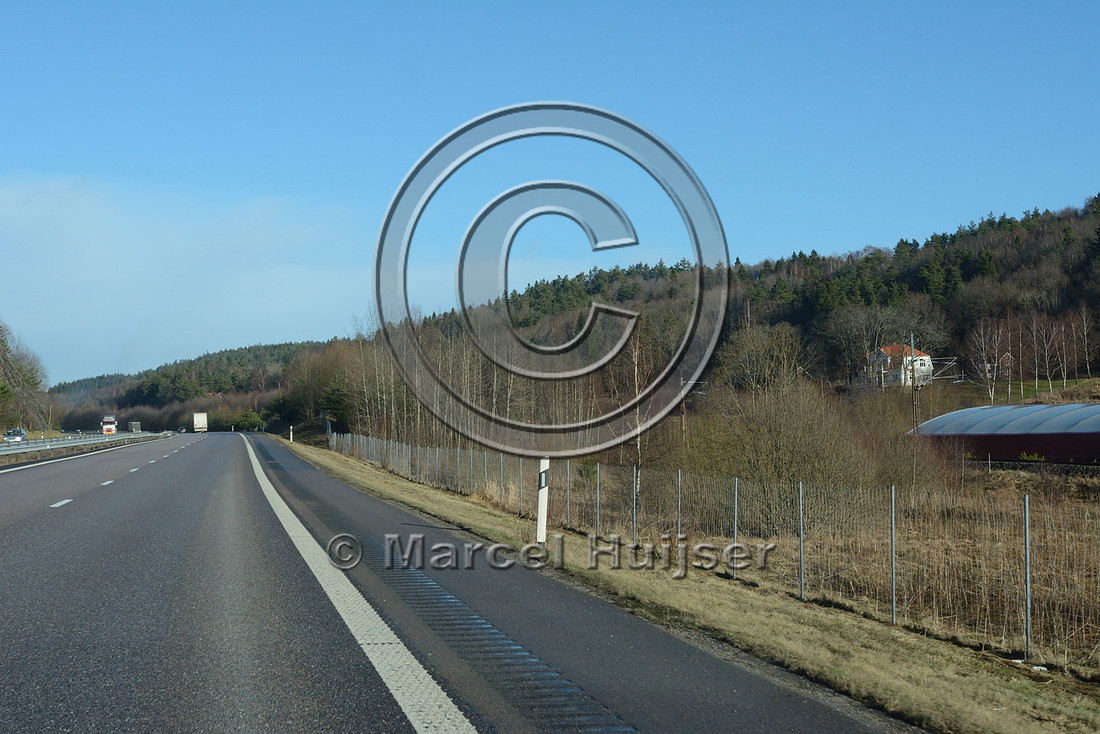
Road ecology blog: landscape bridges (tunnels) in Norway
Road ecology blog: landscape bridges (tunnels) in Norway.
There are no strict rules on how to classify a wildlife crossing structure. However, "wildlife overpasses" tend to be specifically build to allow wildlife to pass to the other side of the road. The dimensions and "furniture" (e.g. soil, cover, vegetation, ponds on either side) of a wildlife overpass are typically designed with certain "target species" in mind. The appropriate width of the structure (i.e. the road length covered by the structure) is often a topic of discussion, but most structures are between 30-70 m wide. While most wildlife overpasses do have soil and vegetation, they tend to not be designed to have a wide range of ecosystem processes continue across the road. Ecosystem processes may not only include movements of a wide variety of plant and animal species groups representative for the ecosystem, but also soil and hydrology processes.
Long road tunnels and long bridges (elevated roadways) are typically several hundreds of meters up to several kilometers wide (i.e. the road length covered or spanned by the structure). They have relatively "undisturbed" soil and water on top or below the structure which make them better suited to have ecosystem processes continue under or over the road compared to wildlife overpasses. In this context these large structures can be regarded as a "landscape bridge" rather than just a wildlife crossing structure. However, long tunnels or bridges tend to be primarily build for other reasons (e.g. a mountain or floodplain is in the way of the road). While most long tunnels or elevated roadways are not primarily designed for ecological processes to continue over or under the road, they do have great potential to function as a landscape bridge. In most of the examples below this is explicitly recognized as the landscape bridges have wildlife fencing associated with them.
For images of landscape bridges or elevated roadways over long distances click here.
For images of wildlife overpasses click here.
Like Marcel Huijser Photography on Facebook
All content © 2014 Marcel Huijser
Image below: Landscape bridge (tunnel) (about 150 m wide) across E6 motorway, near Grind, Sweden

Image below: Landscape bridge Follotunnelen (tunnel) (about 900 m wide) across E6 motorway, near Strømbråten, Norway

Image below: Landscape bridge (tunnel) (about 4000 m wide) across E6 motorway, near Ski, Norway

Image below: Landscape bridge (tunnel) (about 3400 m wide) across E6 motorway, near Oppegard, Norway

Melting snow for cooking and drinking water, camp 1, Dovrefjell National Park, Norway
The making of the muskoxen images, Melting snow for cooking and drinking water, camp 1, Dovrefjell National Park, Norway.
We kept warm water in a thermos overnight to keep it from freezing. In the morning we put some of that water in the pot, heated it, and gradually added snow. Having water to start speeds up the process a lot and snow alone in a hot pot would just burn and evaporate immediately. Note that we dug out a cooking pit in one of the two entrances of the tent; this became the designated cooking area. The pit increases the space between the stove and the tent fabric when pre-heating the gasoline stove (high flame). The pit also helps provide some shelter from the wind when lighting the stove. The fuel bottle and stove are mounted on an aluminum sheet to prevent the hot stove from sinking in the snow. On the right is a garbage bag filled with clean snow, ready for melting.
Click here to view more images of muskoxen.
Click here to view more images of "the making of the muskoxen photos".
Click here to view more images of Norwegian landscapes and abstracts.
Like Marcel Huijser Photography on Facebook
All content © 2014 Marcel Huijser


Road ecology blog: Six wildlife overpasses in Norway
Road ecology blog: Six wildlife overpasses in Norway.
For other images of wildlife overpasses click here.
For images of landscape bridges or elevated roadways over long distances click here.
Like Marcel Huijser Photography on Facebook
All content © 2014 Marcel Huijser
Image below: Wildlife overpass (about 35 m wide), E6 motorway, near Skjeberg, Norway

Image below: Wildlife overpass (about 28 m wide), E6 motorway, near Råde, Norway

Image below: Wildlife overpass (about 75 m wide), E6 motorway, near Sofiemyr , Norway

Image below: Wildlife overpass (about 54 m wide), E6 motorway, near Jessheim, Norway

Image below: Wildlife overpass (about 40 m wide), E6 motorway, near Mogreina, Norway

Image below: Wildlife overpass (about 40 m wide), E6 motorway, near Eidsvoll, Norway

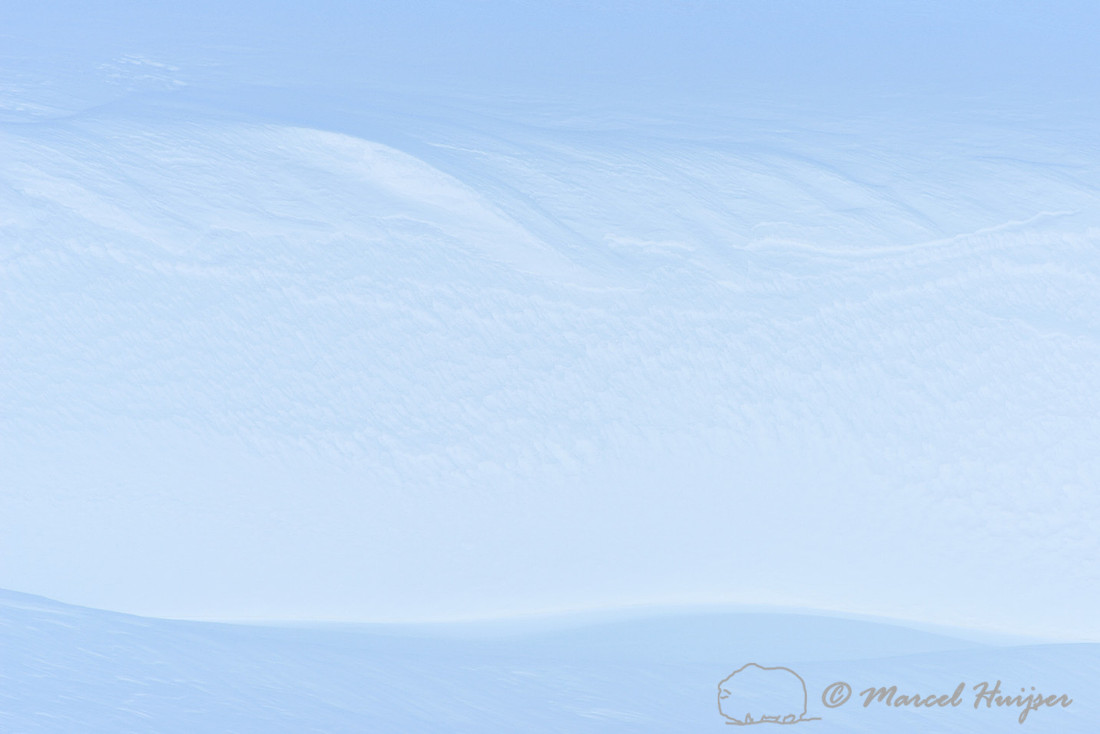
Abstract: Snowy hill side, Dovrefjell National Park, Norway
Abstract: Snowy hill side, Dovrefjell National Park, Norway.
Click here to view more images of muskoxen.
Click here to view more images of "the making of the muskoxen photos".
Click here to view more images of Norwegian landscapes and abstracts.
Like Marcel Huijser Photography on Facebook
All content © 2014 Marcel Huijser
The making of the muskoxen images, Niels Kooijman puts on his boots
The making of the muskoxen images, camp 2, Dovrefjell National Park, Norway, Niels Kooijman puts on his boots, camp 2, Dovrefjell National park, Norway.

Image below: Our tent, a Hilleberg Saivo, at camp 2, Dovrefjell National Park, Norway.

Click here to view more images of muskoxen.
Click here to view more images of "the making of the muskoxen photos".
Click here to view more images of Norwegian landscapes and abstracts.
Like Marcel Huijser Photography on Facebook
All content © 2014 Marcel Huijser
European wildlife: Muskoxen (Ovibos moschatus) sparring, Dovrefjell National Park, Norway
European wildlife: Muskoxen (Ovibos moschatus) sparring, Dovrefjell National Park, Norway.
We spent almost all of our time with a group of 15 male muskoxen. This was a relatively large group; normally a bull group is much smaller (3-5 individuals). As a result there was more sparring (fighting) than usual. It was not mating season, but it appears that the bulls establish and confirm dominance throughout the year.
One day we lucked out; the sparring took place on a ridge of a snowfield with snow covered mountains in the background with snow flying. This was our dream scenario... active animals with nothing but a white background! I slowed the shutter speed down on purpose to emphasize the blowing snow.
Click here to view more images of muskoxen.
Click here to view more images of "the making of the muskoxen photos".
Click here to view more images of Norwegian landscapes and abstracts.
Like Marcel Huijser Photography on Facebook
All content © 2014 Marcel Huijser

Scandinavian landscapes: Birch (Betula sp.) in snow field, Dovrefjell National Park, Norway
Scandinavian landscapes: Birch (Betula sp.) in snow field, Dovrefjell National Park, Norway.
Click here to view more images of Norwegian landscapes and abstracts.
Like Marcel Huijser Photography on Facebook
All content © 2014 Marcel Huijser


Road ecology blog: Moose wildlife fence along the E6 motorway, near Ljugskile, Sweden
Road ecology blog: Moose (Alces alces) wildlife fence along the E6 motorway, near Ljugskile, Sweden.
Click here for more images of wildlife fencing.
Like Marcel Huijser Photography on Facebook
All content © 2014 Marcel Huijser
The making of the muskoxen images: Camp 2, Dovrefjell National Park, Norway
The making of the muskoxen images: Camp 2, Dovrefjell National Park, Norway.
I joined my friend and fellow photographer Niels Kooijman on a 13 day winter camping trip to photograph muskoxen in Dovrefjell National Park, Norway. Niels has been doing this type of trip for several winters already and I benefited from his knowledge, experience, and some of the group gear he has accumulated over the years. We used sleds and snowshoes to transport ourselves and our gear in the area. As it was late in the winter season some of the snow had a hard icy crust. The muskoxen were on steep windswept slopes which meant we had to navigate pretty steep slopes with hard icy snow to get there. This requires an aggressive snowshoe with teeth around the entire frame rather than snowshoes that only have teeth under your boots. The MSR lightning ascent is a very suitable snowshoe for these conditions. Our tent was a Hilleberg Saivo; suitable for extreme winter camping conditions.
Click here to view more images of muskoxen.
Click here to view more images of "the making of the muskoxen photos".
Like Marcel Huijser Photography on Facebook
All content © 2014 Marcel Huijser
The image below shows Niels pulling his Fjellpulken sled towards camp 2.

The image below shows Camp 2. It was below -20 °C (-4 °F) that night.

European wildlife: Muskoxen in a snowy landscape, Dovrefjell National Park, Norway
European wildlife: Muskoxen (Ovibos moschatus) in a snowy landscape, Dovrefjell National Park, Norway.
These muskoxen were on a ridge across the valley. There was almost no difference between the color of the sky and the snow. The muskoxen happened to be in a near perfect horizontal line which made for an interesting composition, I think.
Click here to view more images of muskoxen.
Like Marcel Huijser Photography on Facebook
All content © 2014 Marcel Huijser

European wildlife: Muskoxen (Ovibos moschatus) in winter, Dovrefjell National Park, Norway
European wildlife: Muskoxen (Ovibos moschatus) in winter, Dovrefjell National Park, Norway.
These are some of the bulls my friend and fellow photographer Niels Kooijman and I followed during our 13 day trip in Dovrefjell. We counted up to 15 bulls in the group. The muskoxen had a distinct schedule and we adapted to that. In the morning they grazed, primarily lichen and creeping willow. The animals concentrated their feeding activities on the wind swept slopes and they used their hoofs to scrape the remaining snow and ice off the vegetation. Around noon they sparred for about 15-30 minutes. Afterwards they bedded down and ruminated, perhaps until 4 pm or so.
Click here to view more images of muskoxen.
Like Marcel Huijser Photography on Facebook
All content © 2014 Marcel Huijser

European wildlife: Muskox (Ovibos moschatus) in winter, Dovrefjell National Park, Norway
European wildlife: Muskox (Ovibos moschatus) in winter, Dovrefjell National Park, Norway.
Muskoxen evolved in Asia and adapted to arctic tundra environments. Muskoxen became extinct in Europe (last records are from Sweden about 9,000 years ago) and Asia (last records are from the Taymyr peninsula in Russia about 2,000 years ago), probably primarily as a result of over hunting by people. Muskoxen crossed into North America from Siberia between 200,000 and 90,000 years ago and they survived in Alaska, northern Canada and Greenland. Muskoxen were reintroduced to Europe and Asia relatively recently. Muskoxen were first reintroduced in Dovrefjell National Park in Norway in 1931-1932, but these animals were all killed during the second world war. A second reintroduction attempt (1947-1953) was successful though. The muskoxen population size in Dovrefjell National Park is currently estimated at several hundred individuals.
While muskoxen may look similar to bison or wisent they are actually more closely related to sheep and goats. Their closest living relatives are gorals from central and east Asia.
Click here to view more images of muskoxen.
Like Marcel Huijser Photography on Facebook
All content © 2014 Marcel Huijser
