
Marcel Huijser Photography Home
This is where I show the most recent images and talk about how they were made. The images typically relate to landscapes and wildlife, but I also blog about photos of highways and mitigation measures for wildlife or road ecology in general. Please contact me if you would like to use any of the images.
All content © Marcel Huijser
Road ecology blog: Warning signs for bears, Waterton Lakes National Park, Alberta, Canada
Road ecology blog: Warning signs for bears (black and grizzly, Ursus spp.), Waterton Lakes National Park, Alberta, Canada.
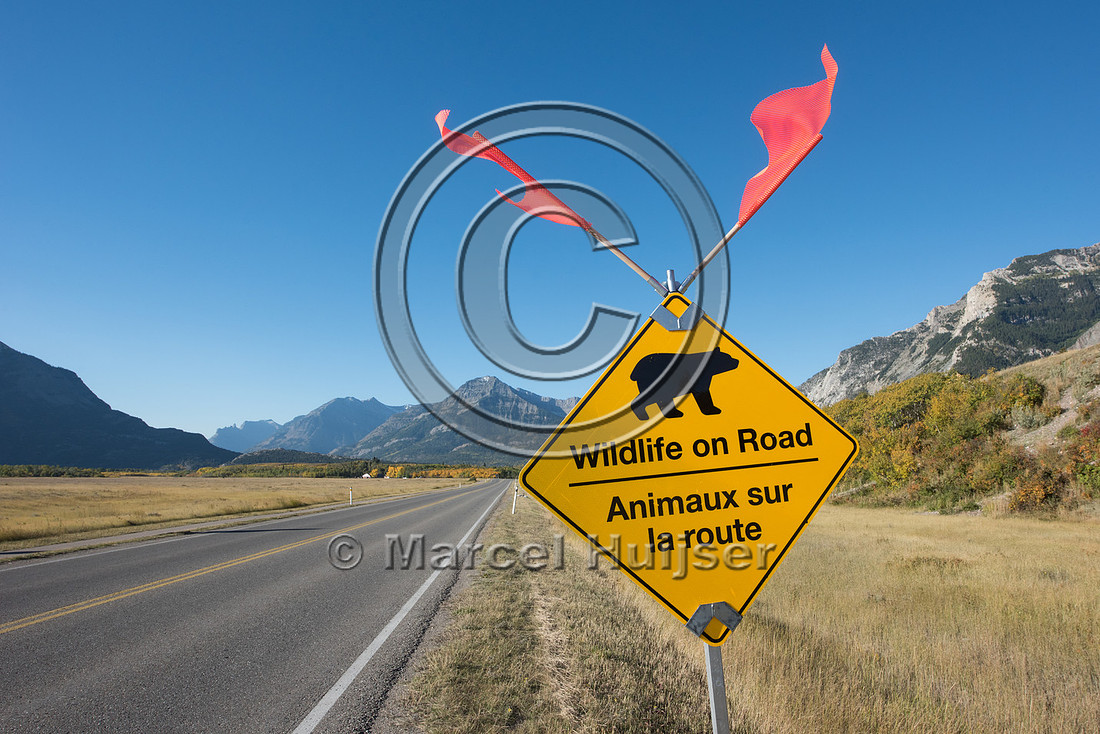


Click here for other images of other wildlife or livestock warning signs.
Click here for other images of animals that were killed by cars.
Click here for other images of animals alive on or near roads.
Like Marcel Huijser Photography on Facebook
All content © 2016 Marcel Huijser
Road ecology blog: Wildlife trail at fence-end (fence end run).
Road ecology blog: Wildlife trail at fence-end (fence end run), US Hwy 95, Bonners Ferry, Idaho, USA. This is an indication that there is a concentration of wildlife crossings at the fence end ("fence-end run"). This can result in a concentration of collisions at or near the fence end. It is important to start and end fences at locations where the probability of fence-end runs is minimized. The following paper describes where to start and end wildlife fences and it summarizes suggestions for fence-end treatments:
Huijser, M.P., E.R. Fairbank, W. Camel-Means, J. Graham, V. Watson, P. Basting & D. Becker. 2016. Effectiveness of short sections of wildlife fencing and crossing structures along highways in reducing wildlife-vehicle collisions and providing safe crossing opportunities for large mammals. Biological Conservation 197: 61-68.


Click here for images of wildlife fencing.
Click here for other images of wildlife guards, cattle guards, electric mats or gates.
Like Marcel Huijser Photography on FacebookAll content © 2016 Marcel Huijser
One of those days
One of those days
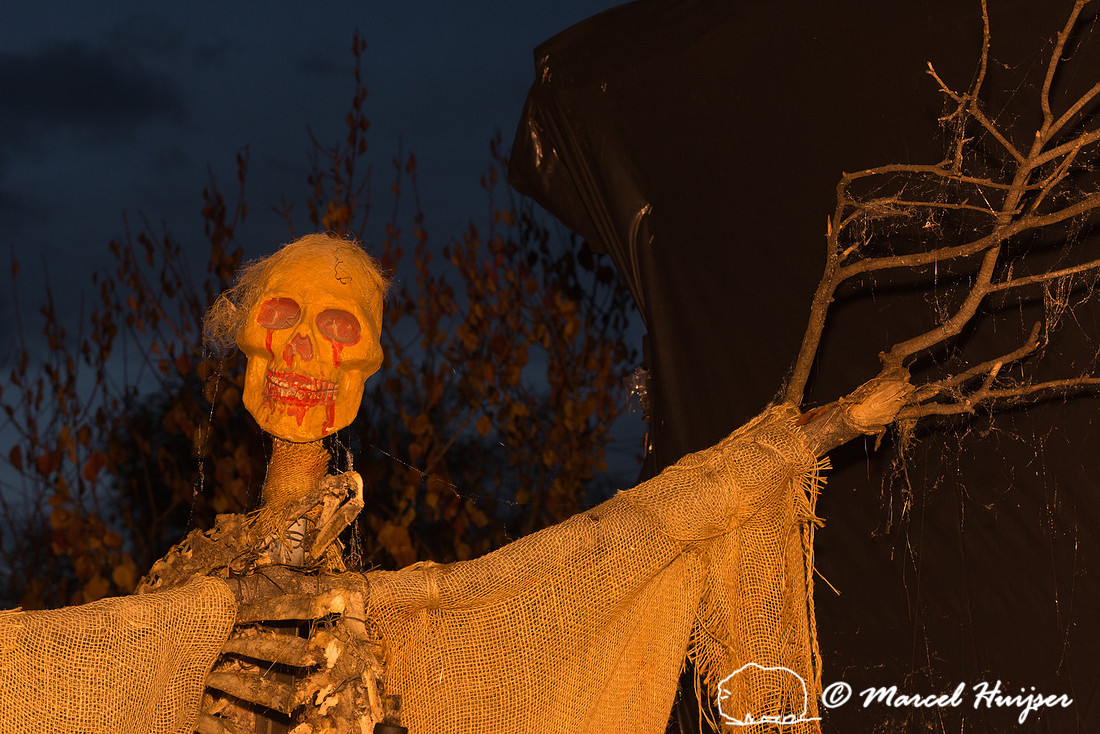
Click here for more Halloween images.
Like Marcel Huijser Photography on Facebook
All content © 2016 Marcel Huijser
Road ecology blog: Anti-erosion plastic netting, US Hwy 95, Bonners Ferry, Idaho, USA
Road ecology blog: Anti-erosion plastic netting, US Hwy 95, Bonners Ferry, Idaho, USA. This material does not decompose fast and can be a death trap for animals (e.g. snakes) for decades or longer. It is much better to use natural materials that decompose quickly.


Click here for more images of erosion and erosion control measures.
Click here for more images of retaining walls.
Like Marcel Huijser Photography on Facebook
All content © 2016 Marcel Huijser
Halloween: Play date at the cemetery
Halloween: Play date at the cemetery
Note: this is not a real cemetery. My friend Daniel "creates" it in his front yard especially for Halloween. It is pretty real looking though!
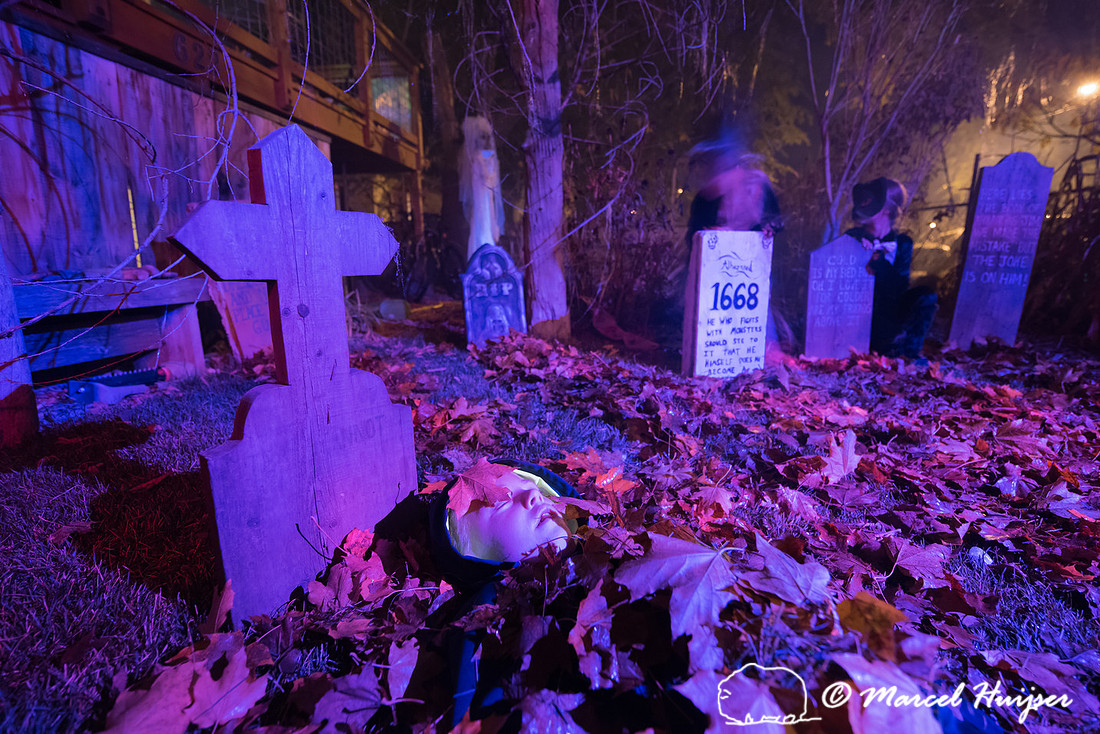
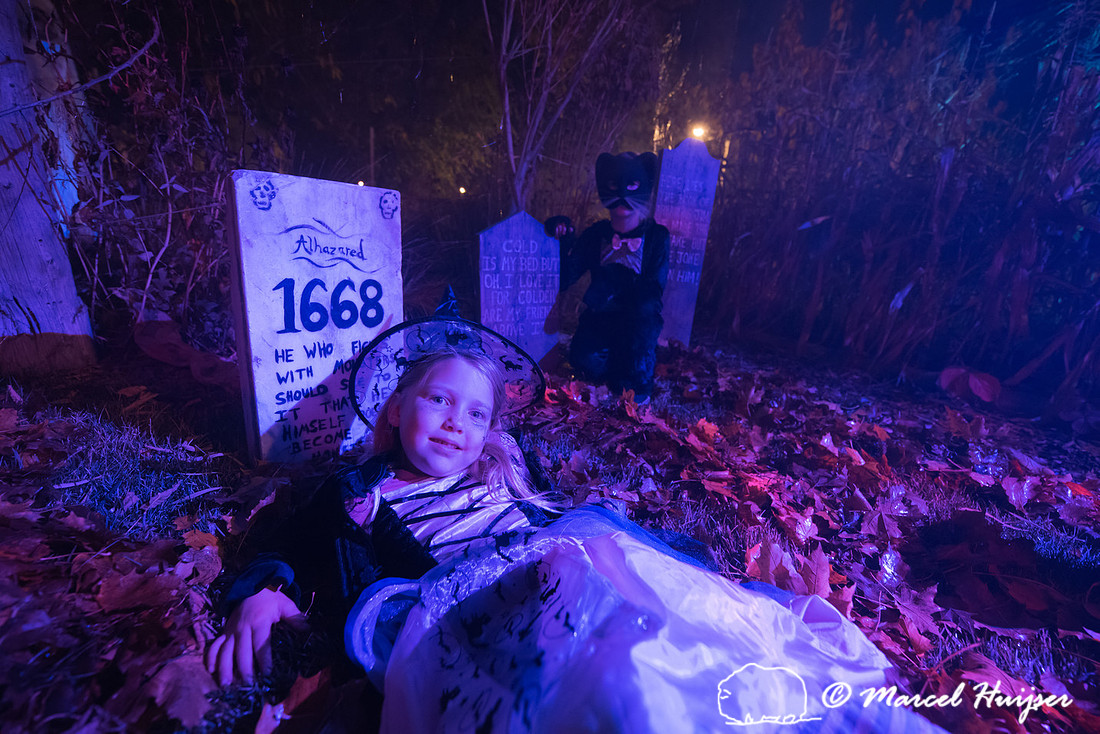
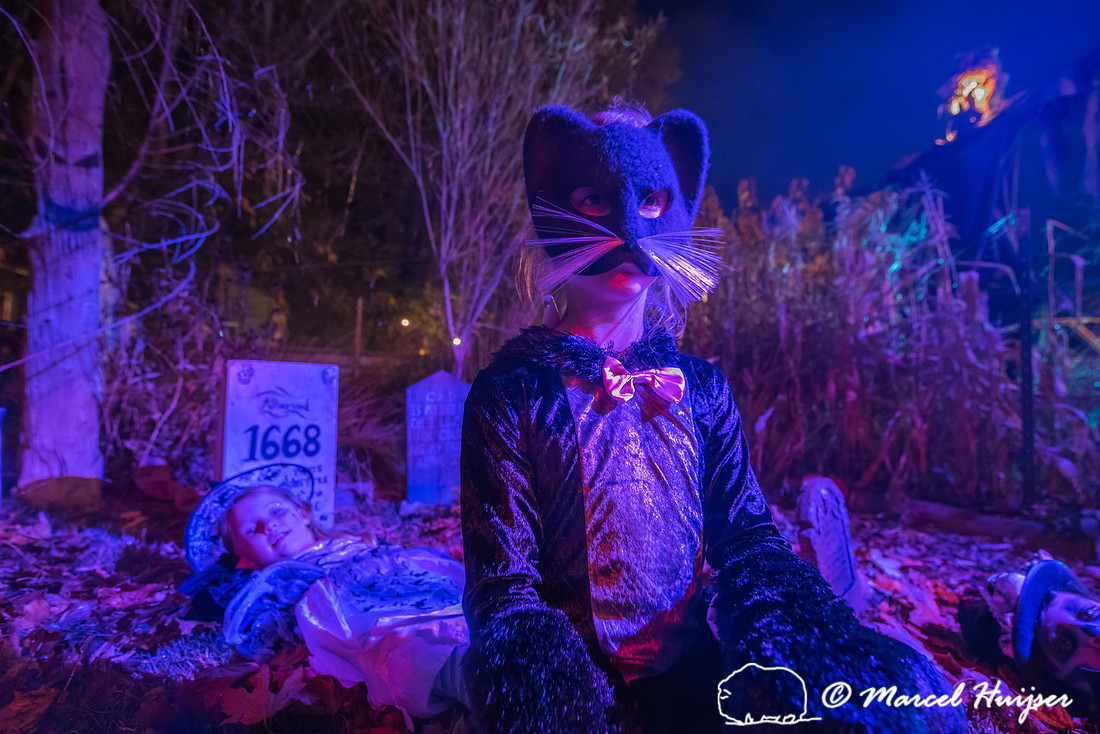
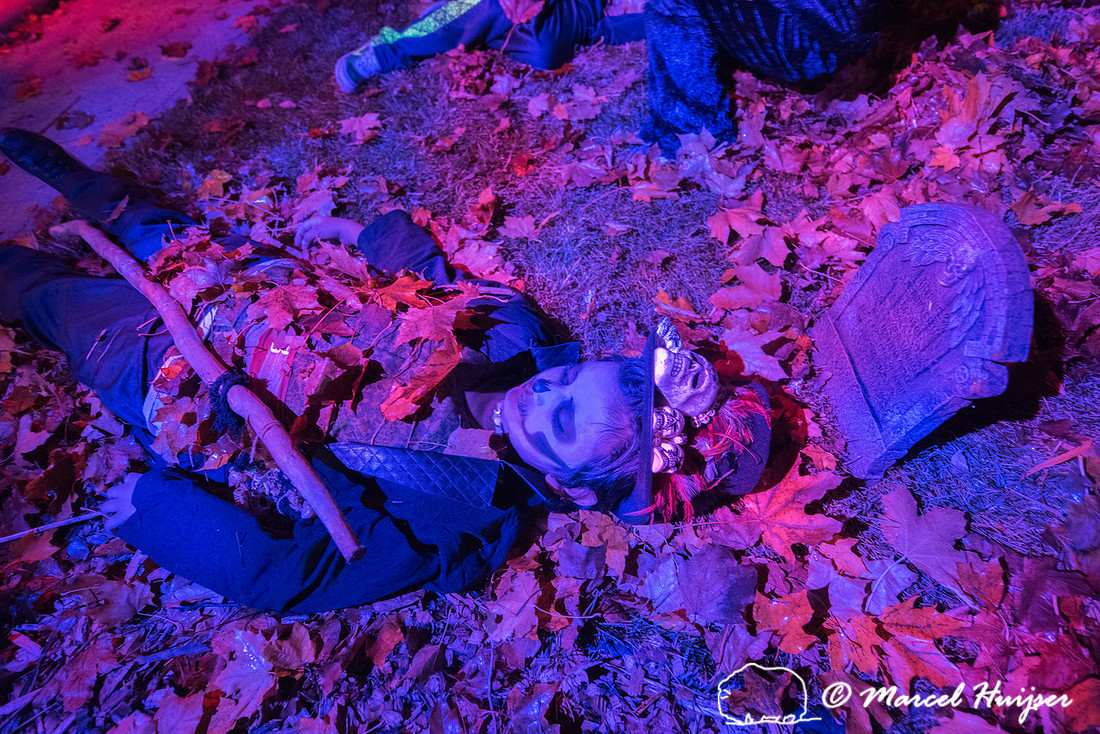
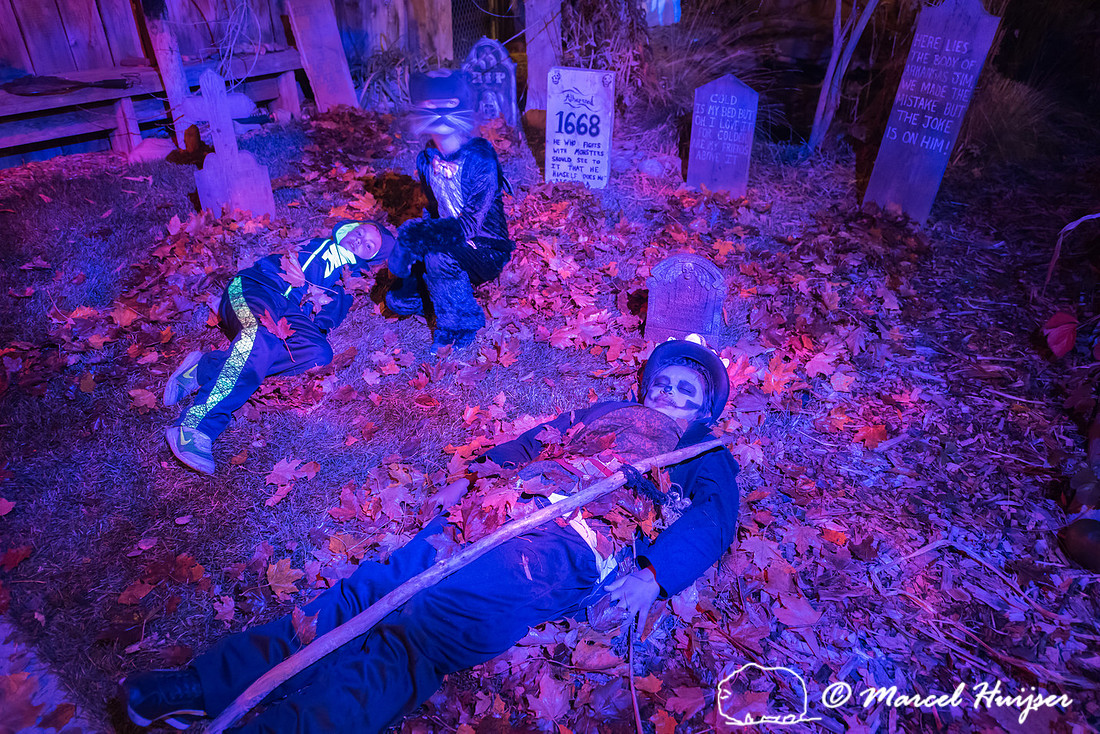
Click here for more Halloween images.
Like Marcel Huijser Photography on Facebook
All content © 2016 Marcel Huijser
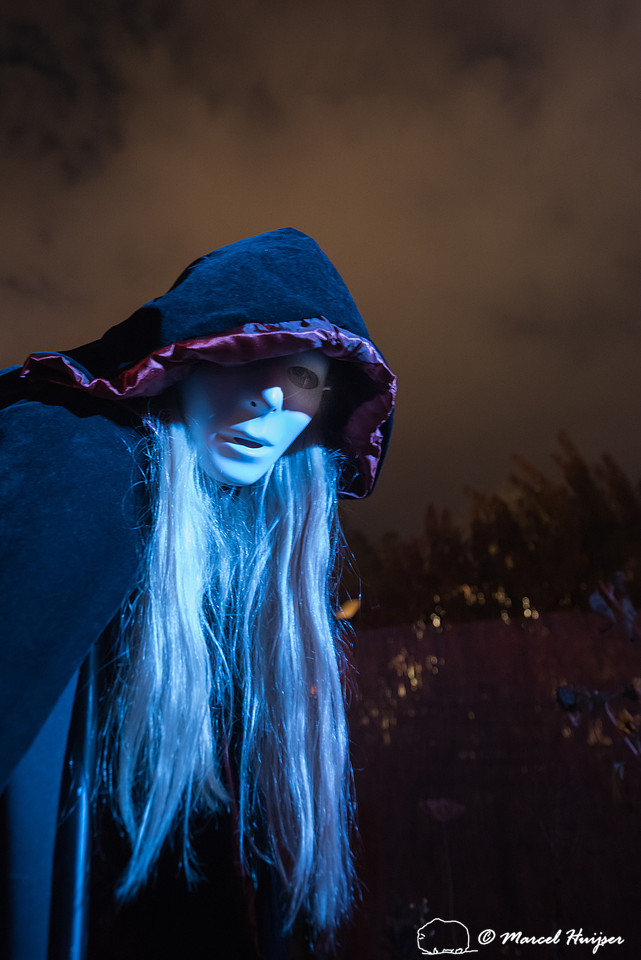
Halloween: scariest costume of the evening
Halloween: scariest costume of the evening
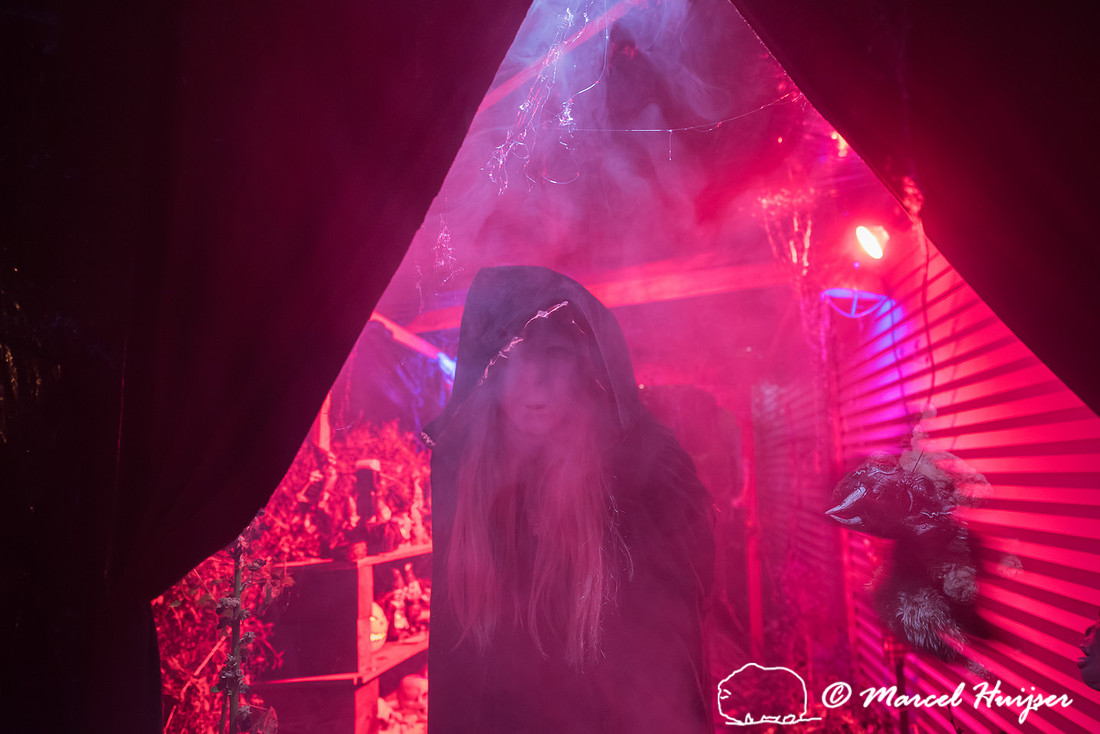
Click here for more Halloween images.
Like Marcel Huijser Photography on Facebook
All content © 2016 Marcel Huijser
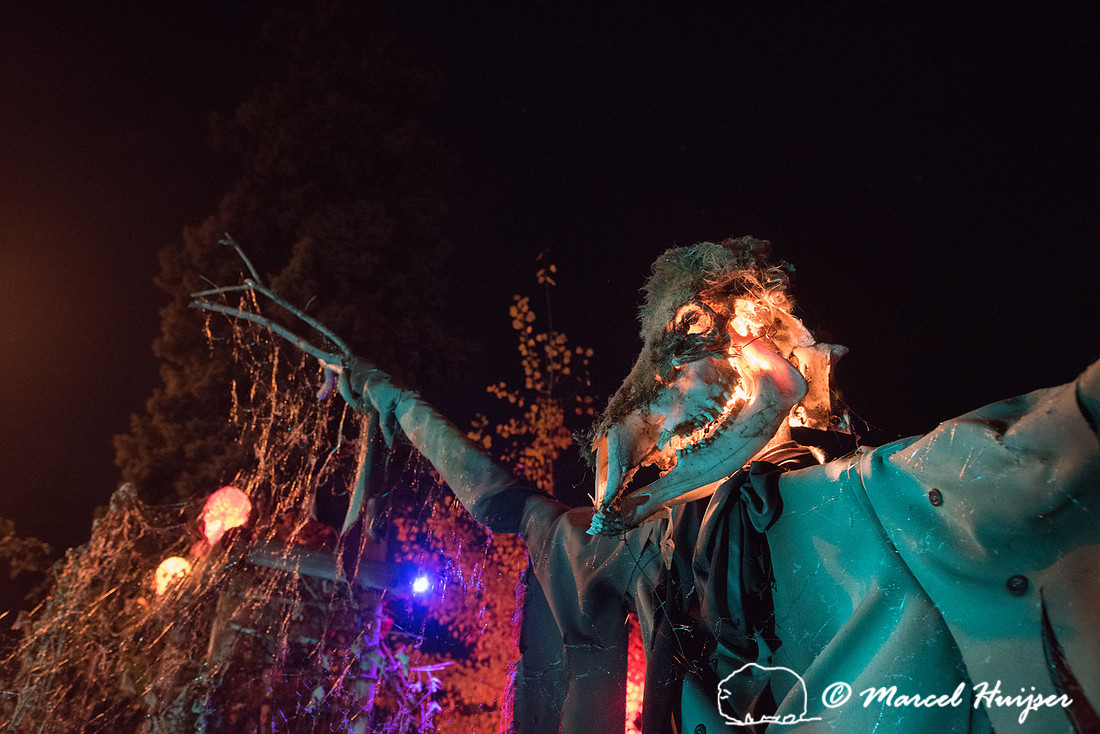
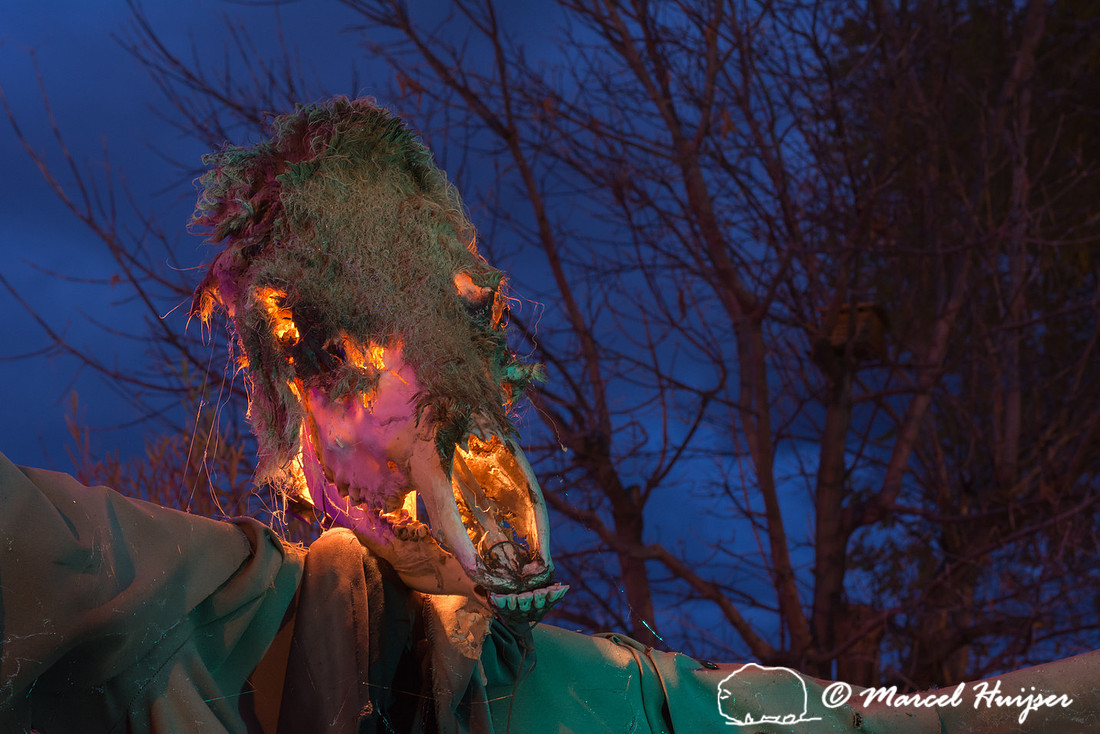
Halloween: elk skull scare crow
Halloween: elk skull scare crow

Click here for more Halloween images.
Like Marcel Huijser Photography on Facebook
All content © 2016 Marcel Huijser
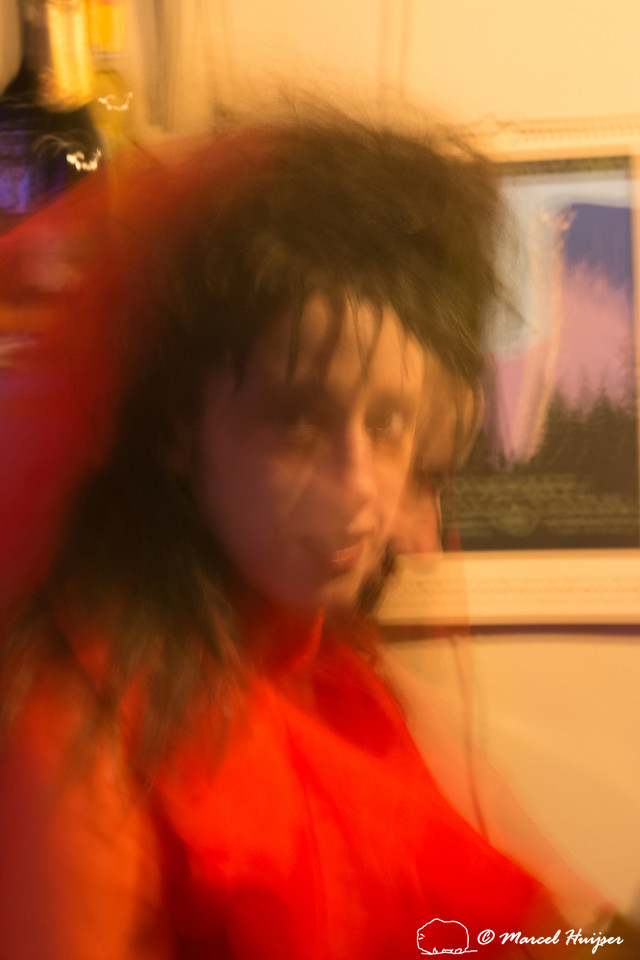
Halloween: Miranda, Red beetle juice.
Halloween: Miranda, Red beetle juice.
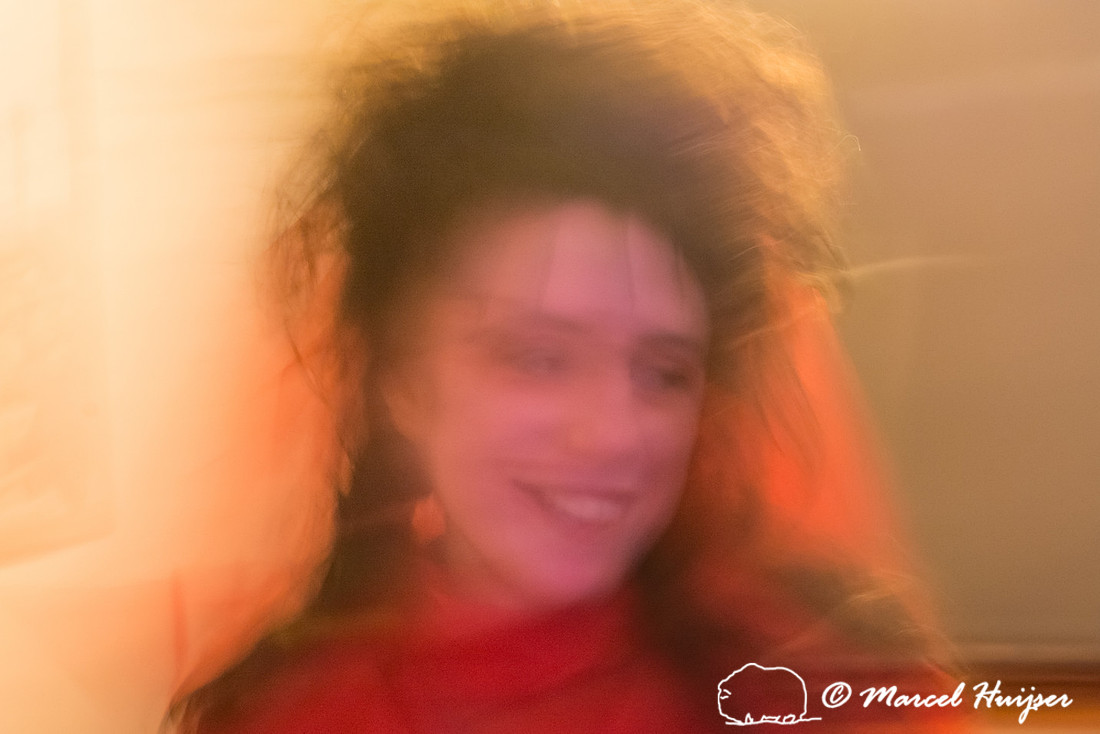
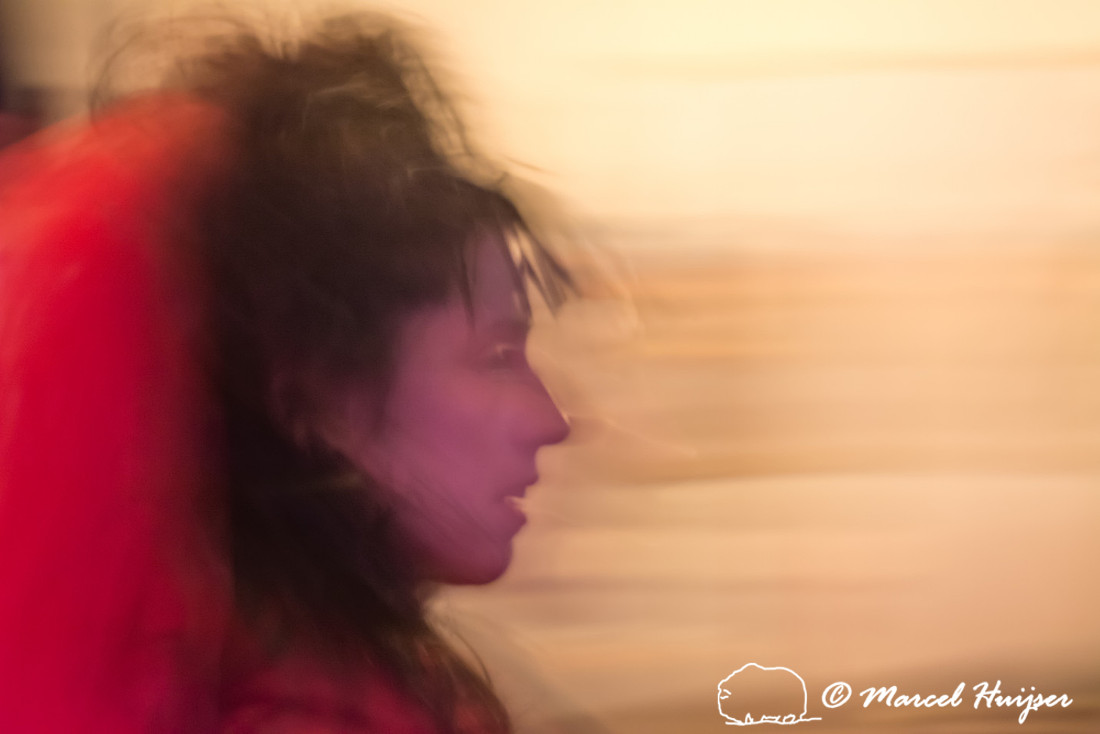
Click here for more Halloween images.
Like Marcel Huijser Photography on Facebook
All content © 2016 Marcel Huijser
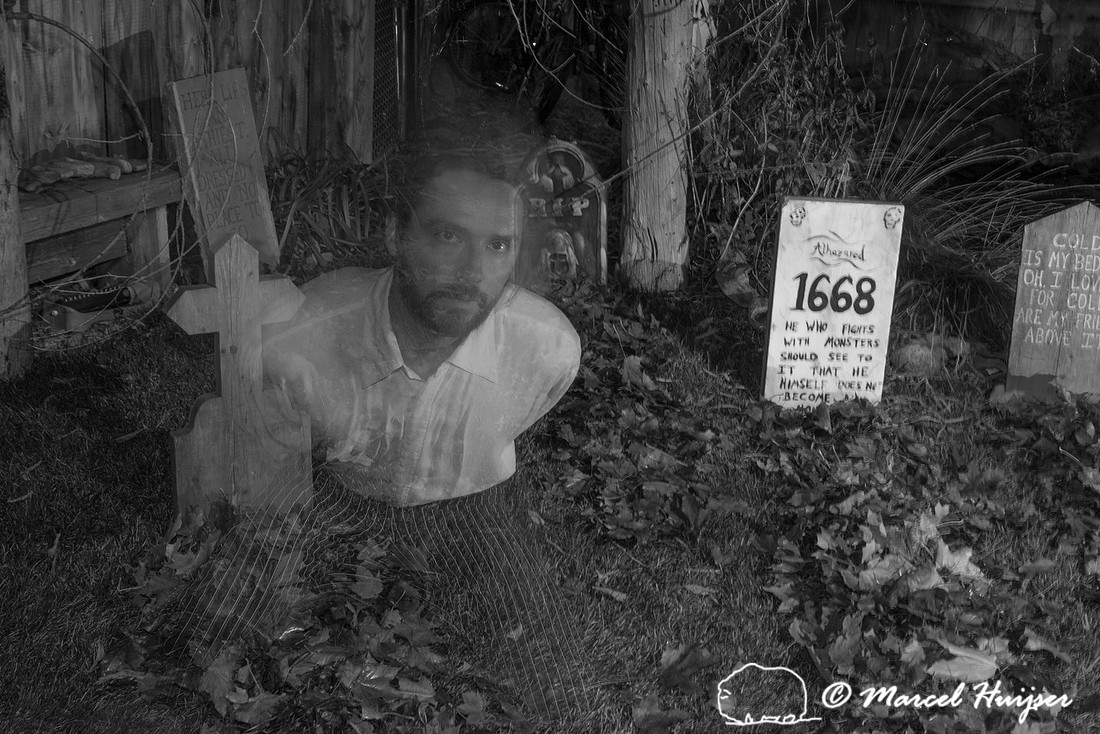
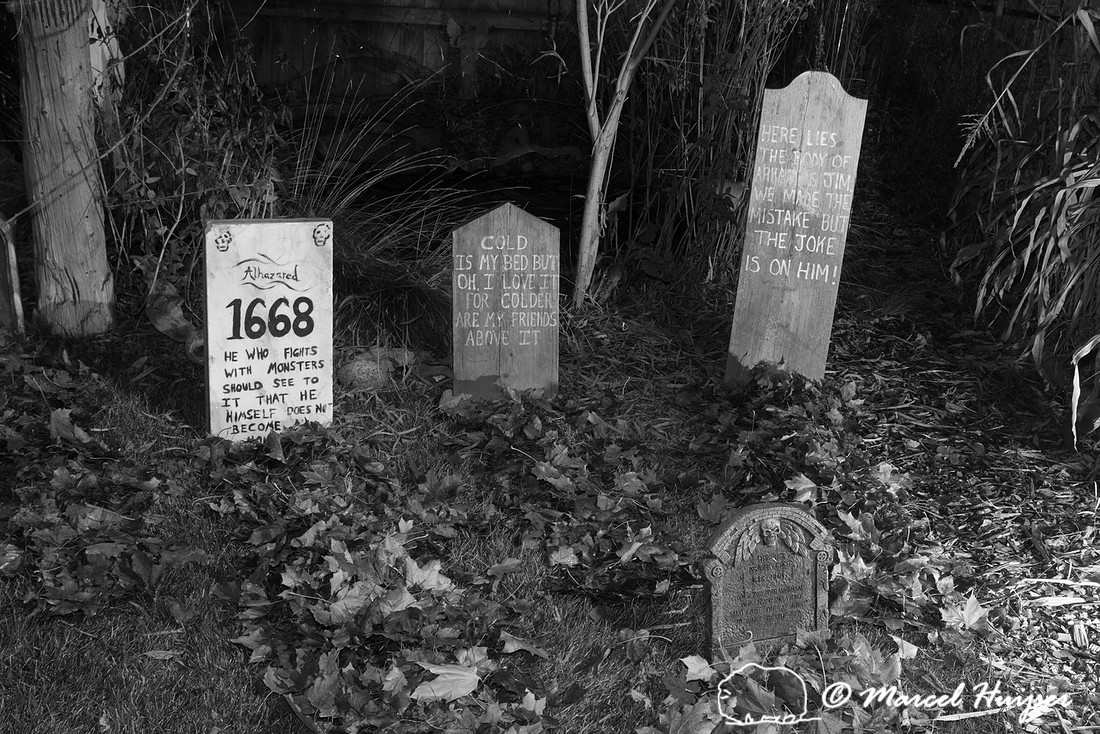
Halloween: Daniel McCue rises from the grave
Halloween: Daniel McCue rises from the grave. Created through double exposure.

Like Marcel Huijser Photography on Facebook
All content © 2016 Marcel Huijser
Road ecology blog: Fernanda Abra photographs roadkilled white-tailed deer, Idaho, USA
Road ecology blog: Fernanda Abra photographs a roadkilled white-tailed deer (Odocoileus virginianus), US Hwy 95, Idaho, USA.
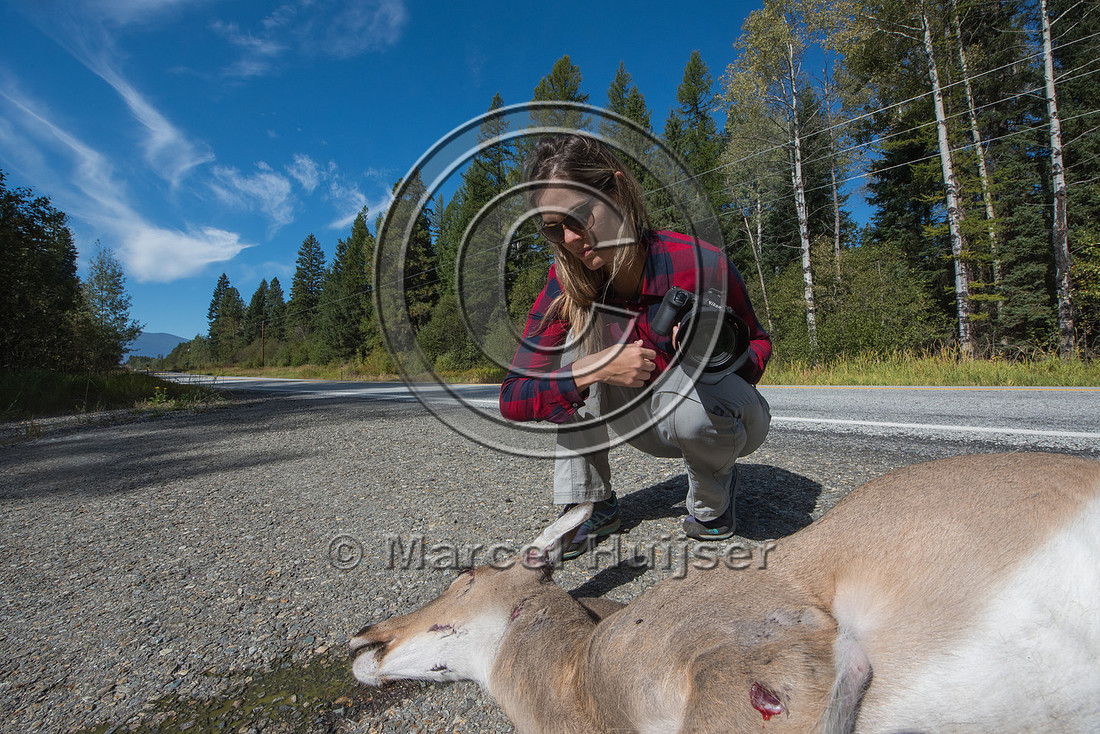
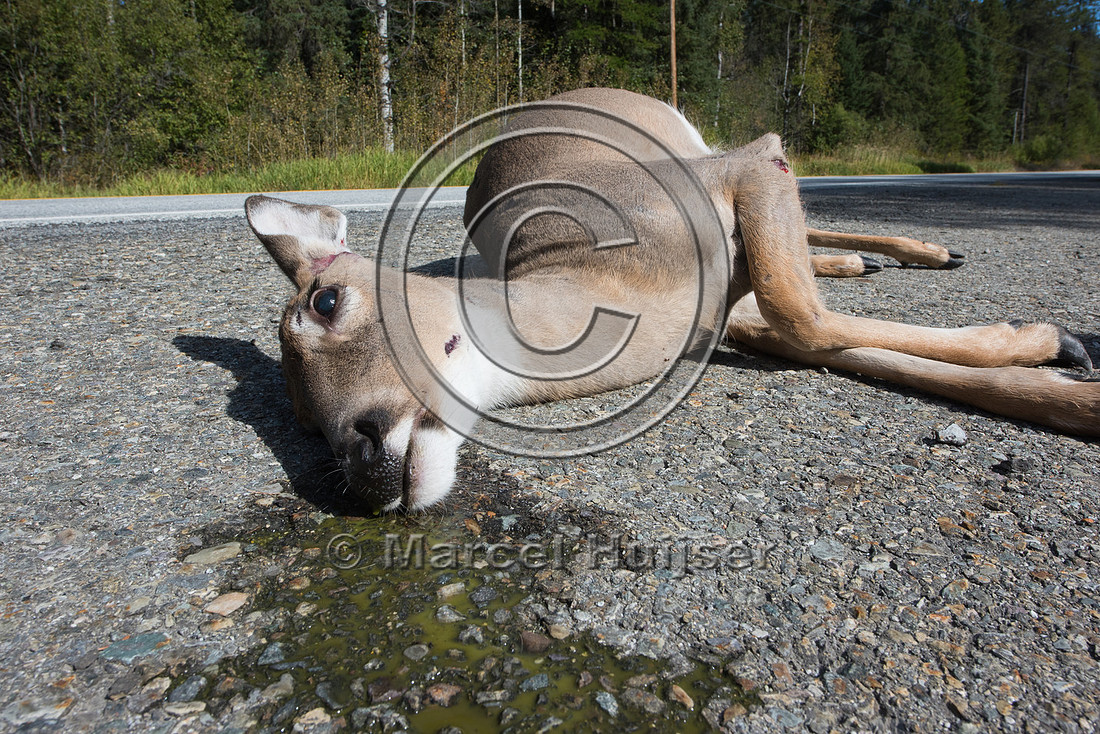
Click here for other images of animals that were killed by cars.
Click here for other images of animals alive on or near roads.
Some large format prints (limited edition) are now for sale at Freshwater Studio & Gallery in Missoula, Montana.
Like Marcel Huijser Photography on Facebook
All content © 2016 Marcel Huijser
Road ecology blog: Mitigation for bighorn sheep, near Thompson Falls, Montana, USA
Road ecology blog: Mitigation measures for bighorn sheep, near Thompson Falls, Montana, USA. This section of Hwy 200 needed to be reconstructed and mitigation measures to reduce collisions with bighorn sheep were made an integral component of the project. Advise on the types of mitigation measures and their configuration are detailed in this report:
Huijser, M.P. & A.P. Clevenger. 2013. Review of proposed bighorn sheep mitigation measures along montana Hwy 200, East of Thompsonfalls, Montana. Western Transportation Institute, College of Engineering, Montana State University, P.O. Box 174250. Bozeman, MT 59717-4250, USA.
Images below: the reconstructed bridge across the Thompson river. This bridge is also suitable for bighorn sheep (Ovis canadensis) to pass under.
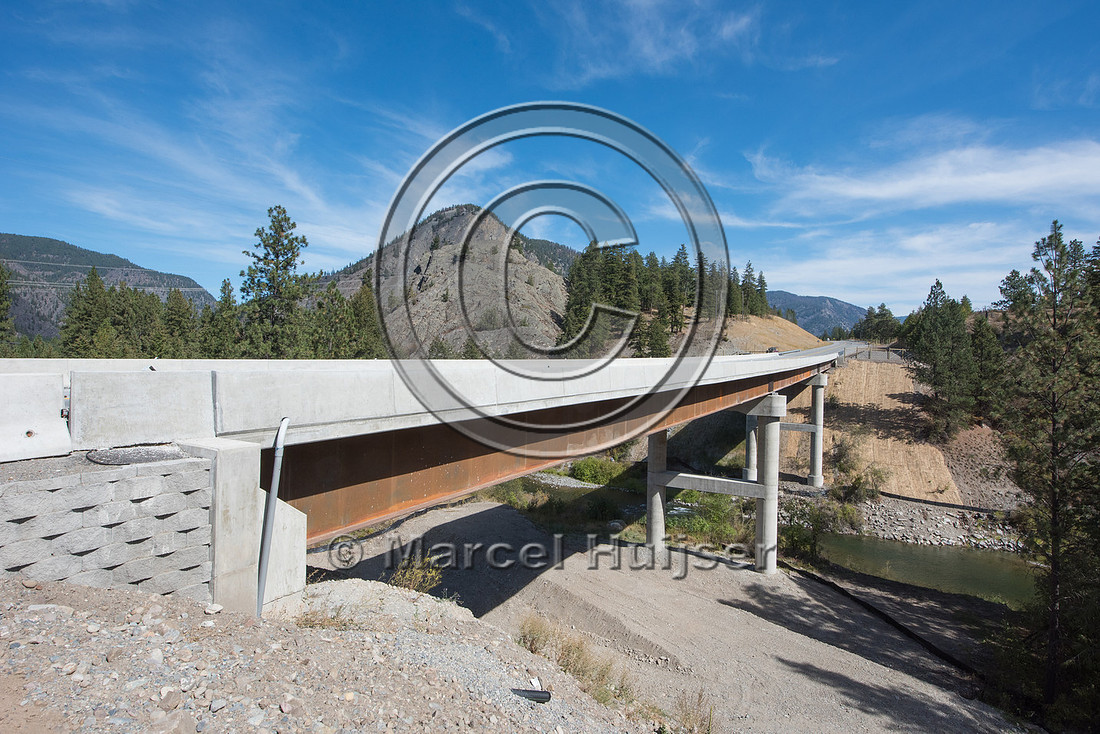
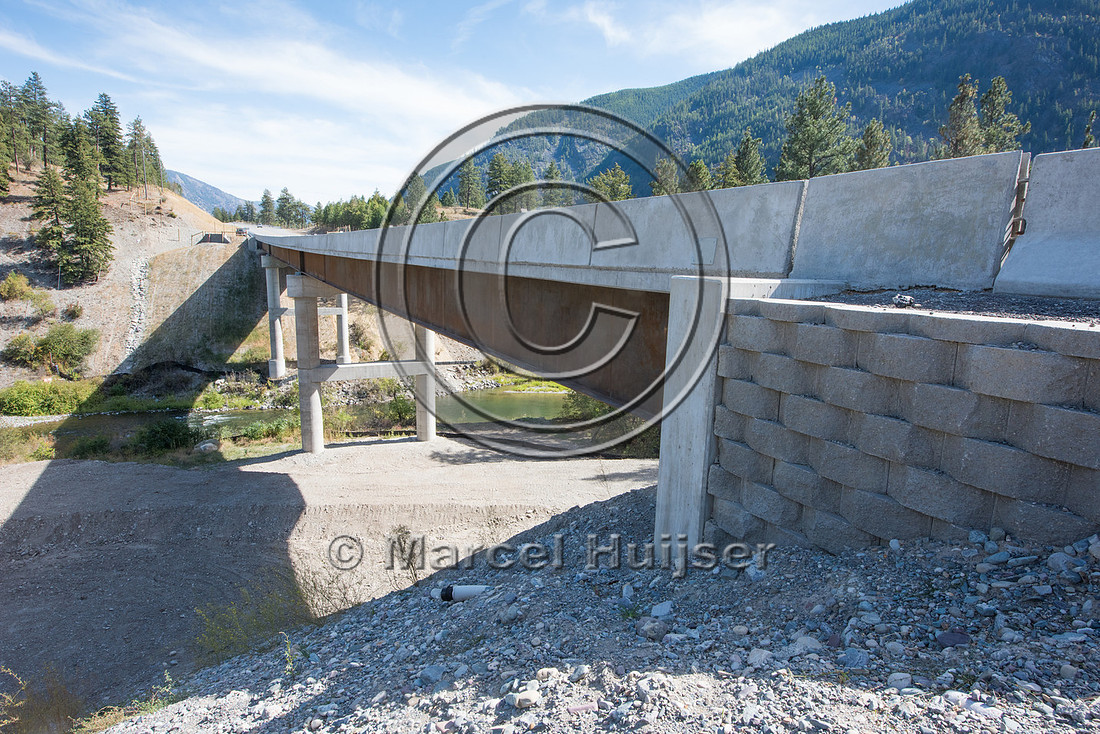
Image below: The wildlife fencing east of the bridge. The first phase of the project included the reconstruction of the bridge and a relatively short road section just east of the bridge. In a later phase a second underpass will be constructed, specifically for bighorn sheep and other wildlife. Erecting a 2.4 (8 ft) fence without fence-end treatments to discourage animals from walking into the fenced road corridor would have resulted in a dangerous situation for both drivers and wildlife. On the other hand, the wildlife fence needed to be constructed as part of the first phase because of budget allocation and project delineation. Therefore the tall fence posts (2.4 m (8ft)) with low right-of-way fence (about 1.2 m (4 ft)) were installed in phase 1 (see image below). Once the wildlife underpass has been constructed further to the east, and once the wildlife fences are extended further to the east (with potential fence-end treatment), the height of the wildlife fence will be increased to 2.4 m (8 ft). This will be as simple as attaching another roll of mesh wire fence to the existing tall posts. See the report referenced above for more details.
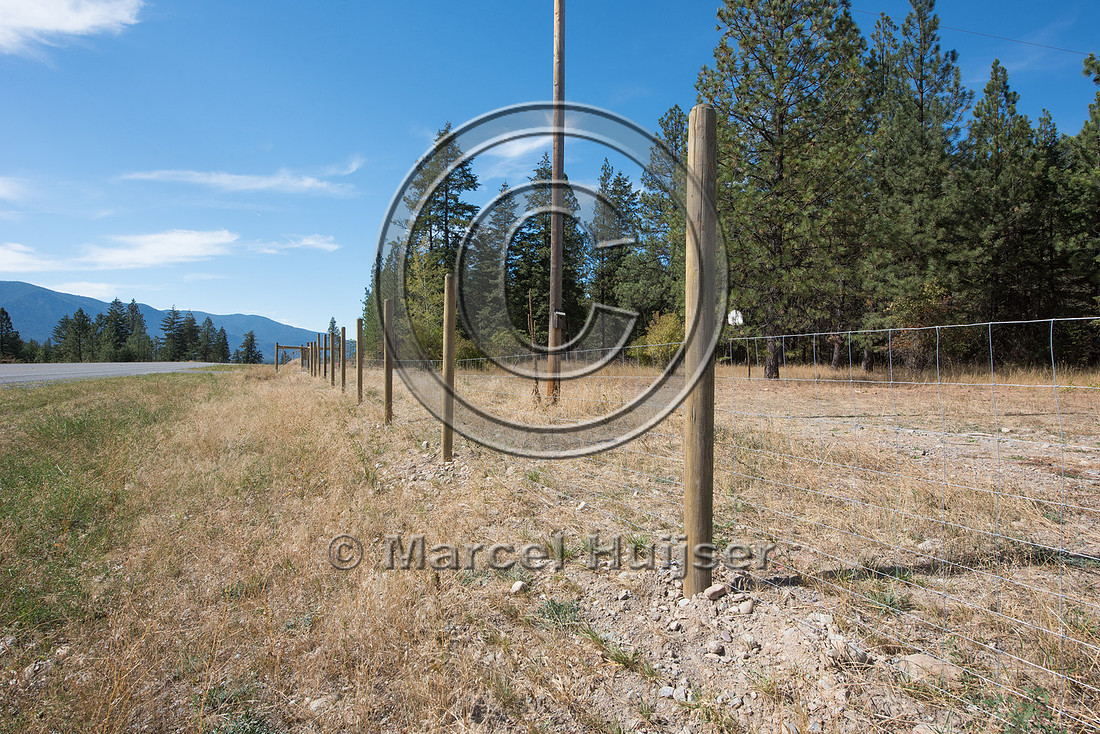
Image below: There are a number of drive ways and access roads in the area. Wildlife guards (similar to cattle guards) and gates were provided.
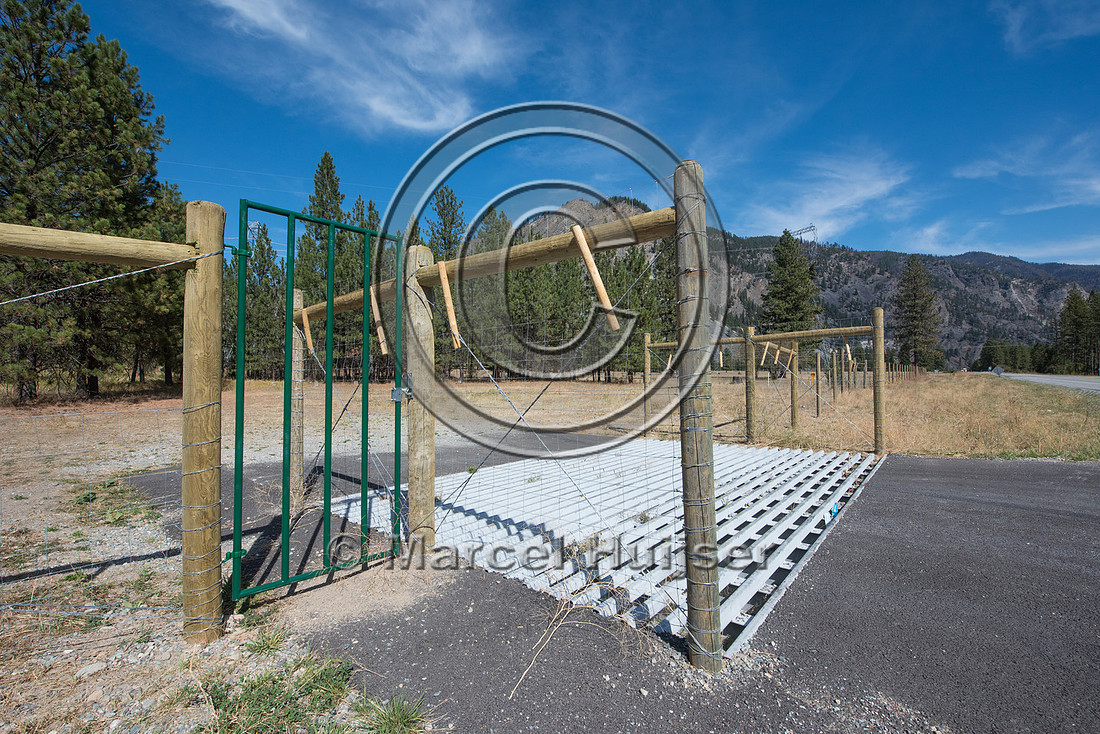
Image below: It is important that the wildlife fence has a tight connection to the wildlife guard. In the image below we see that there is too much space between the fence and the wildlife guard. This may allow animals to walk in between the fence and the metal bars and access the fenced road corridor. It is advisable to retrofit this situation.
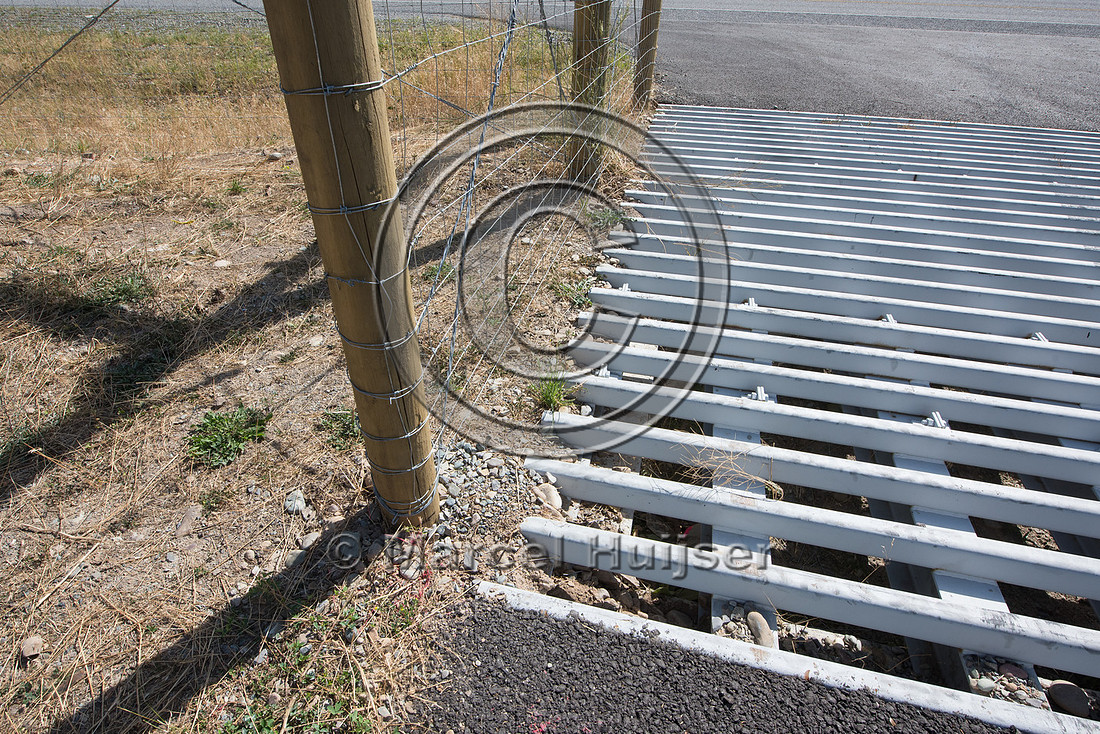
Image below: this is a better situation; a tight connection of the fence to the metal bars of the wildlife guard.
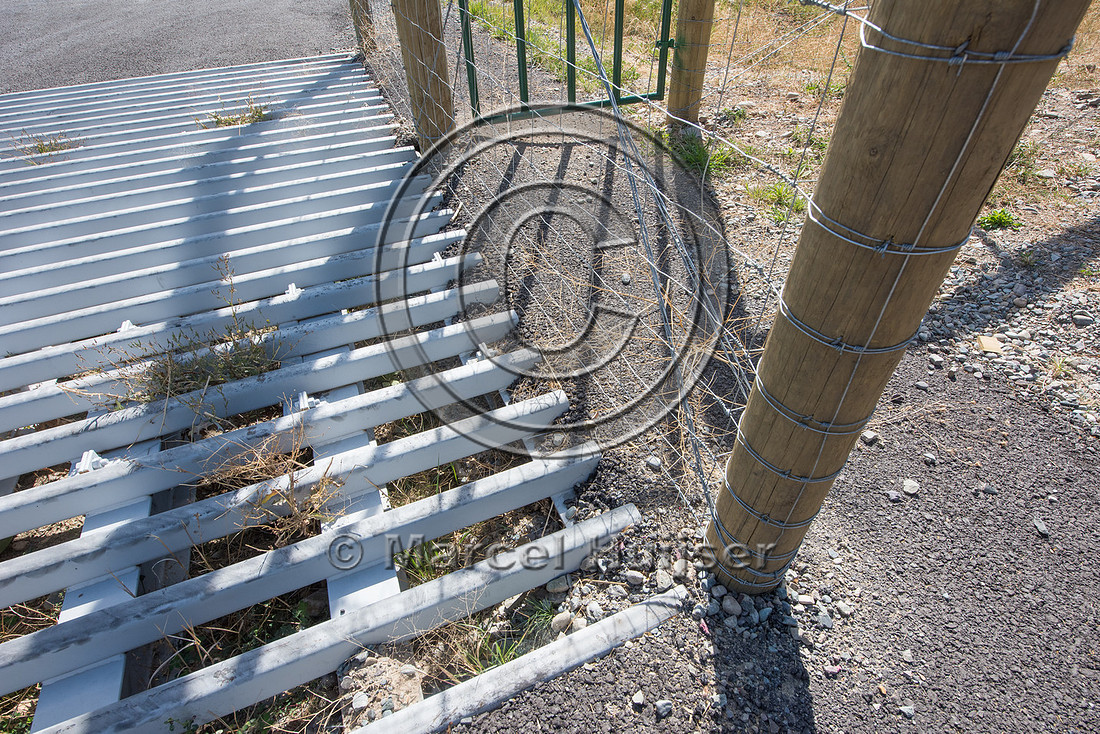
Images below: Wildlife jump-outs or escape ramps allow the animals to escape from the fenced road corridor. The earthen ramps allow the animals to walk up to the height of the fence and then jump down to the safe side of the fence. Wildlife jump-outs should be low enough to allow animals to jump down, but they should be high enough so that animals will not jump up into the fenced road corridor.
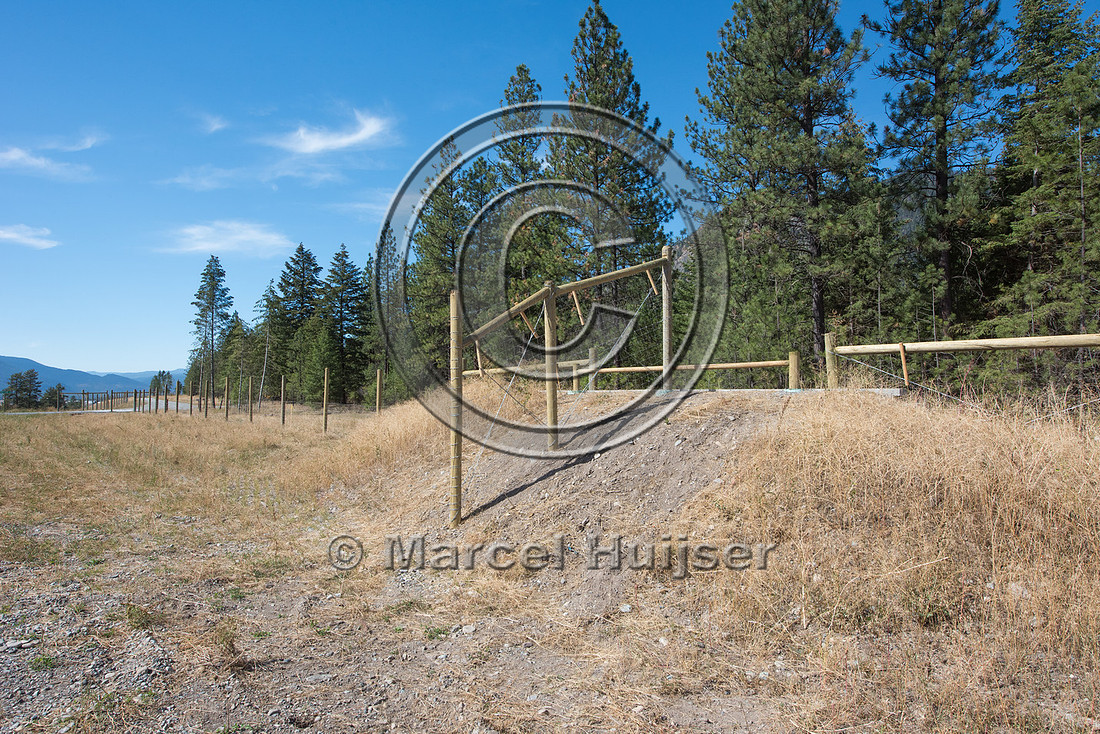
Image below: The purpose of the bar (horizontal wooden post) is to increase the height of the jump-out for animals that want to jump up (undesirable) into the fenced road corridor; they would not only have to clear the retaining wall but also the wooden bar. On the other hand, animals that want to jump down (desirable) can simply step over the wooden bar before jumping down. Thus the wooden bar is aimed at influencing the ratio of animals jumping up vs. down.
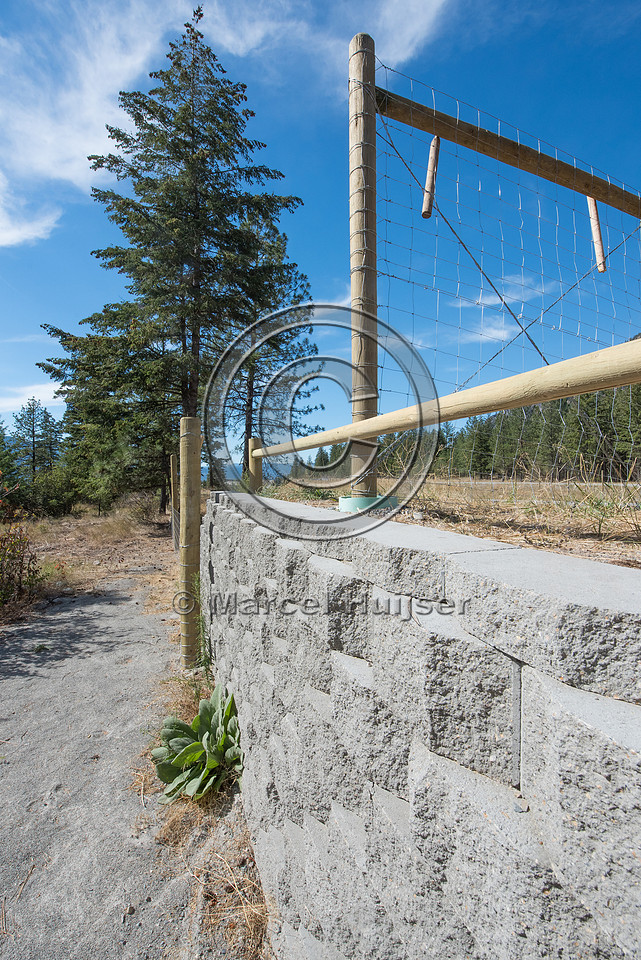
Image below: The retaining wall of the jump-outs has "ledges". This may allow certain animal species to climb up the wall (undesirable). Bighorn sheep are adept at jumping and climbing steep rocky slopes. Thus this type of retaining wall may not be the best for bighorn sheep; a smooth retaining wall would have been preferable.
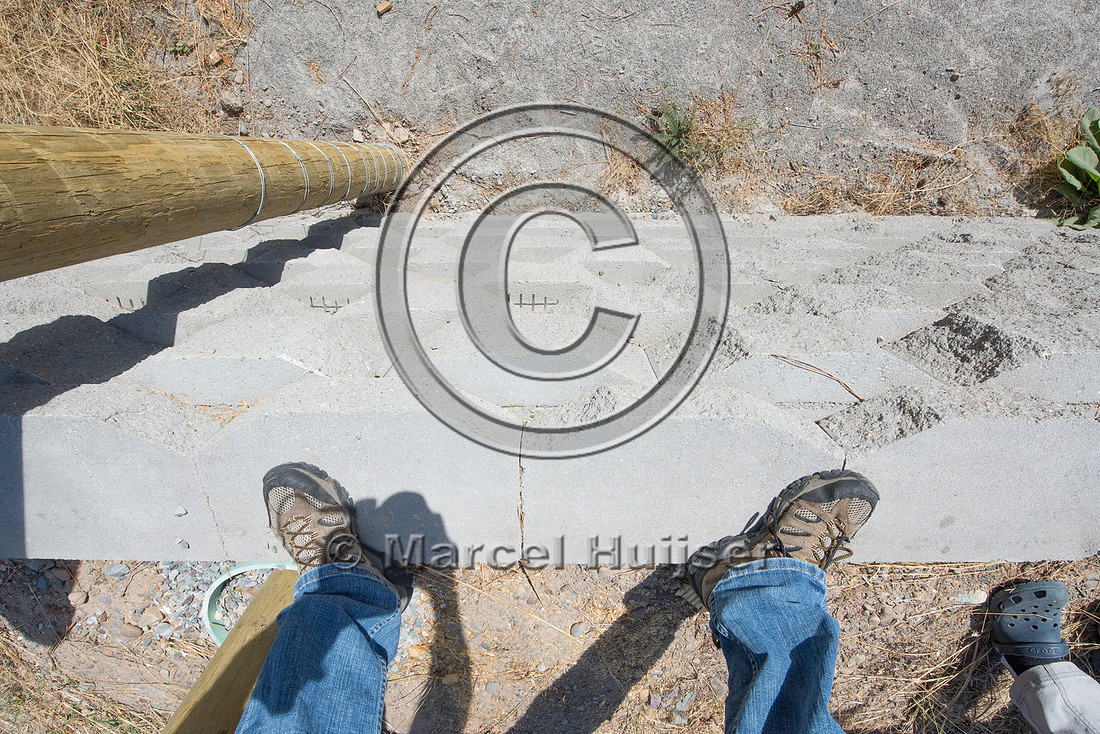
Click here for images of wildlife fencing.
Click here for more images of wildlife jump-outs or escape ramps.
Click here for other images of wildlife guards, cattle guards, electric mats or gates.
Click here for images of wildlife underpasses.
Click here for more images of long bridges or viaducts.
Click here for images of multifunctional underpasses.
Like Marcel Huijser Photography on Facebook
All content © 2016 Marcel Huijser

Road ecology blog: Animal detection system, along US Hwy 95, Bonners Ferry, Idaho, USA
Road ecology blog:
Image below: Animal detection system, along US Hwy 95, Bonners Ferry, Idaho, USA

Image below: Doppler radar and FLIR thermal camera associated with animal detection system, along US Hwy 95, Bonners Ferry, Idaho, USA

Click here for other images of animal detection systems.
Like Marcel Huijser Photography on FacebookAll content © 2016 Marcel Huijser
Rocky Mountain wildlife: Bighorn sheep (Ovis canadensis), Crowsnest Pass, Alberta, Canada
Rocky Mountain wildlife: Bighorn sheep (Ovis canadensis), Crowsnest Pass, Alberta, Canada.

Click here for other images of bighorn sheep.
Like Marcel Huijser Photography on Facebook
All content © 2016 Marcel Huijser
Road ecology blog: Animal detection system and underpass, Idaho, USA
Road ecology blog: Animal detection system, along frontage road of US Hwy 95, Chilco, Idaho, USA. This system is manufactured by Sloan Security Group in Boise Idaho. It uses doppler radar to detect large animals on a frontage road along US Hwy 95. The system detects wildlife that approach or leave a wildlife underpass under US Hwy 95 (the main highway, see images further down). Animals that use the underpass still have to cross the frontage road. This is where the system comes in and warns drivers of large animals on or near the frontage road right outside the wildlife underpass.

Image below: the wildlife underpass is just to the left of the red truck.


Image below: The panel is the doppler radar. The FLIR camera is a thermal camera that is used to verify the reliability of the system.

Image below: Cell phone signal booster for remote control and data collection.
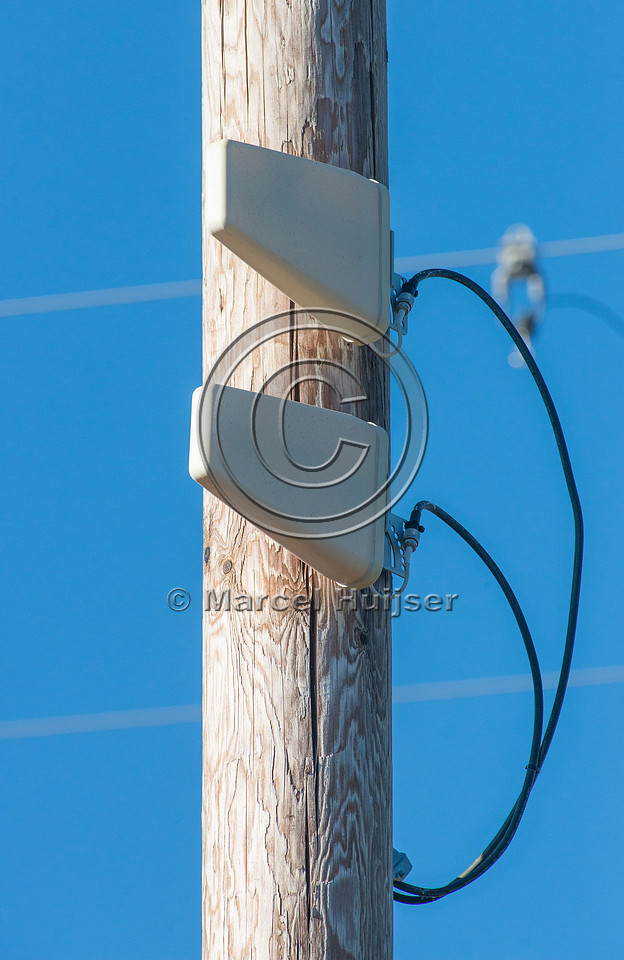
Image below: Animals that use the wildlife underpass still have to navigate the frontage road. That is where the animal detection system is installed.
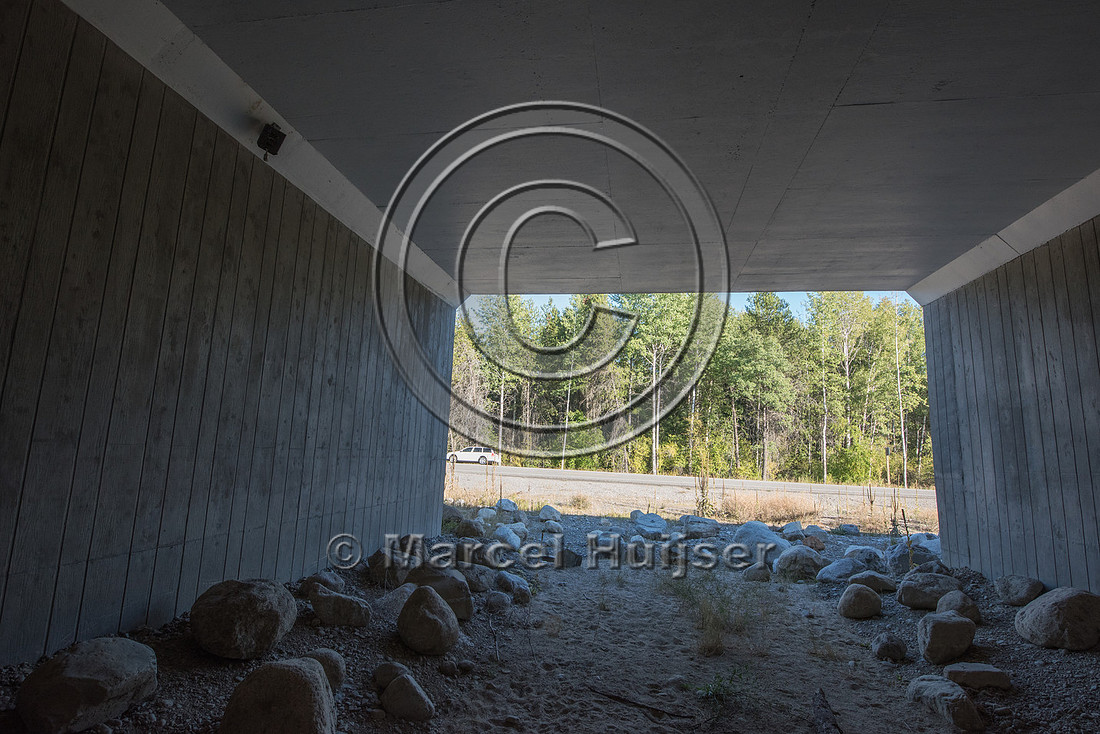
Image below: Boulders block access to unauthorized vehicles at wildlife underpass, US Hwy 95, Chilco, Idaho, USA
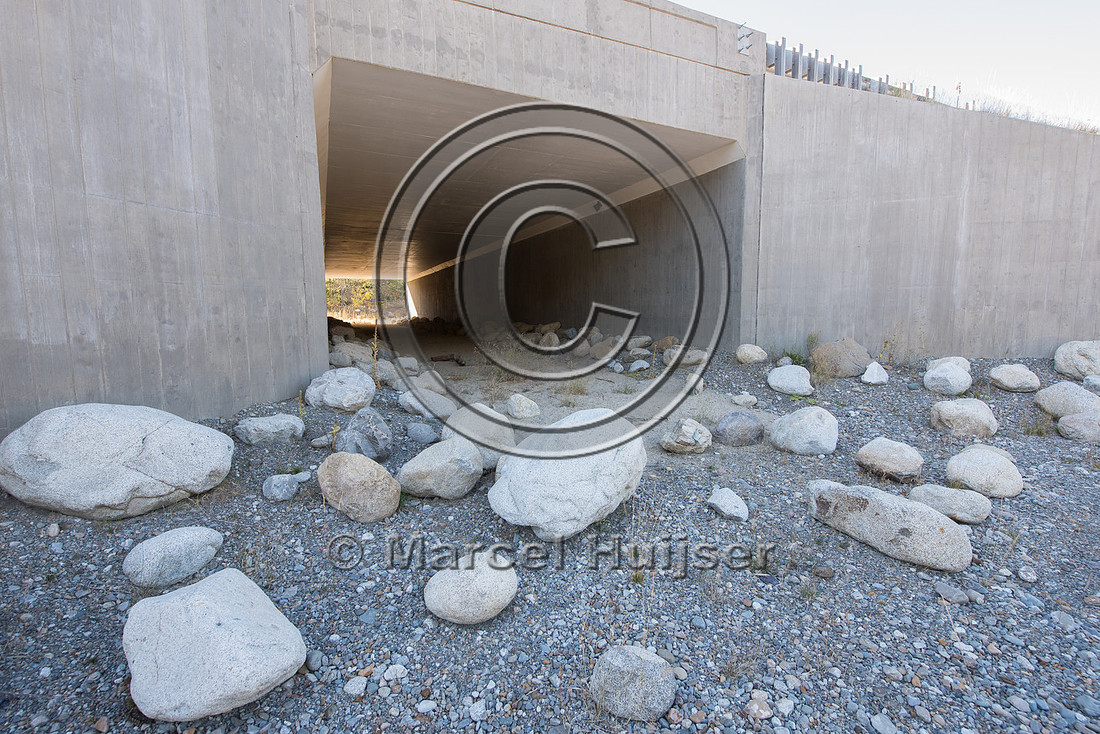
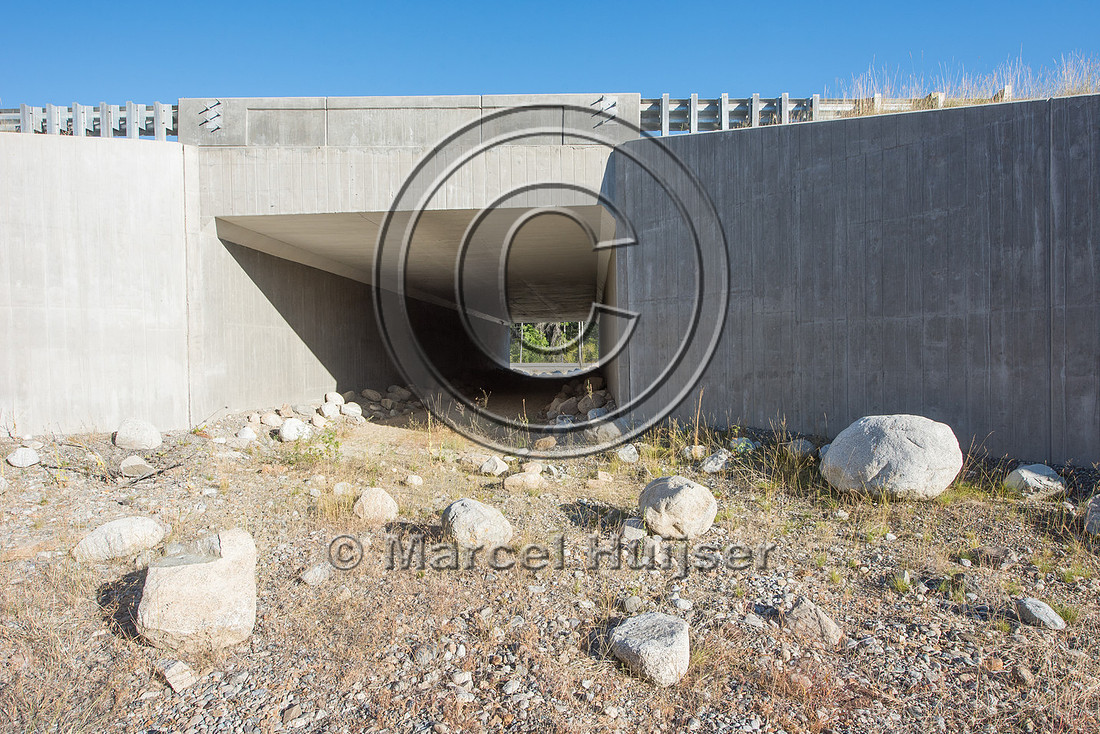
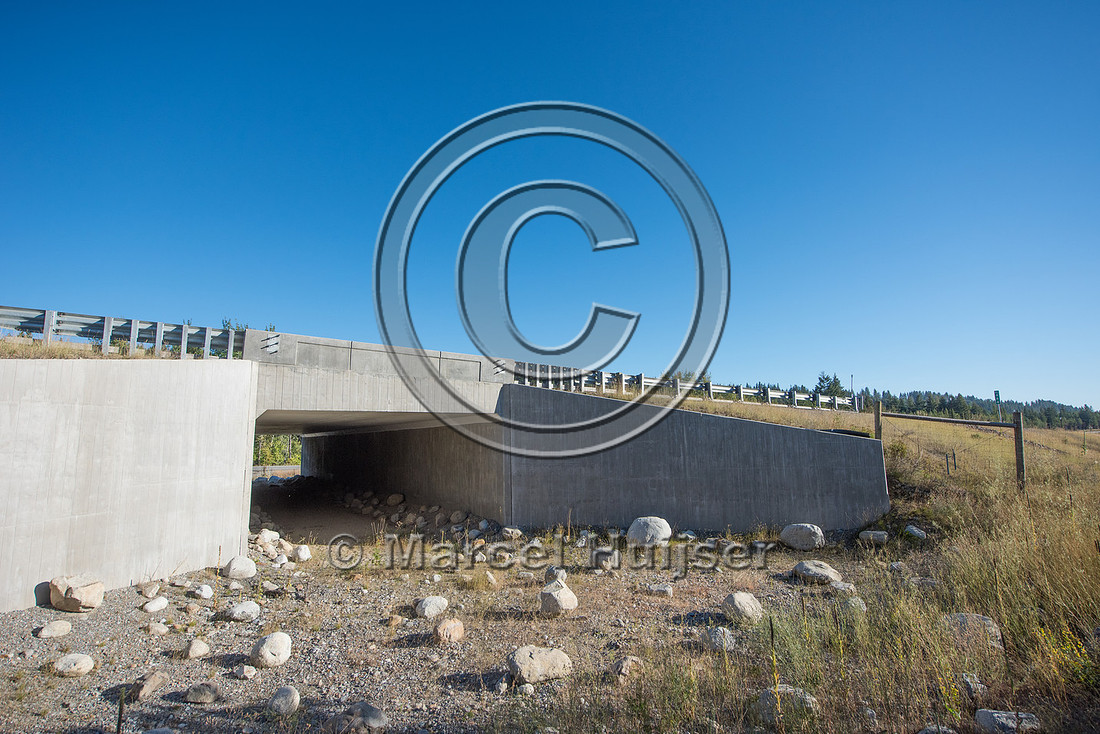
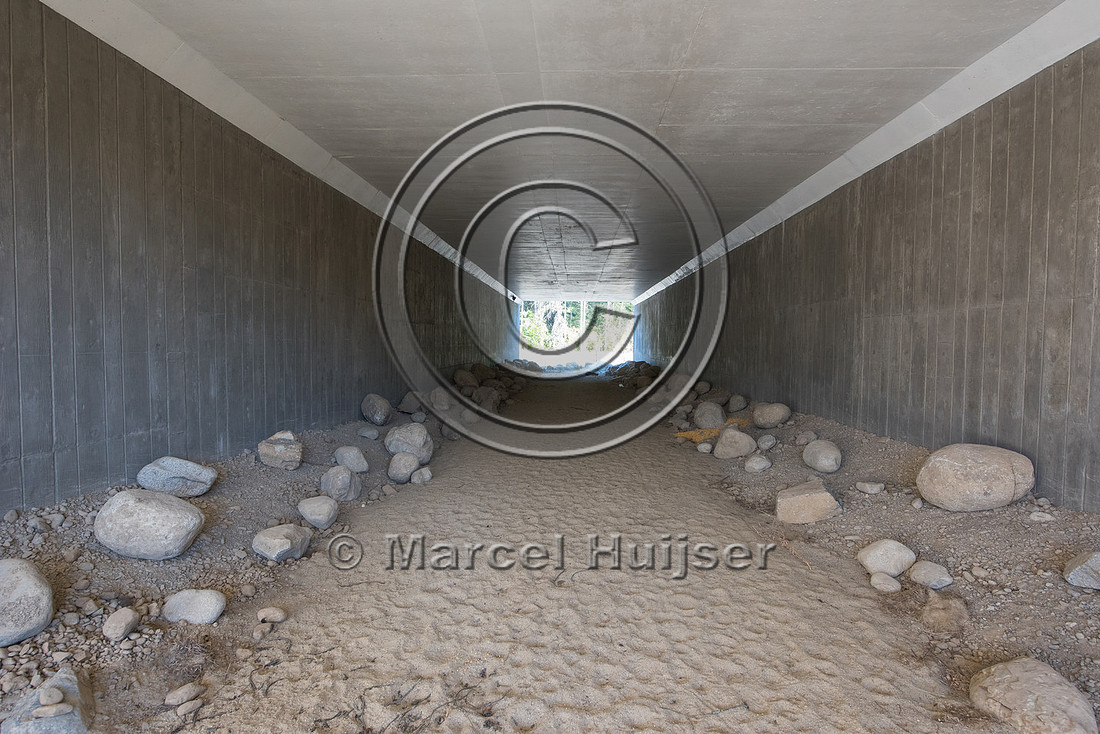
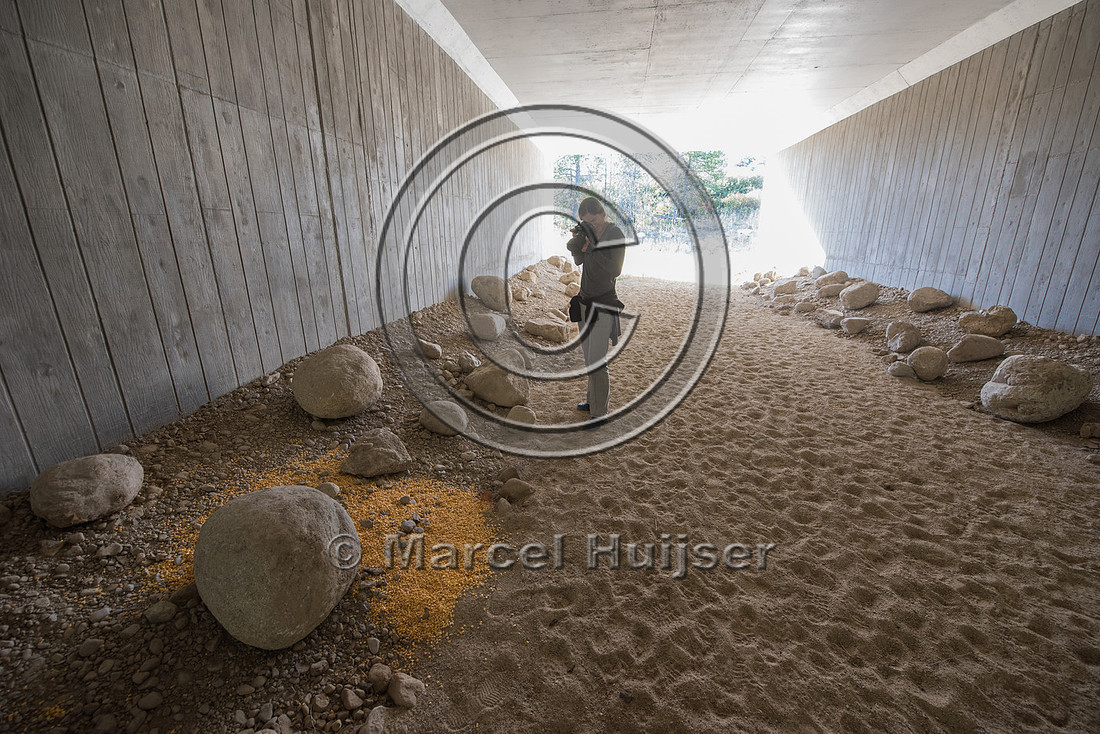
Images below:boulders and rocks inside the underpass provide cover to small animal species. Note that there is corn inside the underpass, apparently to lure animals into the underpass. Not sure if this is legal or illegal feeding.
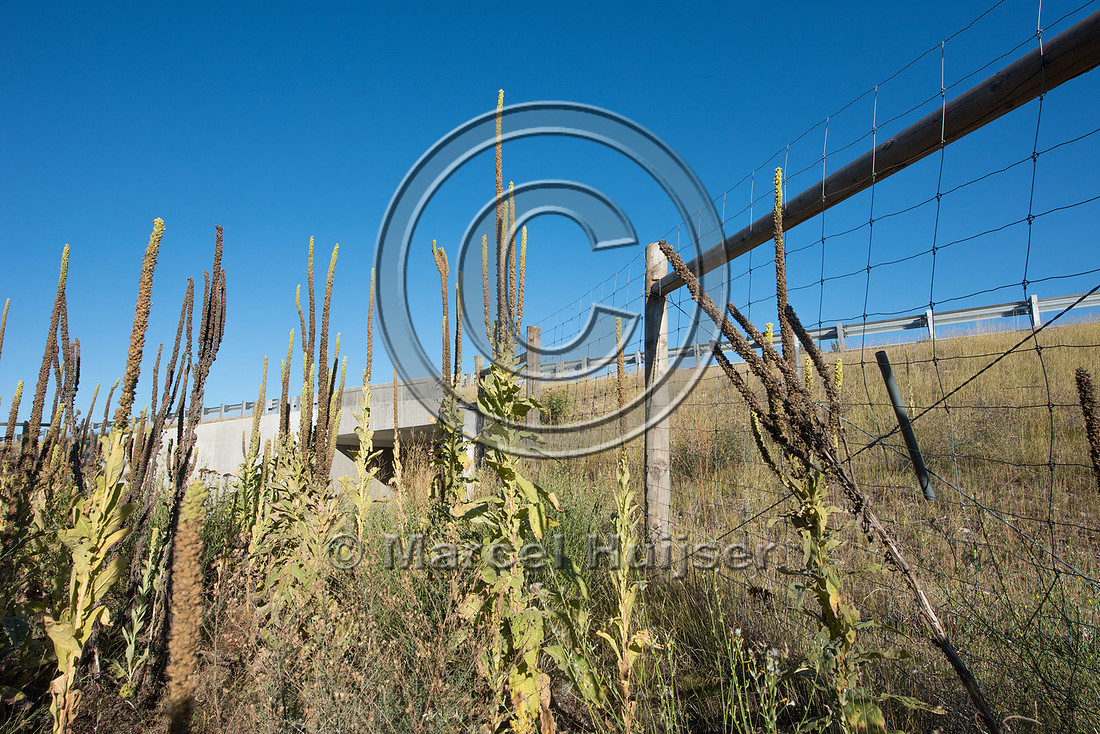
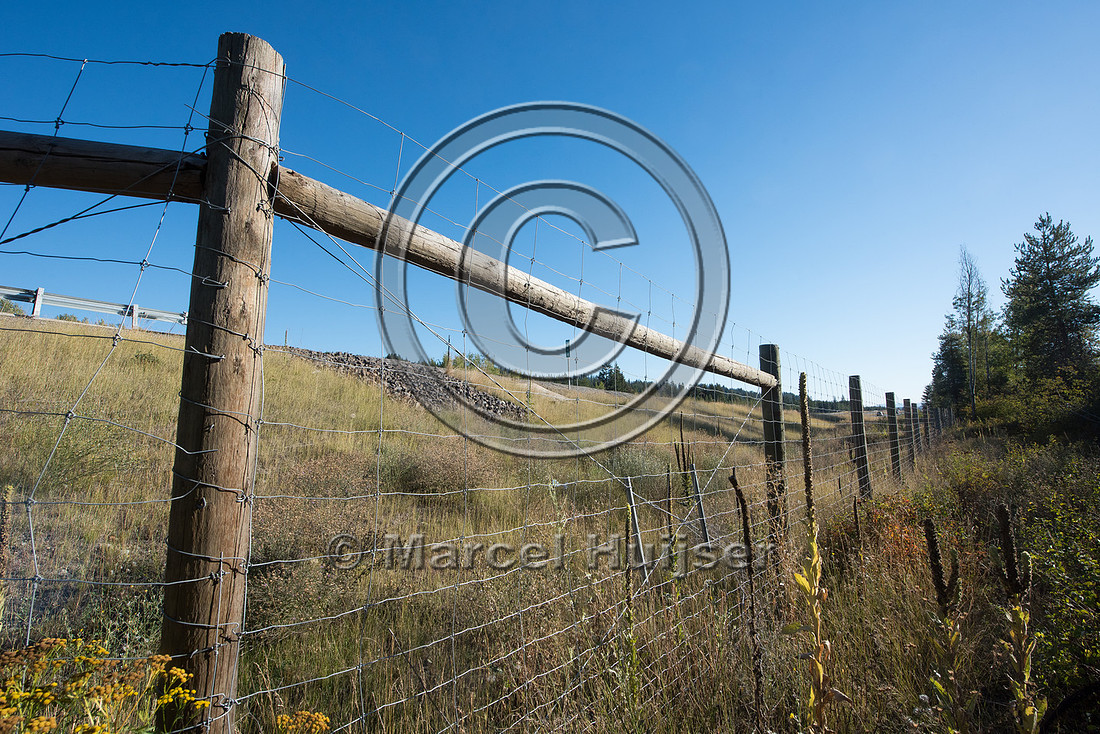
Images below: the wildlife fencing associated with the wildlife underpass.
Click here for other images of animal detection systems.
Click here for images of wildlife underpasses.
Click here for more images of long bridges or viaducts.
Click here for images of wildlife fencing.
Click here for images of multifunctional underpasses.
Like Marcel Huijser Photography on Facebook
All content © 2016 Marcel Huijser