Marcel Huijser Photography Home
This is where I show the most recent images and talk about how they were made. The images typically relate to landscapes and wildlife, but I also blog about photos of highways and mitigation measures for wildlife or road ecology in general. Please contact me if you would like to use any of the images.
All content © Marcel Huijser
Montana wildlife: Sage grouse images posted!
The sage grouse (Centrocercus urophasianus) images are now posted on the website. There are some images with beautiful warm golden sun light. I kept the aperture open enough to allow for unsharp foreground and background. More images at: http://marcelhuijser.zenfolio.com/sagegrouse/h177ceb57#h177ceb57
All content © 2012 Marcel Huijser


Road ecology blog: Black-tailed jackrabbit (Lepus californicus) feet
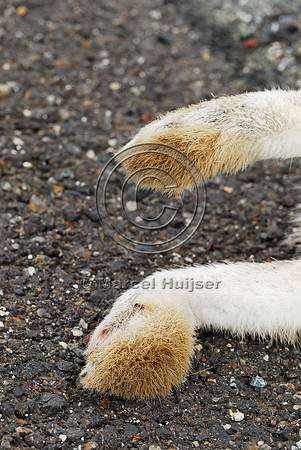
I found two road-killed black-tailed jackrabbits (Lepus californicus) just a few miles apart. I took quite a few images, but I think the one below with two feet up in the air is perhaps the most powerful one. You can see that the animal must be on its side and you see that the background is asphalt, so you can deduct what you are actually looking at and what may have happened to the animal without having to see the the wounds. For more images of the two black-tailed jackrabbits click here.
All content © 2012 Marcel Huijser
Montana wildlife: Sage grouse revisited
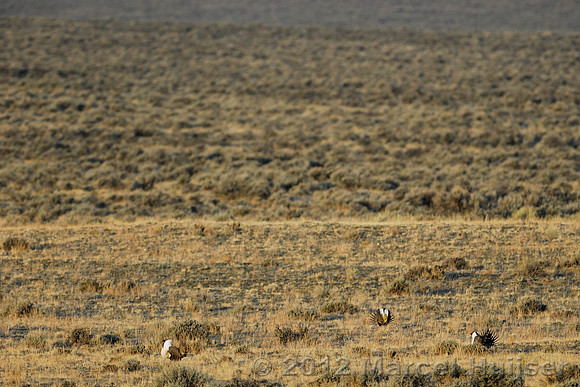
A few weeks ago I reported on my first attempt to photograph sage grouse. The animals were there and it was a spectacular sight, but I needed a different approach for the images I was looking for. More knowledge, better planning, and some dedication paid off last weekend. From a blind I was able to photograph the birds at much shorter range. The image below is just the first one I processed. More images will follow soon.
All content © 2012 Marcel Huijser

Road ecology blog: Modification for wildlife guards
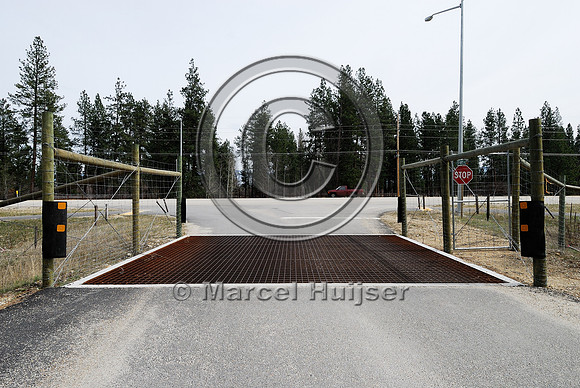
Wildlife fencing of the correct height and type is generally very effective in keeping large mammals from accessing highways and wildlife fencing reduces wildlife-vehicle collisions substantially. However, in multi-functional landscapes there is a need for access roads which means that there will be gaps in the fence. Wildlife guards can reduce wildlife intrusions into the fenced roadway at these gaps in the fence. Wildlife guards are very similar to cattle guards, but they are specifically designed for wildlife species, e.g. for white-tailed deer and mule deer. One type of wildlife guard is shown in the image below. While this particular design is a substantial barrier for deer (about 9 out of 10 deer that approach the guard do not cross the guard), some deer do end up crossing the guard. Some of the deer use the concrete ledge at the side of the metal bridge grate. The rubber flaps shown in the image were designed and installed by the Montana Department of Transportation to make it more difficult for deer to walk across the concrete ledge and then enter the fenced highway. At this time it is unknown how effective the rubber strips are in blocking deer from using the concrete ledge. Click here for more images of the wildlife guard.
All content © 2012 Marcel Huijser
Road ecology blog: Bearely fenced...
This adult black bear (Ursus americanus), blonde phase, was likely struck by a vehicle some time ago. It appears it may have been hidden by the snow, the guardrail, and it is partly out of sight for the drivers because of the slope of the road bed. On the other side of the wildlife underpass (visible behind the bear), lies a dead cub, possibly hers. Wildlife underpasses and fences generally work very well for wildlife, including bears; they reduce road mortality and they provide safe crossing opportunities. However, black bears can climb wildlife fences that have large mesh size, especially if the fences have wooden poles. Therefore the most commonly used wildlife fences are not an absolute barrier to black bears. In this particular case the wildlife underpass has only limited fence length; you can see one of the fence ends in the image. Contiguous fencing may be more effective in keeping animals from accessing the road and in guiding wildlife to the safe crossing opportunities. However, this may not always be possible or desirable in multi-functional landscapes where access roads are frequent and cannot be blocked, and where landscape aesthetics may be a concern. Click here for more images of the two bears.
All content © 2012 Marcel Huijser

Montana wildlife: Mule deer against an evening sky
There is a group of mule deer near where the snowy owls have chosen to hang out this winter. After the snowy owls left to hunt for the night I experimented a bit with the focus ring, the evening sky and long range flash to get some interesting effects. For additional images click here.
All content © 2012 Marcel Huijser

Montana wildlife: Snowy owls are still here
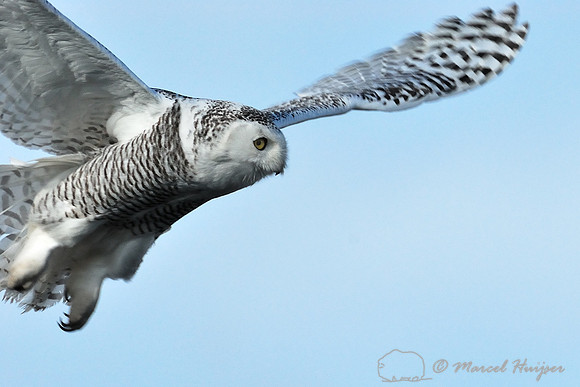
The snowy owls are still around in the Flathead Valley. We associate snowy owls with winter and it is a strange sight to see them on a nice sunny and warm spring day in Montana.
All content © 2012 Marcel Huijser
Montana wildlife: Sage grouse
Sage grouse are displaying on their leks this month. My first attempt to photograph this spectacle was this weekend using my new blind for the very first time. It was a cold clear morning (-10 C (14 F)) which is typically associated with a good number of sage grouse at the leks. Indeed, at least 25 males were present and although the distance was a few hundred yards they were very audible. I think I'll be back for more!
All content © 2012 Marcel Huijser