
Marcel Huijser Photography Home
This is where I show the most recent images and talk about how they were made. The images typically relate to landscapes and wildlife, but I also blog about photos of highways and mitigation measures for wildlife or road ecology in general. Please contact me if you would like to use any of the images.
All content © Marcel Huijser
Brazilian birds: Common potoo (Nyctibius griseus), Vitória, Espírito Santo, Brazil
Brazilian birds: Common potoo (Nyctibius griseus), Vitória, Espírito Santo, Brazil.
The art of hiding in plain sight. This unusual bird was roosting on a snag just 100 m or so from the building where I attended a workshop. Leonardo Merçon, a fellow photographer who also works for "Últimos Refúgios", was very kind to me. He not only showed me where the bird was but also lent me his equipment as I only brought my wide angle lens.... a good reminder to always bring the heavy photo stuff .... I should just check that bag... ! :)
Some large format prints (limited edition) are now for sale at Freshwater Studio & Gallery in Missoula, Montana.
Like Marcel Huijser Photography on Facebook
All content © 2014 Marcel Huijser


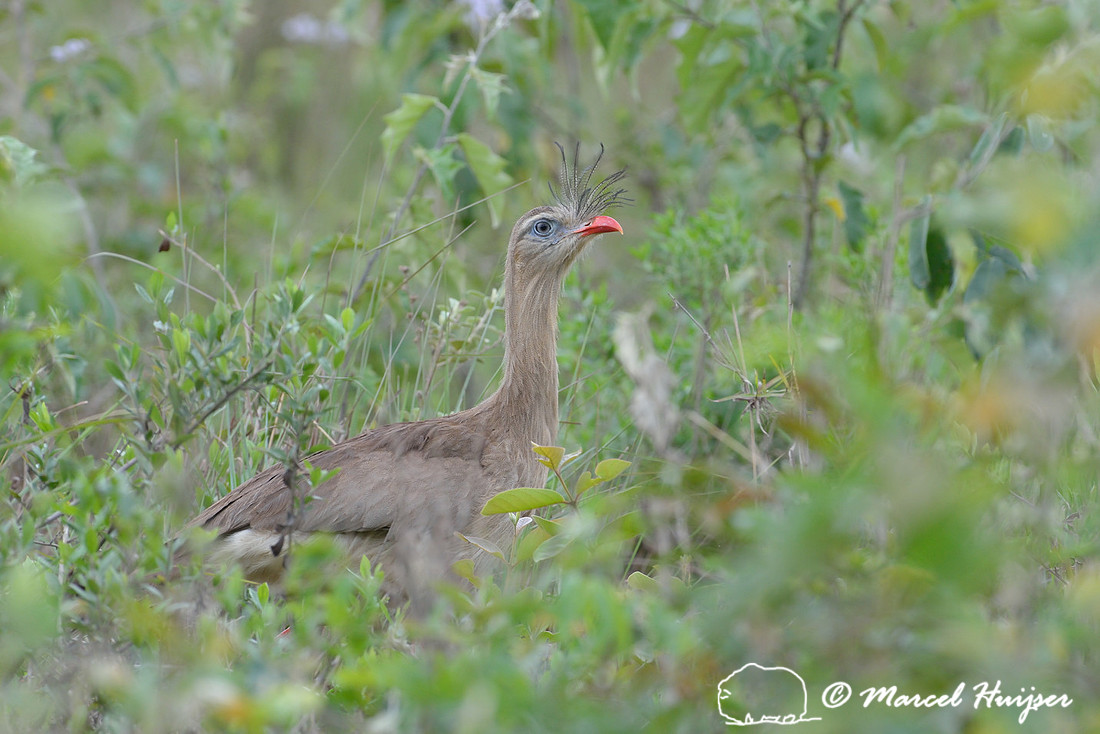
Brazilian birds: Red-legged seriema, Minas Gerais
Brazilian birds: Red-legged seriema or crested cariama (Cariama cristata), near São Roque de Minas , Minas Gerais, Brazil.
Click here for more images of Serra da Canastra National Park.
Some large format prints (limited edition) are now for sale at Freshwater Studio & Gallery in Missoula, Montana.
Like Marcel Huijser Photography on Facebook
All content © 2014 Marcel Huijser
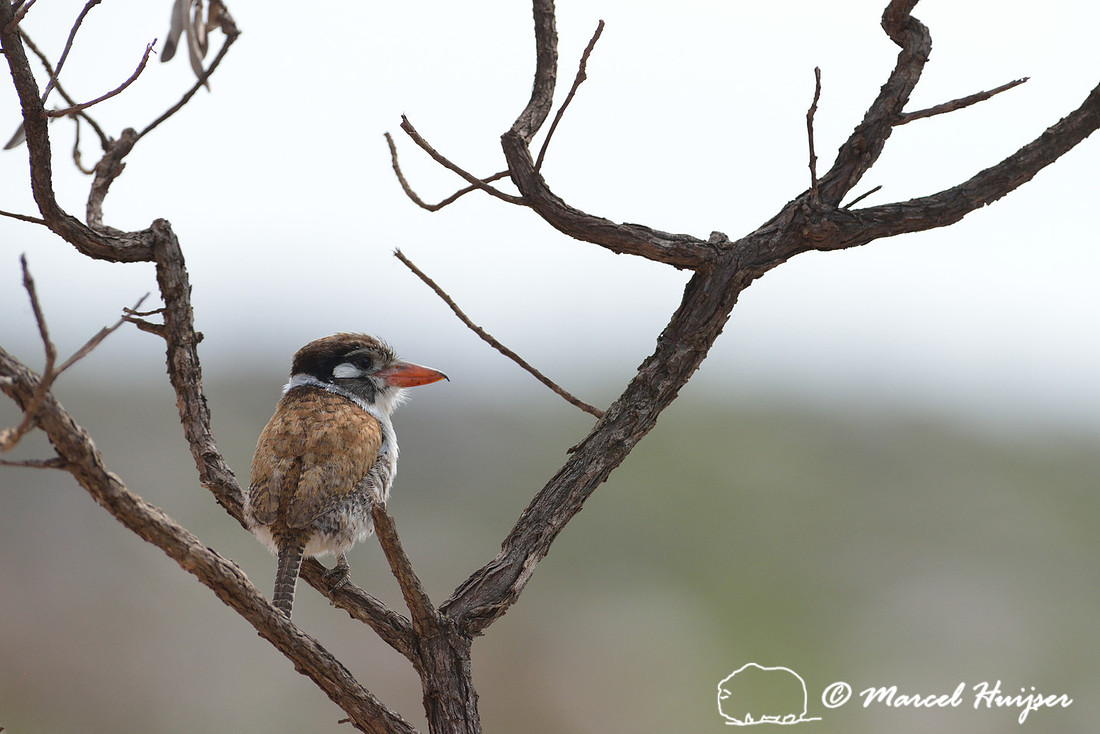
Brazilian birds: White-eared puffbird (Nystalus chacuru), Minas Gerais, Brazil
White-eared puffbird (Nystalus chacuru), Parque Nacional da Serra da Canastra, Minas Gerais, Brazil.
Click here for more images of Serra da Canastra National Park.
Some large format prints (limited edition) are now for sale at Freshwater Studio & Gallery in Missoula, Montana.
Like Marcel Huijser Photography on Facebook
All content © 2014 Marcel Huijser
Brazilian wildlife: Feeding banana to black-tufted marmosets, Minas Gerais
Black-pencilled (or black-tufted) marmosets (Callithrix penicillata) are native further north in Brazil, but they were introduced into this area. Besides tree sap and bark they also eat invertebrates, bird eggs and young that are still in the nest. This unnatural mortality appears to be a problem for some bird species. It is almost never a good idea to introduce non-native species, and, while it is very cute to watch monkeys stuff their faces with banana, feeding of wildlife - native or not - typically results in a suite of problems and is therefore best avoided.
Click here for more images of Serra da Canastra National Park.
Some large format prints (limited edition) are now for sale at Freshwater Studio & Gallery in Missoula, Montana.
Like Marcel Huijser Photography on Facebook
All content © 2014 Marcel Huijser


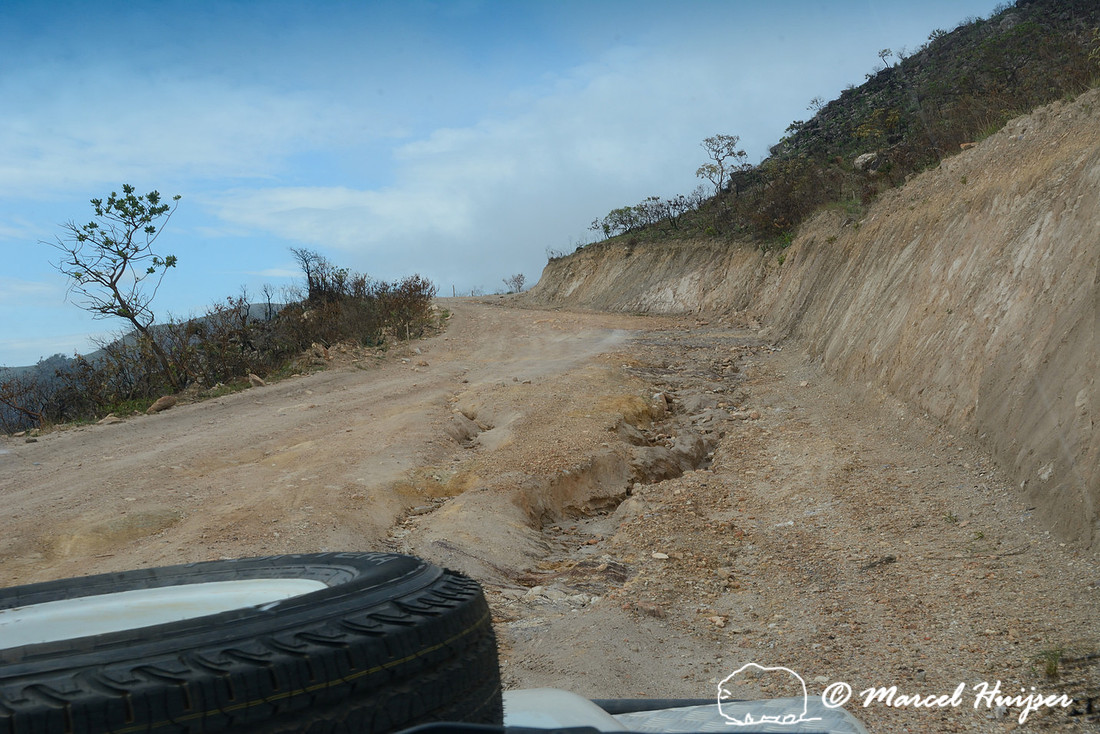
Road ecology blog: The dirt road between São Roque de Minas and Serra da Canastra
The road between São Roque de Minas and Parque Nacional da Serra da Canastra, Minas Gerais, Brazil. The road is in poor shape, causes substantial erosion, and is only drive-able with high clearance 4x4 vehicles. The road is typically closed after a few days of rain.
Click here for more images of Serra da Canastra National Park.
Some large format prints (limited edition) are now for sale at Freshwater Studio & Gallery in Missoula, Montana.
Like Marcel Huijser Photography on Facebook
All content © 2014 Marcel Huijser


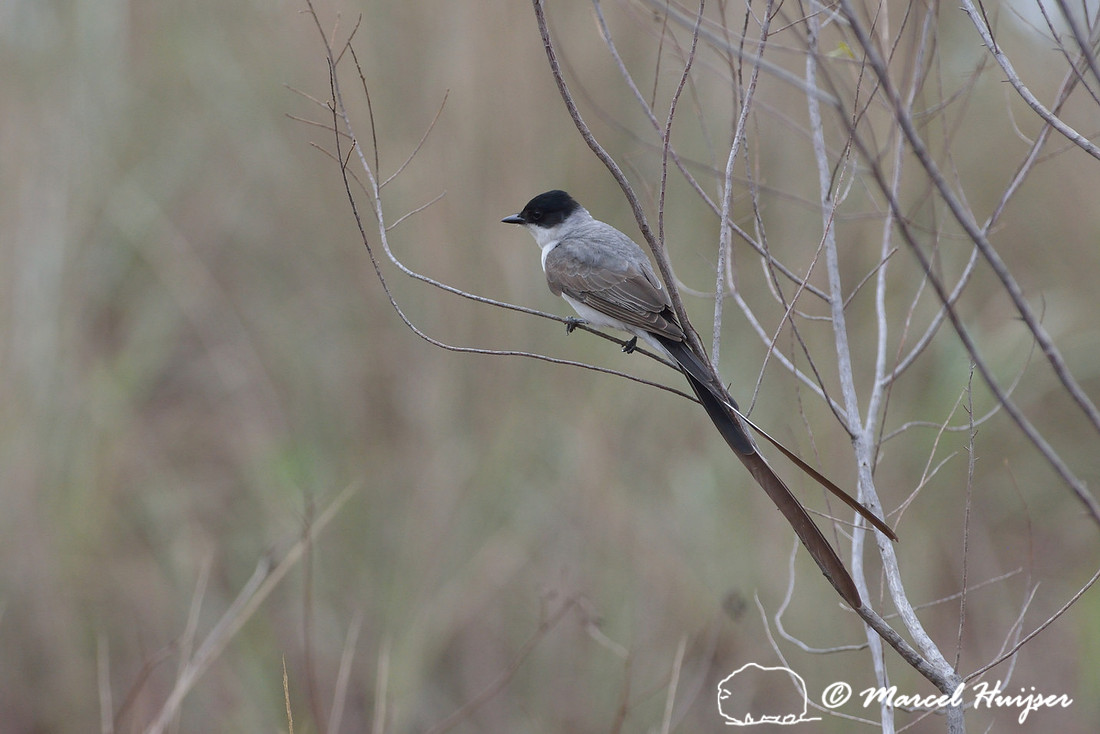
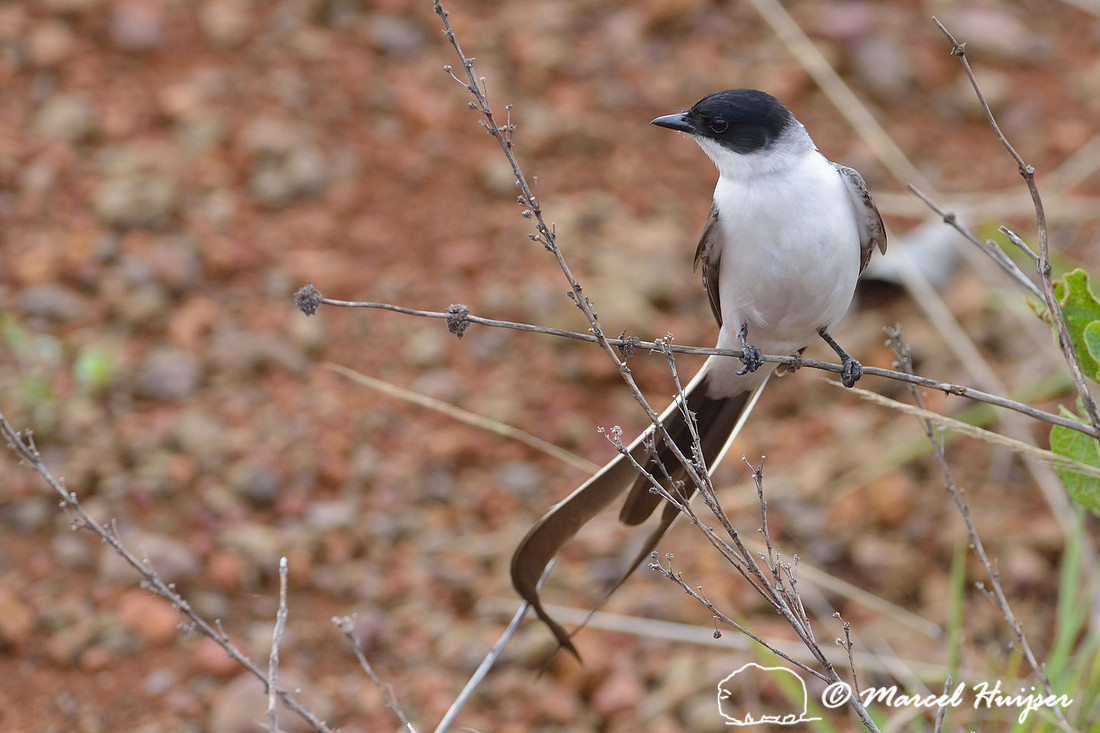
Brazilian birds: Fork-tailed flycatcher (Tyrannus savana), Minas Gerais
Brazilian birds: Fork-tailed flycatcher (Tyrannus savana), Parque Nacional da Serra da Canastra, Minas Gerais, Brazil.
Click here for more images of Serra da Canastra National Park.
Some large format prints (limited edition) are now for sale at Freshwater Studio & Gallery in Missoula, Montana.
Like Marcel Huijser Photography on Facebook
All content © 2014 Marcel Huijser
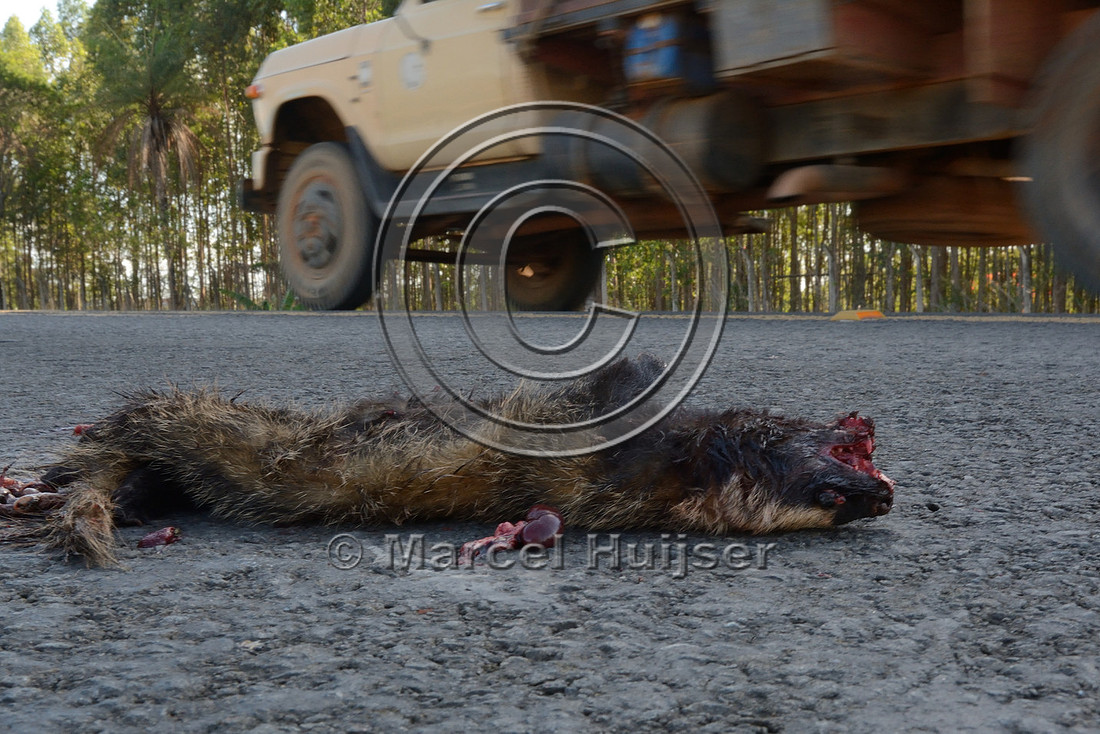
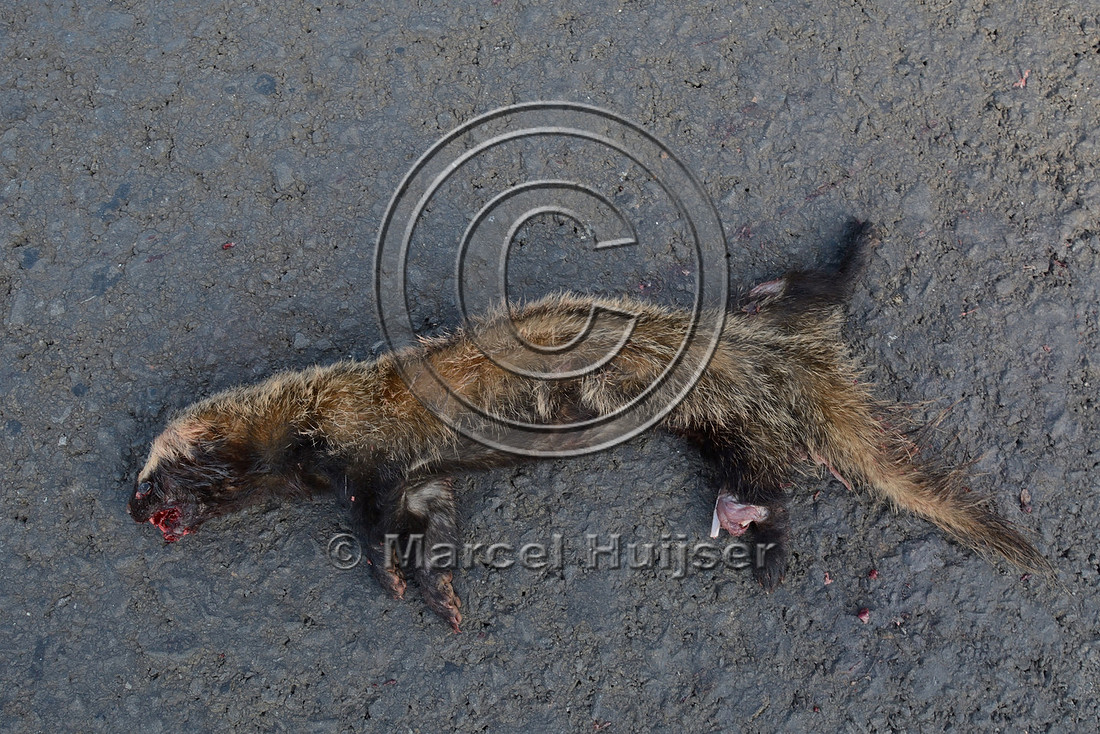
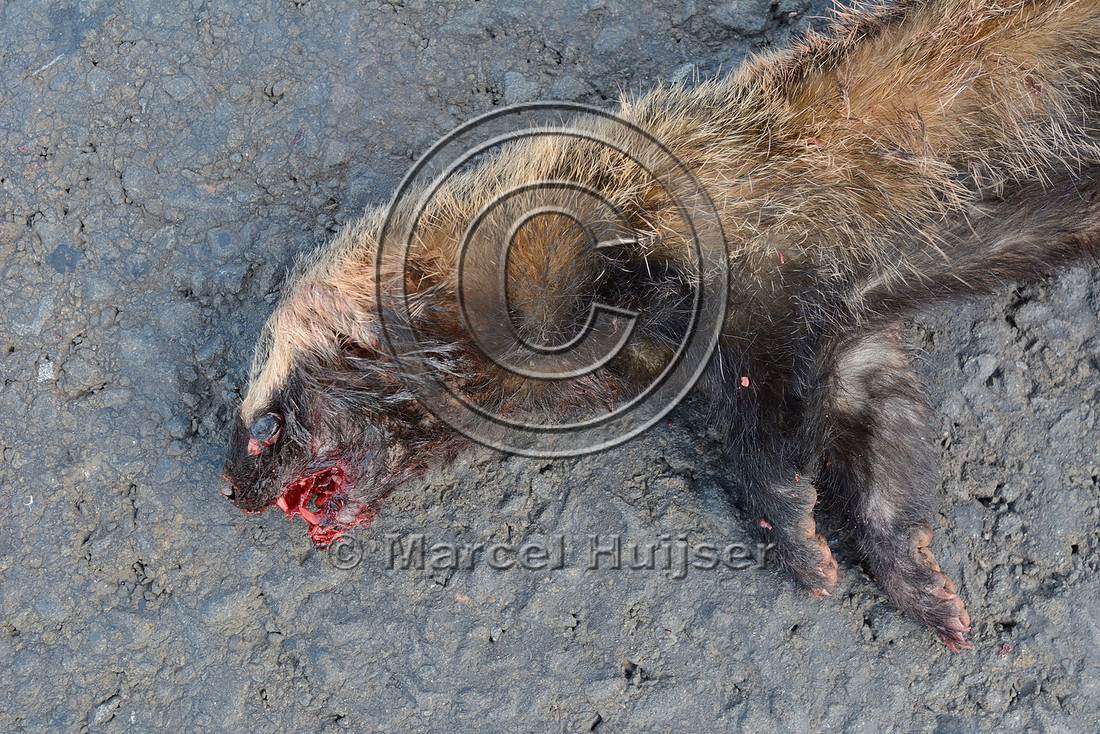
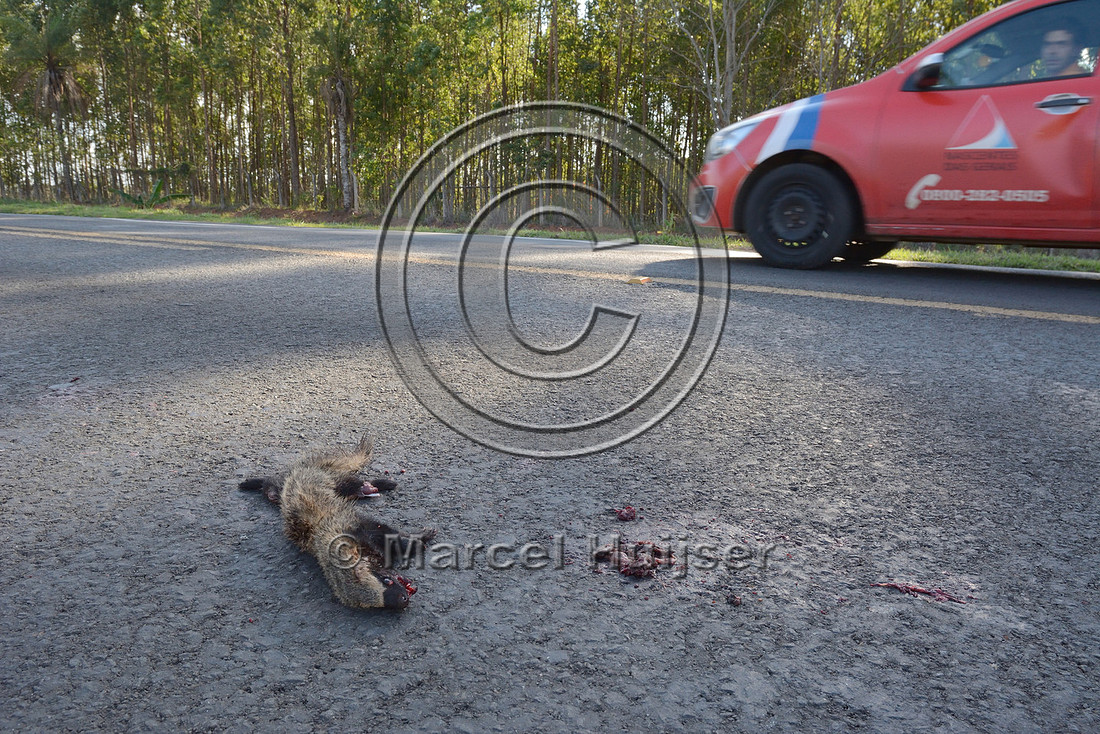
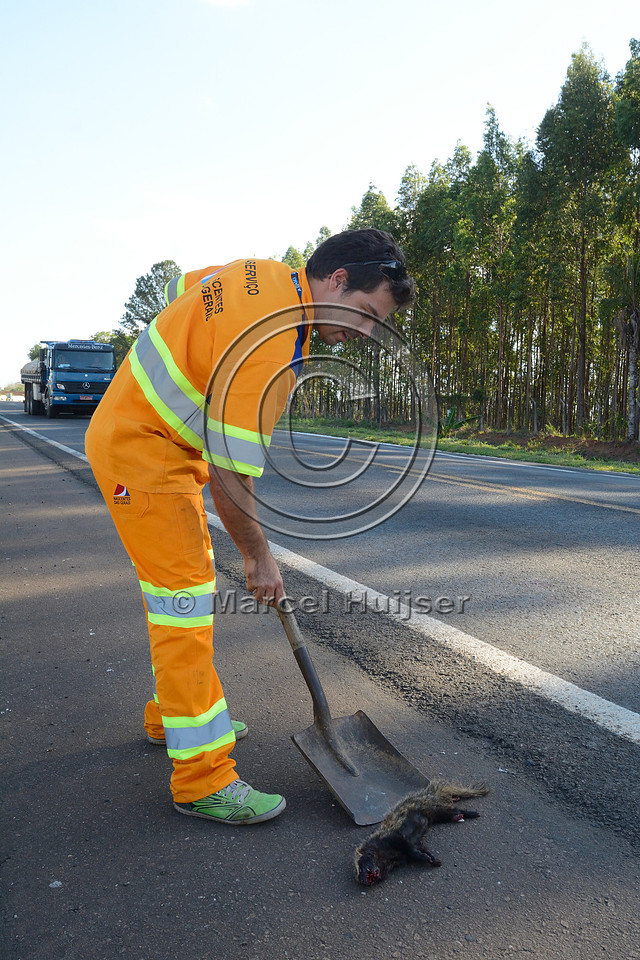
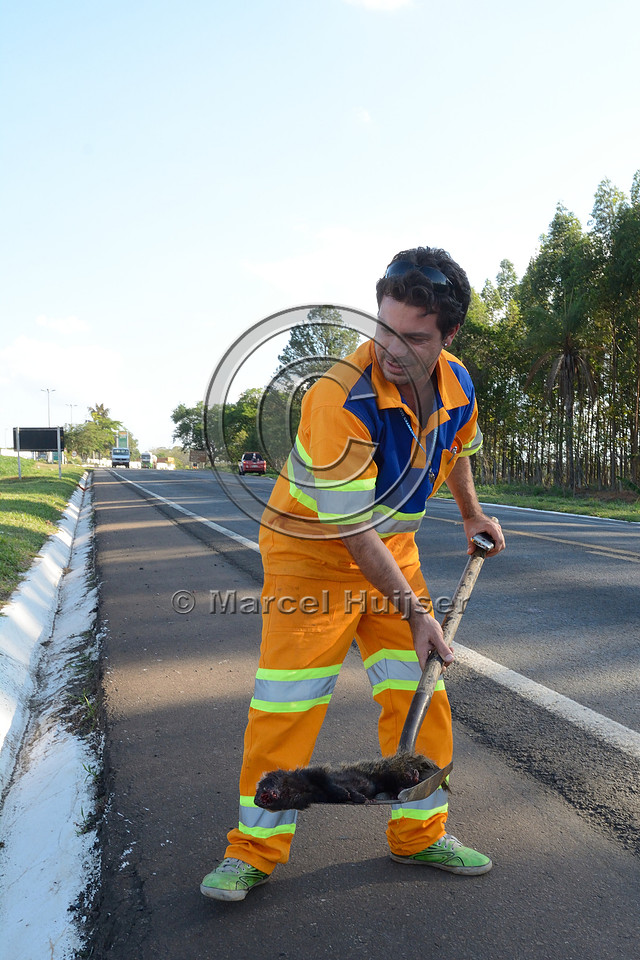
Road ecology blog: Lesser grison (Galictis cuja), near Furnas, MG-050, Minas Gerais, Brazil
Road ecology blog: Lesser grison (Galictis cuja), near Furnas, MG-050, Minas Gerais, Brazil.
While I was photographing the dead lesser grison an employee (Luís Gustavo Lopes Almada) of the toll road company (concessionária Nascentes das Gerais) happened to drive by. Luís saw me photographing the dead animal and stopped to remove it from the road. It is standard practice that employees from tollroad companies drive by at least every few hours to check the condition of the road. This includes removing and recording dead animals that may be present along the road. For Luís the standard practice is to dig a hole along the side of the road and bury the animal. Interestingly - but not surprisingly - Luís did not know the name of the species. He probably would have left the name of the species on the form blank. This suggests that relatively rare species may be under-reported; not only because other people may remove the carcass from the road before road maintenance personnel drives by, but also because road maintenance personnel may not have the training required to identify relatively rare species.
Click here for other images of animals that were killed by cars.
Click here for other images of animals alive on or near roads.
Some large format prints (limited edition) are now for sale at Freshwater Studio & Gallery in Missoula, Montana.
Like Marcel Huijser Photography on Facebook
All content © 2014 Marcel Huijser
An amazing wildlife adventure in Canastra National Park, Brazil
Text by Bethanie Walder
“I’m 81 years old, Marcel, I know my limitations…” Piet told Marcel Friday evening, as we descended the nearly impassable main road to Parque Nacional da Canastra (Canastra National Park) just after dark, ending a nearly 15 hour day of wildlife watching. “But who knows what we might see tomorrow, Dad – maybe we’ll see another maned wolf, or maybe we’ll see a greater rhea!” Actually, Marcel and his dad were talking in Dutch, but this is basically what they said. Piet was deciding whether or not to subject himself to one more day in the park – the road ascending from the village of São Roque de Minas to the main entrance station for the park is in an abominable state, and from everything we heard, it won’t get better anytime soon. It’s all but impassable without a 4x4. Our guide, Marcello, told us that the park often closes this entrance station for up to a week after heavy rains.
Image below: Piet Huijser and Marcel Huijser on the maned wolf expedition, Parque Nacional da Serra da Canastra, Minas Gerais, Brazil

Once you reach the top of the chapadão (mesa), the roads are much better. We left at 5:30 am on Friday morning with Jean Pierre Santos, who works on several different maned wolf conservation projects. Marcel has already written about his amazing encounter with a maned wolf. But while Marcel was photographing that first maned wolf, Jean Pierre spotted a second one, much larger, on the other side of the road. After watching it until it disappeared, we returned to see how Marcel was doing. (We watched Marcel’s encounter through our binoculars and that’s when I learned how to say, “he’s shitting his pants” (with happiness) in Portuguese.) We spent a few more hours with Jean Pierre looking for maned wolves and giant anteaters (tamandua bandeira), but apart from a pampas deer we didn’t spy anything else that morning. Jean Pierre had other obligations for the afternoon, so we drove back down the entrance road, and spent about an hour in town having lunch and taking photos of the marmosets that hang out by the hotel eating bananas from people’s hands. Then we headed back up to the top of the mesa for the afternoon with another guide, Marcello (from Canastra 4x4).
Image below: Marcello from Canastra 4x4 spots tracks from a hoary fox (Lycalopex vetulus), Parque Nacional da Serra da Canastra, Minas Gerais, Brazil

Maned wolves and giant anteaters are some of the iconic animals of Brazil. We’d seen one, but would we see the other? We were maybe 2 kilometers inside the park when we struck silver – Marcello spotted a giant anteater on a distant slope, but it was really far away. We watched for a while and then moved on. Just a short while later we struck gold - we found a tamandua bandeira that was much closer. They have very bad eyesight and hearing, so if you are downwind, you can get relatively close to them. so we walked slowly and silently toward the animal. It was wandering through a field of “sempre viva” flowers – an other-worldly flower that’s common in Canastra. We got close enough to get an excellent look at the animal, and to really get a sense of how it walks (it curls its toes under to protect its nails, which it needs for digging into termite mounds). While Marcel was photographing this animal, Marcello spotted another one not very far away - our third tamandua of the day. By the time we left that evening, we had seen six, or maybe seven, including one very young one quite close by as we were driving out. It was an unbelievably amazing day.
Image below: Giant anteater (Myrmecophaga tridactyla), Parque Nacional da Serra da Canastra, Minas Gerais, Brazil (vulnerable, IUCN 2014).

But it was also incredibly long. We finally arrived back in town around 8:30 pm. By the time we finished dinner that night, around 10:00 pm, Piet agreed to join us the following day – yippee! To convince him, we decided to "sleep in" setting a 7:30 am departure the next morning (2 hours later than the day before), and we promised Piet we’d get him to dinner by 7:30 pm if he decided to come with us.
There was still one more iconic “Canastra” species that we hadn’t seen yet – the greater rhea ("ema" in Portuguese). This enormous bird resembles an ostrich or emu. Our guide, Marcello, is a serious birder, so we stopped regularly to check out all sorts of amazing birds, from a puffbird with a poisonous frog that Marcel’s already posted, to the galito (Alecturis tricolor), to a series of beautiful blue birds, (Tersina viridis, Dacnis cayana, Porphyrospiza caerulescens), to campo flickers (Coloptis campestris), to cool looking red-winged tinamous (Rhynchotus rufescens), to toucans and more – there are way too many to name them all.
Image below: Gallito or cock-tailed tyrant (Alectrurus tricolor), male, Parque Nacional da Serra da Canastra, Minas Gerais, Brazil (vulnerable, IUCN 2014)

Image below: Gallito or cock-tailed tyrant (Alectrurus tricolor), female, Parque Nacional da Serra da Canastra, Minas Gerais, Brazil (vulnerable, IUCN 2014)

Image below: Fighting campo flickers (Colaptes campestris), Parque Nacional da Serra da Canastra, Minas Gerais, Brazil

Image below: Red-winged tinamou (Rhynchotus rufescens), Parque Nacional da Serra da Canastra, Minas Gerais, Brazil

We were also somewhat embarrassed on Saturday to realize that, during our intense search for the maned wolf, we had completely missed entire hillsides of stunning wildflowers. (To our credit, the most beautiful hillsides are near the entrance and we had entered the park in the dark on Friday morning, and driven out at last light in the evening, so maybe it wasn’t so surprising that we missed them.) In any case, a prehistoric looking flowering plant, “canela-de-ema” first caught our eye. According to Marcello these plants mostly flower after fires, and there was a very large fire in Canastra in September. The trunks of the canela-de-ema plants were blackened by the fire, but brilliant green leaves had re-sprouted from the trunks, followed by pure white flowers with yellow stamen. Marcel and I walked around to take photos, and came back with ash-covered pants. Piet walked up the road a bit and found purple canela-de-ema flowers and beautiful orange iris-type flowers as well. It added a whole new dimension to our visit. Apparently once the rains start, Canastra will be fully carpeted with flowers (but whether or not you can drive up the road to see them is another story).
Image below: Canela-de-ema (Vellozia sp.) flowers after a fire, Parque Nacional da Serra da Canastra, Minas Gerais, Brazil

Image below: Sempre-viva (Paepalanthus sp.) flowers, Parque Nacional da Serra da Canastra, Minas Gerais, Brazil

We stopped to take overview photos of the mesa, where most of the land on the northerly (or right-hand side if you are driving into the park from the main entrance) of the road had burned and largely re-sprouted with short, but bright green grasses; while most of the land on the southerly (or left-hand side) of the road was unburned, with much thicker, brown and golden grasses. Marcello said that it burns every three to five years, and it seems the vegetation is quite adapted to fire. Without reading a bunch of Portuguese articles about cerrado ecosystems, I will have to go by what Marcello and others said regarding fire and Canastra – apologies if I’m misrepresenting anything. Several people also talked about the fact that most of the fires are human-caused at the moment, as farmers in the lower lands are regularly starting fires to improve the grasses for their cattle, and those fires run up hill into the national park. In any case, the recent fire made for quite a stark contrast from one side of the road to the other. (It also made it easier to scan for cool animals.) The burnt side of the road also had a narrow strip that was a slightly different color, as firefighters had lit a lower intensity backburn from the road toward the fire to help ensure the fire would stay on just one side of the road.
Image below: Burnt area (left), a 30 m wide back burn zone adjacent to a dirt road, the dirt road, and unburnt vegetation (right), Parque Nacional da Serra da Canastra, Minas Gerais, Brazil

We meandered through the park taking pictures of birds and flowers, eating lunch, checking out one of the waterfalls, and eventually turning back toward São Roque de Minas. We had promised Piet we’d be back before dark, after all. We repeatedly stopped to scan the slopes, occasionally finding another tamandua, or a pampas deer. And then, finally, Marcello spotted a greater rhea. But it wasn’t just any greater rhea, it was a male rhea with 12 chicks in tow. Wow! It was too far away for a reasonable photo, but we saw it and we could clearly see the chicks. Marcello explained that the males take care of the chicks, and often chicks from numerous different pairs will be with just one male. We tried to get closer, but couldn’t. Just a short while later Marcel spotted another rhea – this one was alone. We got a much better look at it, and as we watched it run up and over a hill, I couldn’t help but think that it resembled what running dinosaurs might have looked like.
Image below: Marcello (guide from Canastra 4x4), Bethanie Walder and Piet Huijser spot a greater rhea, Parque Nacional da Serra da Canastra, Minas Gerais, Brazil

Image below: Greater rhea (Rhea americana), Parque Nacional da Serra da Canastra, Minas Gerais, Brazil (near threatened, IUCN 2014)

On our way out of the park we spotted the juvenile giant anteater again, but this time it was just meters from the road. Piet finally got an excellent look at an anteater, and Marcel got a bunch more photos with some nice afternoon light. And then it was back down that crazy road to São Roque. Though he might have been a little stiff from the driving, Piet was all smiles when we got back and managed to get him to dinner before 8:00 pm (yeah, it wasn’t quite 7:30, but it was close enough).
Image below: Giant anteater (Myrmecophaga tridactyla), Parque Nacional da Serra da Canastra, Minas Gerais, Brazil (vulnerable, IUCN 2014).

Click here for more images of Serra da Canastra National Park.
Some large format prints (limited edition) are now for sale at Freshwater Studio & Gallery in Missoula, Montana.
Like Marcel Huijser Photography on Facebook
All content © 2014 Marcel Huijser
Road ecology blog: Lineated woodpecker roadkill, Minas Gerais, Brazil
Road ecology blog: Lineated woodpecker (Dryocopus lineatus) roadkill, about 3 km north west of Furnas, MG-050, Minas Gerais, Brazil.
Click here for other images of animals that were killed by cars.
Click here for other images of animals alive on or near roads.
Some large format prints (limited edition) are now for sale at Freshwater Studio & Gallery in Missoula, Montana.
Like Marcel Huijser Photography on Facebook
All content © 2014 Marcel Huijser

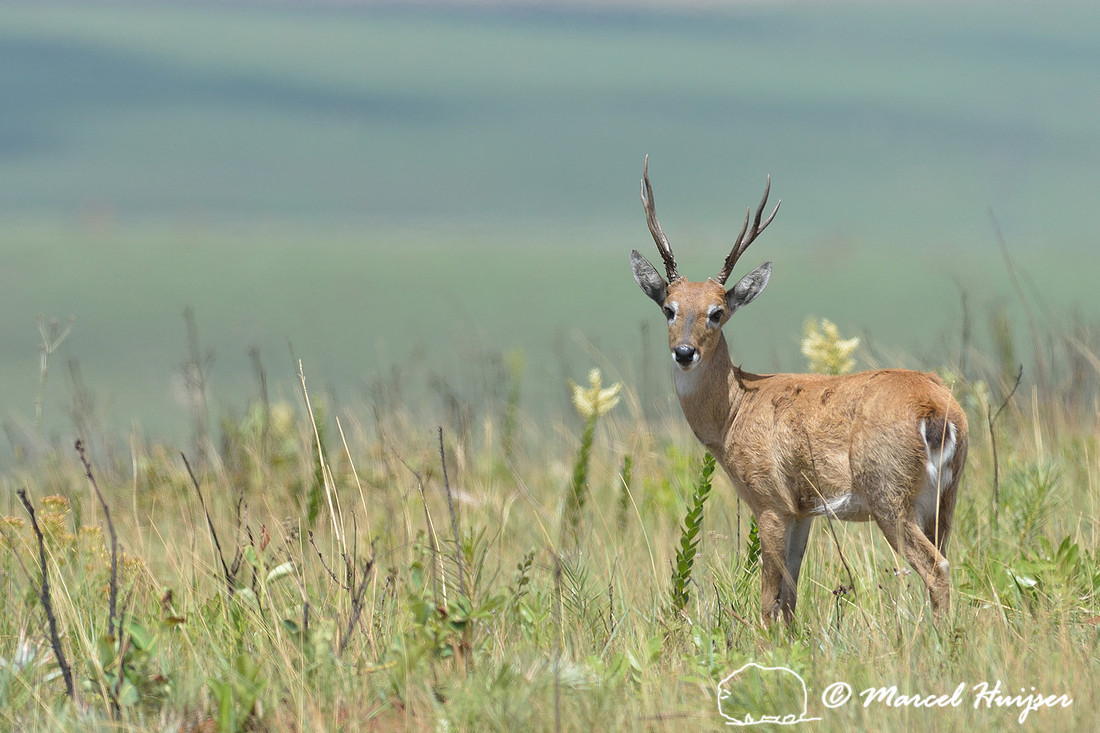
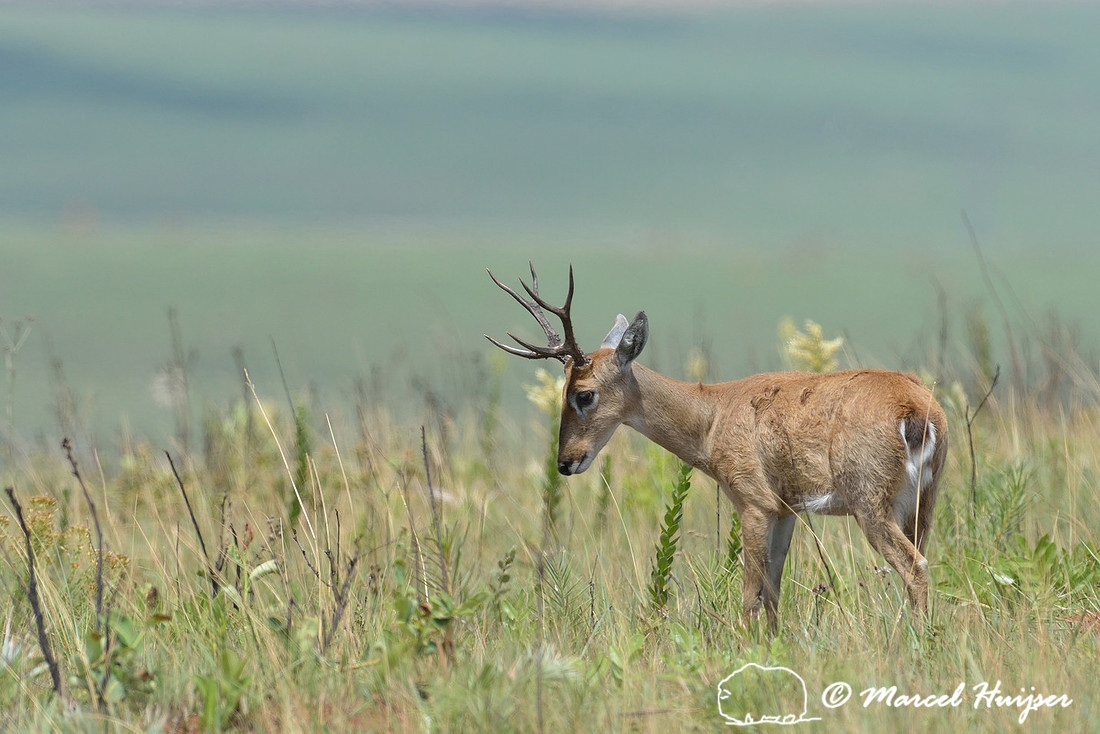
Brazilian wildlife: Pampas deer, Parque Nacional da Serra da Canastra, Minas Gerais
Brazilian wildlife: Pampas deer (Ozotoceros bezoarticus), Parque Nacional da Serra da Canastra, Minas Gerais, Brazil (near threatened, IUCN 2014).
Click here for more images of Serra da Canastra National Park.
Some large format prints (limited edition) are now for sale at Freshwater Studio & Gallery in Missoula, Montana.
Like Marcel Huijser Photography on Facebook
All content © 2014 Marcel Huijser
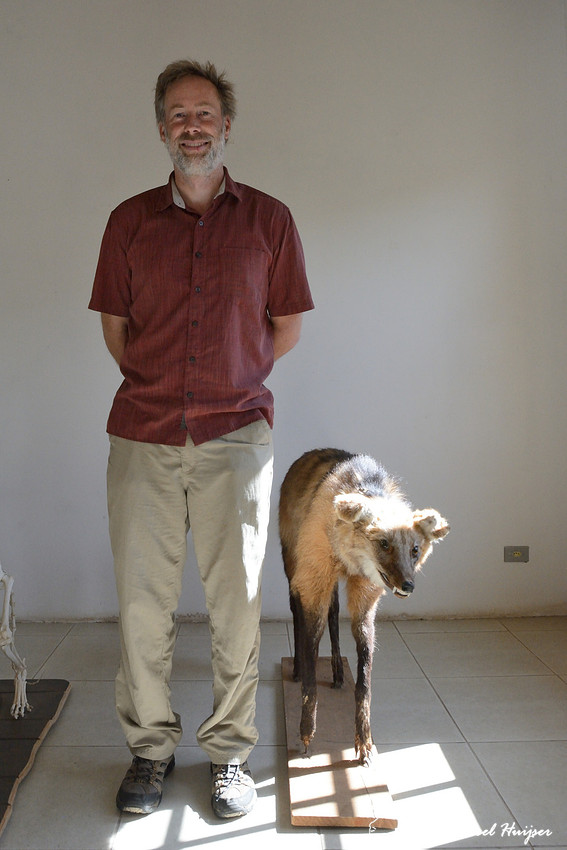
Find all five differences
Find all five differences between Marcel Huijser and a mounted maned wolf (Chrysocyon brachyurus).
Road ecology blog: Giant anteater (Myrmecophaga tridactyla) roadkill, Minas Gerais, Brazil
Road ecology blog: Giant anteater (Myrmecophaga tridactyla) roadkill, Minas Gerais, Brazil. The giant anteater is categorized as a vulnerable species (IUCN 2014).
Click here for other images of animals that were killed by cars.
Click here for other images of animals alive on or near roads.
Some large format prints (limited edition) are now for sale at Freshwater Studio & Gallery in Missoula, Montana.
Like Marcel Huijser Photography on Facebook
All content © 2014 Marcel Huijser


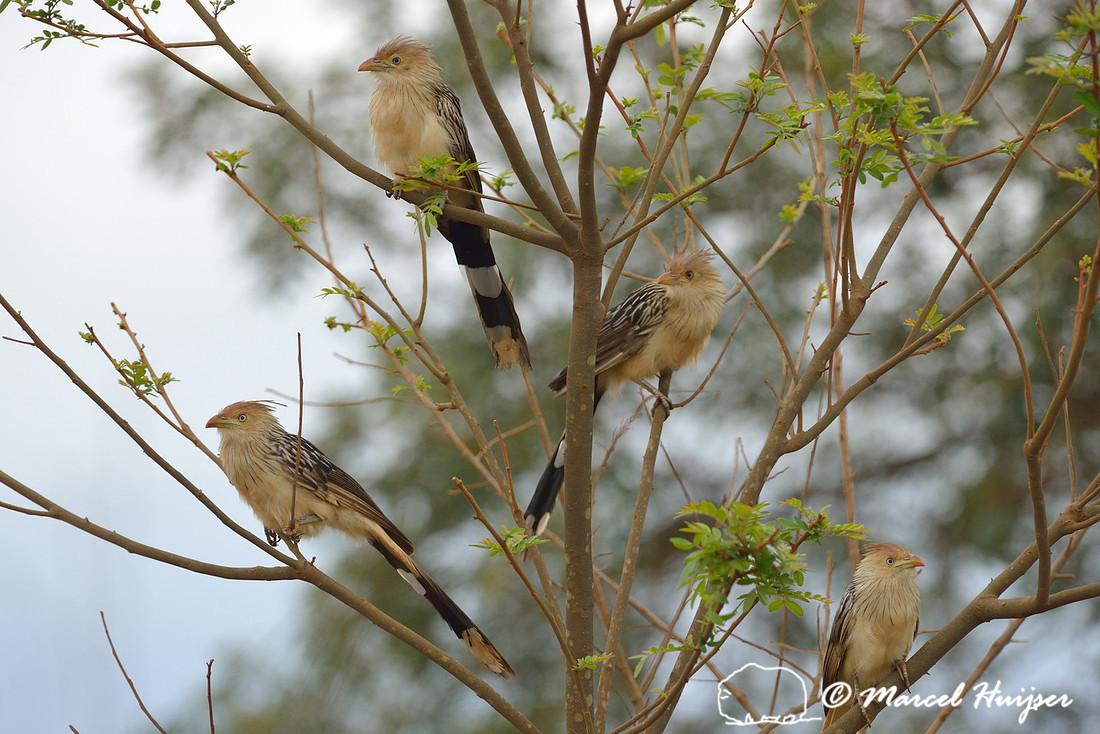
Brazilian birds: Guira cuckoos (Guira guira), near São Roque de Minas , Minas Gerais, Brazil
Brazilian birds: Guira cuckoos (Guira guira), near São Roque de Minas , Minas Gerais, Brazil.
Click here for more images of Serra da Canastra National Park.
Some large format prints (limited edition) are now for sale at Freshwater Studio & Gallery in Missoula, Montana.
Like Marcel Huijser Photography on Facebook
All content © 2014 Marcel Huijser
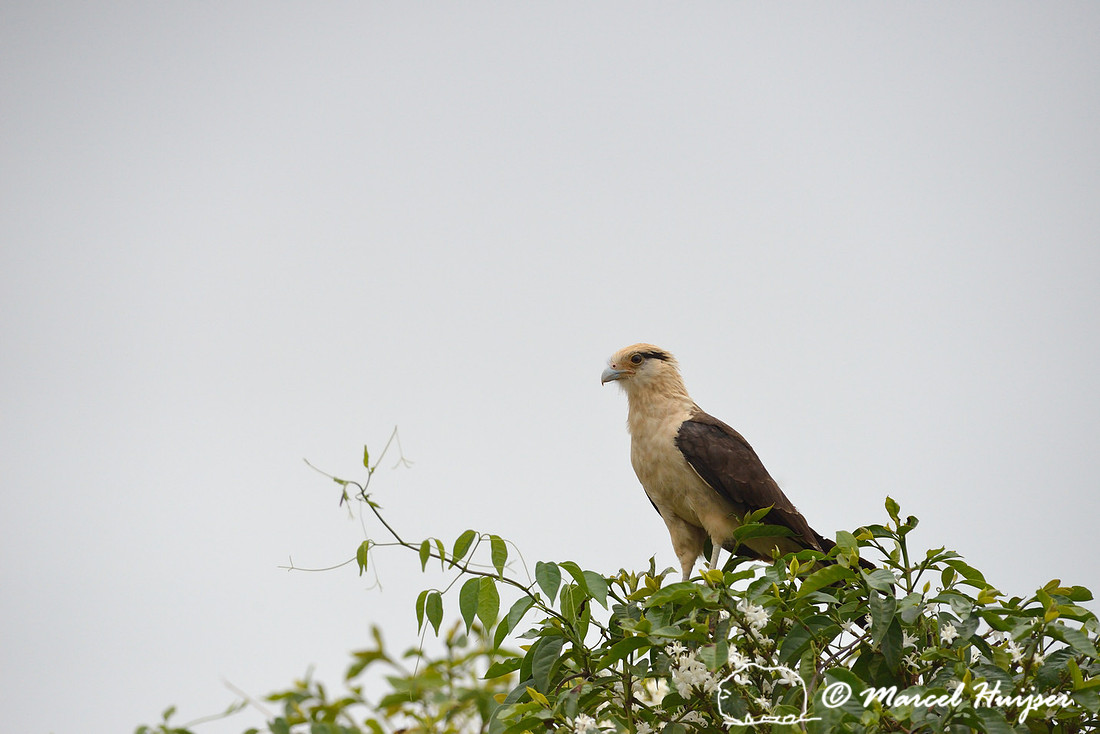
Brazilian birds: Southern crested caracara and yellow-headed caracara, Minas Gerais
Image below: Southern crested caracara (Caracara plancus), near São Roque de Minas, Minas Gerais, Brazil, Minas Gerais
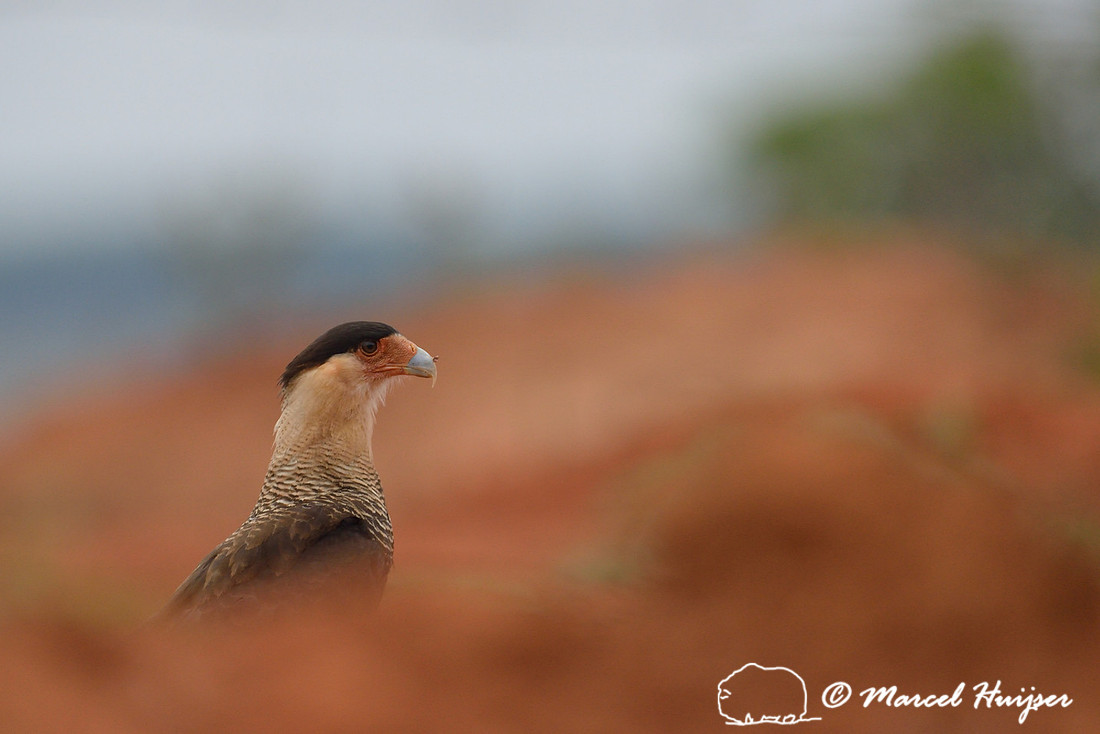
Image below: Yellow-headed caracara (Milvago chimachima), near São Roque de Minas , Minas Gerais, Brazil
Click here for more images of Serra da Canastra National Park.
Some large format prints (limited edition) are now for sale at Freshwater Studio & Gallery in Missoula, Montana.
Like Marcel Huijser Photography on Facebook
All content © 2014 Marcel Huijser
Brazilian wildlife: Tropical house gecko eating a termite, Minas Gerais
Tropical house gecko (Hemidactylus mabouia) eating a termite, São Roque de Minas , Minas Gerais, Brazil.
Click here for more images of Serra da Canastra National Park.
Some large format prints (limited edition) are now for sale at Freshwater Studio & Gallery in Missoula, Montana.
Like Marcel Huijser Photography on Facebook
All content © 2014 Marcel Huijser
