
Marcel Huijser Photography Home
This is where I show the most recent images and talk about how they were made. The images typically relate to landscapes and wildlife, but I also blog about photos of highways and mitigation measures for wildlife or road ecology in general. Please contact me if you would like to use any of the images.
All content © Marcel Huijser
Brazilian birds: Blue-and-yellow macaws eat clay, Parque Nacional das Emas, Goiás
Brazilian birds: Blue-and-yellow macaw (Ara ararauna), Parque Nacional das Emas, Goiás, Brazil.
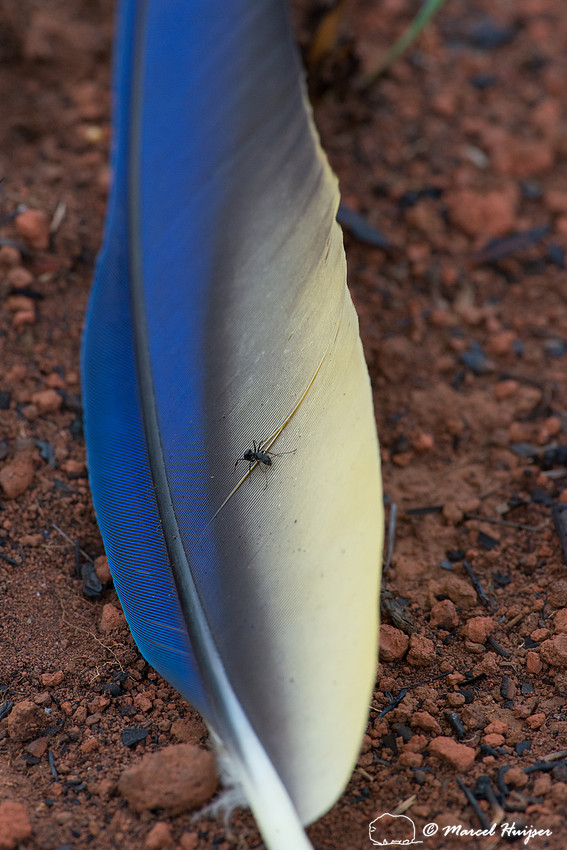
It appeared these macaws were eating clay ("geophagy"); both from the ground and from the termite mounds. While it is also possible they were eating invertebrates I think this is less likely and I saw them pick up chunks of clay with their claws and bring these to their beaks. Geophagy is common among macaws. While there are a number of theories about why macaws eat clay, it appears that the most plausible reason is minerals, specifically sodium. It was quite the frenzy; macaws are very social and make a lot of noise. After the macaws left I found a feather on the ground. The ant on the feather provides some scale.
Click here for more images of Parque Nacional das Emas
Like Marcel Huijser Photography on Facebook
All content © 2015 Marcel Huijser


Road ecology blog: Pampas deer buck on dirt road, Parque Nacional das Emas, Goiás, Brazil
Road ecology blog: Pampas deer buck (Ozotoceros bezoarticus) on dirt road, Parque Nacional das Emas, Goiás, Brazil. Near threatened (IUCN 2015).
Click here for images of animals alive on or near roads.
Click here for images of animals that were killed by cars.
Like Marcel Huijser Photography on Facebook
All content © 2015 Marcel Huijser

First Friday, 6 May 5-8 pm, art walk in Missoula
FIRST FRIDAY
NEW PRINTS AVAILABLE !
Exhibit at Freshwater Studio & Gallery
Friday 6 May 5-8 pm
Join me this First Friday at Freshwater Studio & Gallery 5-8 pm, Montana Building, 101 E Broadway in Missoula.
Bob has printed some new images that are now for sale: a toco toucan from Brazil and several images of sandhill cranes from a trip I made to Nebraska in early April (see below).
Freshwater Studio & Gallery is run by Bob Montgomery and the gallery hosts some really cool work by several artists. Bob is also a specialty printer and custom framer. The gallery is located on Broadway just a few steps east from Higgins. I hope to see you there!


Brazilian wildlife: Pampas deer looking back, buck, Parque Nacional das Emas, Goiás, Brazil
Pampas deer buck (Ozotoceros bezoarticus), Parque Nacional das Emas, Goiás, Brazil. Near threatened (IUCN 2015).
Click here for more images pampa deer.
Some large format prints (limited edition) are now for sale at Freshwater Studio & Gallery in Missoula, Montana.
Like Marcel Huijser Photography on Facebook
All content © 2015 Marcel Huijser

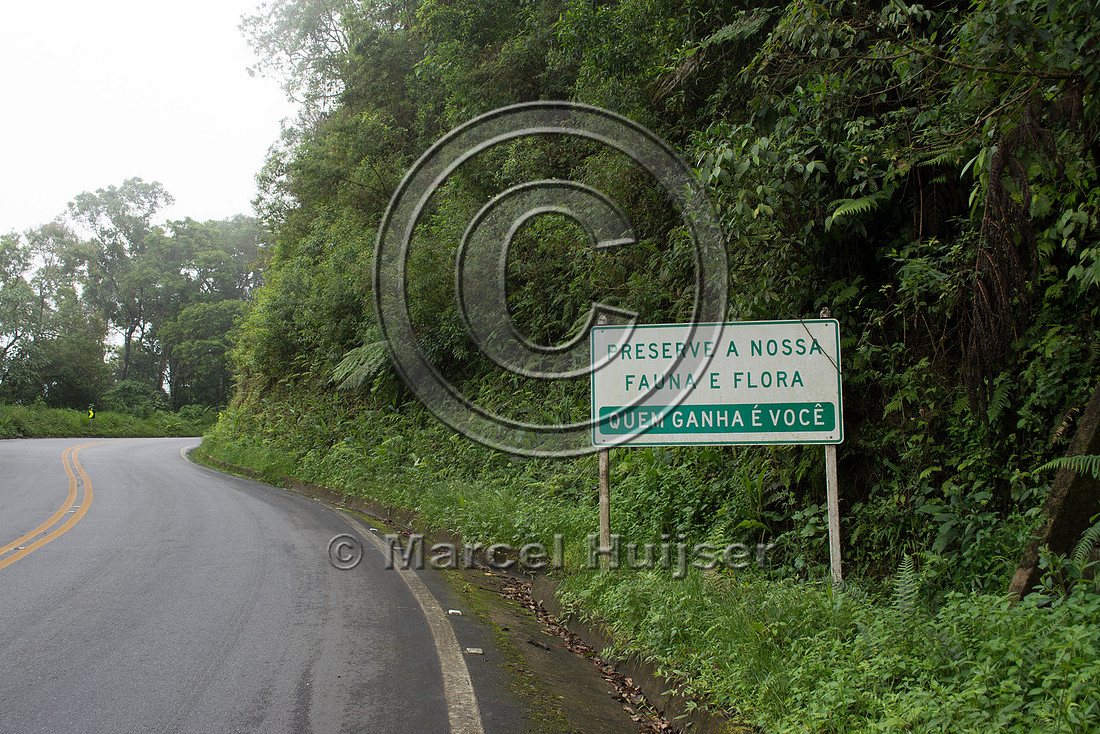
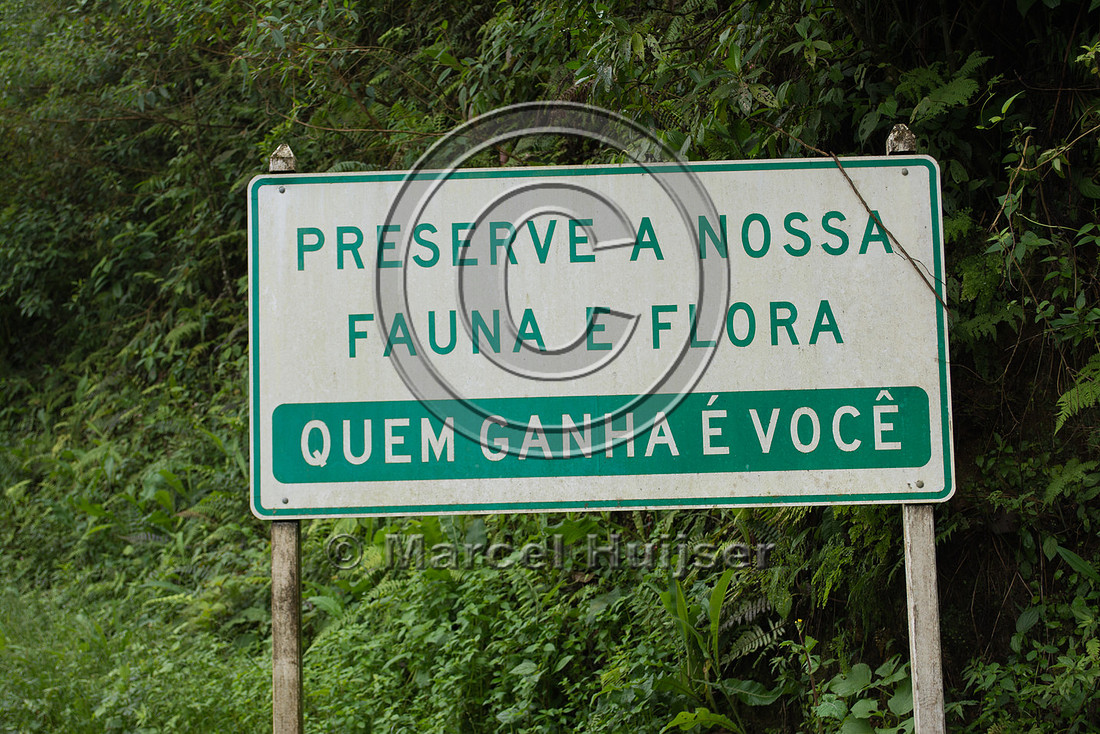
Road ecology blog: Road signs along "park road" RJ-163, near Resende, Rio de Janeiro, Brazil
Images below: Sign, preserve our fauna and flora, "park road" (estrada-parque) Capelinha-Mauá (RJ-163), near Resende, Rio de Janeiro, Brazil
Images below: Sign, do not polute our rivers and lakes, nature thanks you, "park road" (estrada-parque) Capelinha-Mauá (RJ-163), near Resende, Rio de Janeiro, Brazil
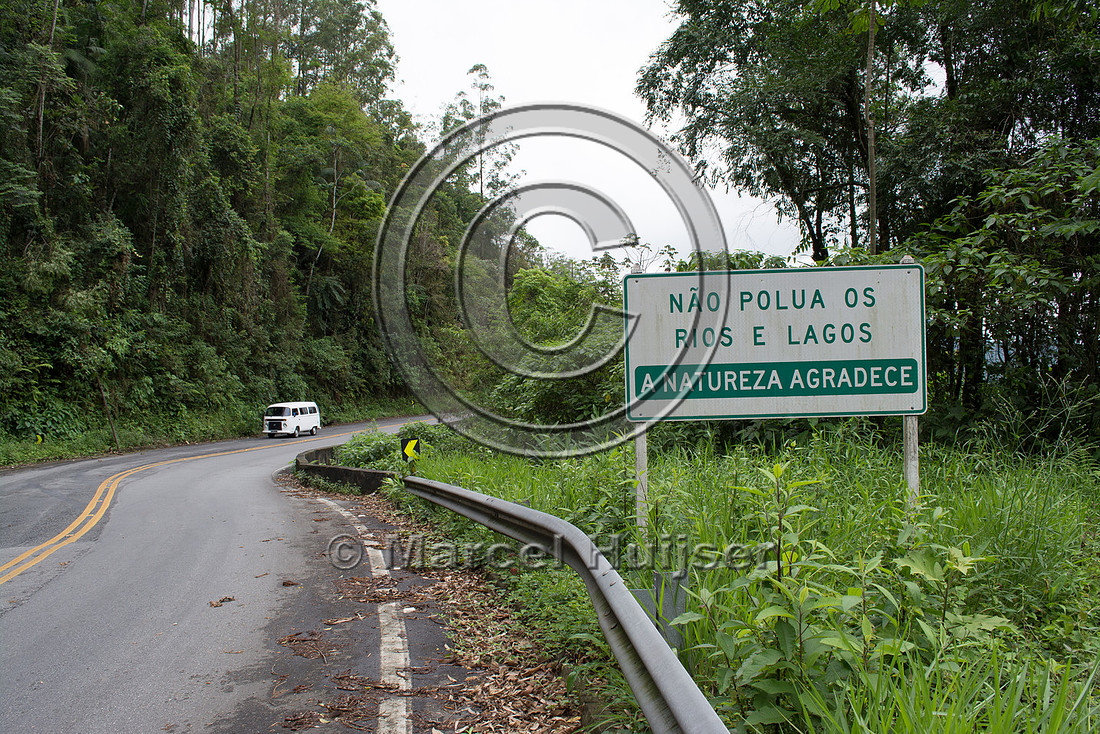
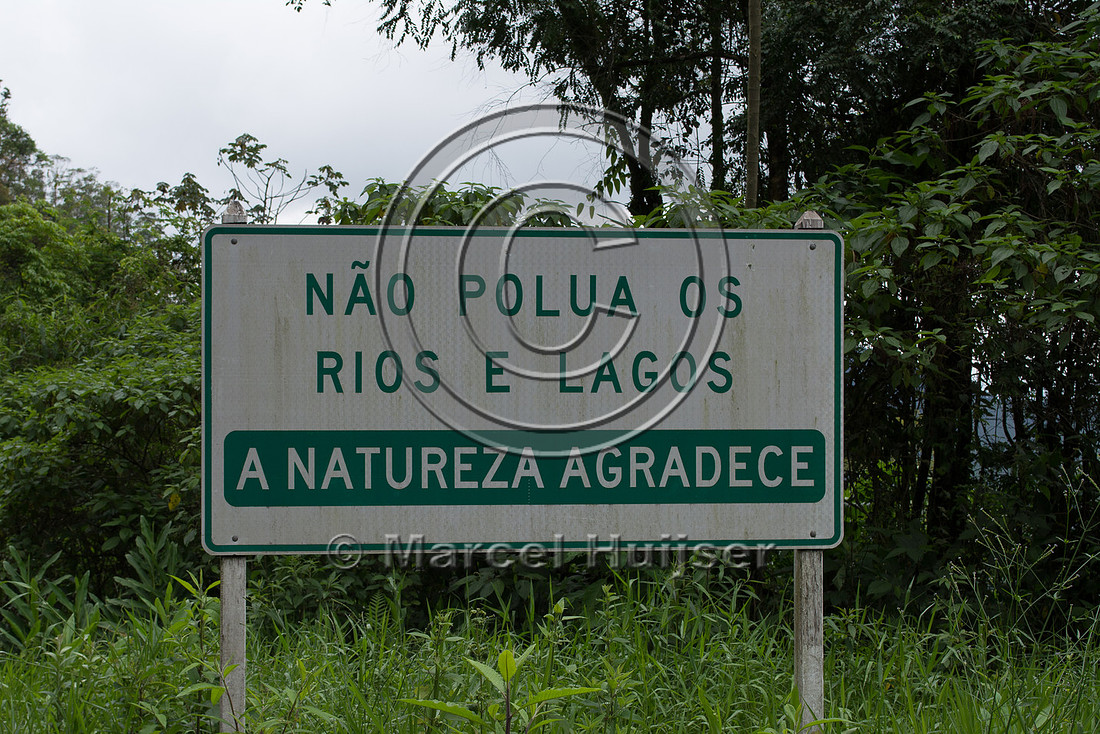
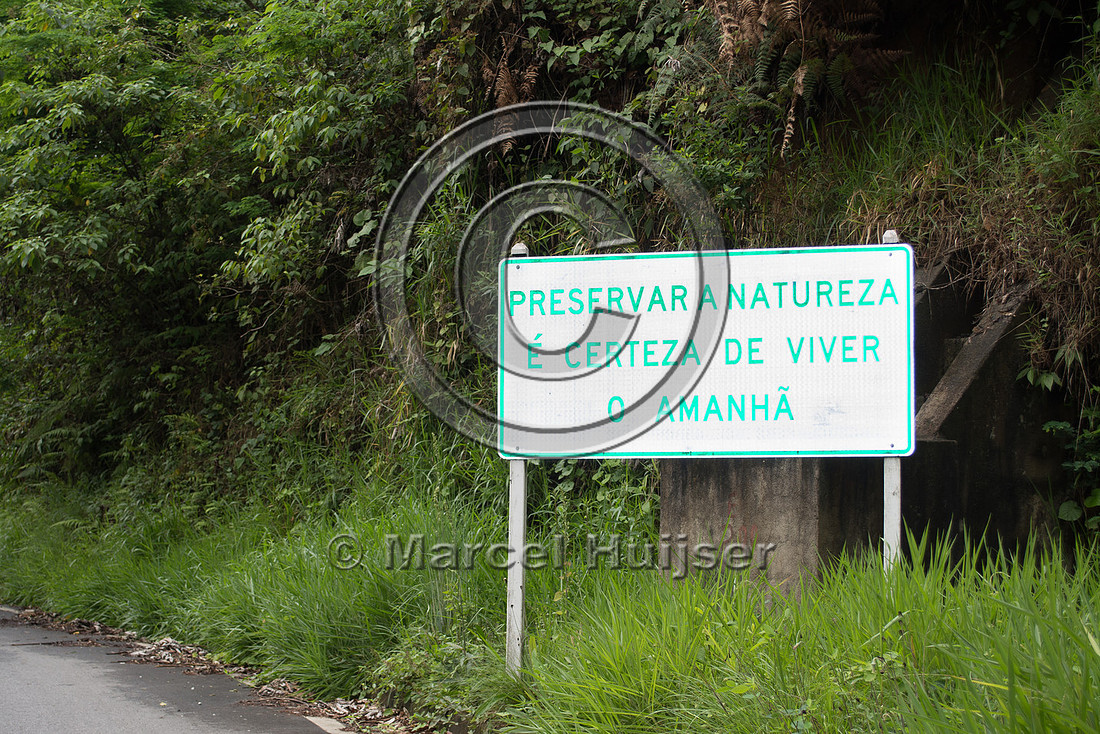
Image below: Road sign, preserve nature and secure life for tomorrow, "park road" (estrada-parque) Capelinha-Mauá (RJ-163), near Resende, Rio de Janeiro, Brazil
Click here for more images of road signs.
Some large format prints (limited edition) are now for sale at Freshwater Studio & Gallery in Missoula, Montana.
Like Marcel Huijser Photography on Facebook
All content © 2015 Marcel Huijser
Brazilian wildlife: Southern muriqui or southern woolly spider monkey, Brazil
Brazilian wildlife: Southern muriqui or southern woolly spider monkey (Brachyteles arachnoides), Parque Estadual Carlos Botelho, São Paulo, Brazil. Endangered (IUCN, 2015).
The muriqui were moving fast through the trees. It was also overcast and rainy. This combination required a very high ISO setting (4000). The monkeys only looked at us briefly. I am very happy with the image below... the other images all had branches and leaves in front of their faces or they were blurry because the animals moved so fast.
Click here for more images of Carlos Bothelho State Park, Brazil.
Some large format prints (limited edition) are now for sale at Freshwater Studio & Gallery in Missoula, Montana.
Like Marcel Huijser Photography on Facebook
All content © 2015 Marcel Huijser

Mariana Landis (muriqui researcher) and Bethanie Walder wait for southern woolly spider monkeys
Mariana Landis (muriqui researcher) and Bethanie Walder wait for southern muriqui or southern woolly spider monkeys (Brachyteles arachnoides), Parque Estadual Carlos Botelho, São Paulo, Brazil
Click here for more images of Carlos Bothelho State Park, Brazil.
Some large format prints (limited edition) are now for sale at Freshwater Studio & Gallery in Missoula, Montana.
Like Marcel Huijser Photography on Facebook
All content © 2015 Marcel Huijser


Road ecology blog: Suggestions for improving canopy crossings, Rio de Janeiro, Brazil
Road ecology blog: Suggestions for improving canopy crossings for arboreal mammals, "park road" (estrada-parque) Capelinha-Mauá (RJ-163), near Resende, Rio de Janeiro, Brazil
Below are images of several large metal canopy crossing structures across the road. They are about 10 m wide, 6 m high, and they span the entire width of the road. They appear to have been designed for a terrain that is level which allows the structure to be at canopy level on both sides (click here to see this type of structure in flat terrain). However, here the canopy crossings have been installed on a steep slope. While the structures are at canopy level on one side (downhill side), the other side (uphill side) is at ground level (on the top of the cut slope). This is of course not how canopy crossings should be installed; canopy crossings should be at canopy level on both sides of the road; they should not be at ground level. The structures in the images below are not consistent with the goal to provide connectivity across the road for arboreal mammals.
It seems that communication should have been better between the people who formulated the goals and objectives for the crossing structures, the people who designed the structures, and the people who constructed the canopy bridges in the field. The goal and objectives for the canopy crossings are probably related to providing connectivity across the road for arboreal mammals and actual use by selected species. The design engineers can then go to work, but the design should allow for flexibility to deal with local topography. This road is mostly on the steep slopes of a mountain range; it is not situated in flat terrain. Thus it is always a good idea for the design engineers to visit the area where crossing structures will be installed before they design the structures; this could have prevented the mismatch between the goals and objectives of the structures and how the structures were constructed in the field. I think the design could have allowed for pillars of variable length. The pillars should have been longer on one side of the structure (uphill side) to bring the structures up to canopy height. The "surface" of the structure would then have the same incline as the mountain slope. Note that this would put a lateral force on the pillars on the downhill side; these pillars may need to be strengthened.
I would like to stress that these types of situations and communication problems occur in many places in the world; this is not just a Brazilian problem. It illustrates that it is a good idea to have an ecologist oversee the different stages of the design and implementation process to make sure that the structures that are build are indeed consistent with the goals and objectives of the project.
In conclusion: I think the structures shown below can still be retrofitted by lifting the structures and putting longer pillars in place on the uphill side. Hopefully the structures will indeed be lifted. If and when they are at canopy level, ropes and cables would still need to be installed between the structures and the crowns of the surrounding trees.
Note: One of the structures is positioned close to electricity wires. Care must be taken that the structure, potential ropes or cables that connect to the surrounding trees, nor jumping or climbing animals can come in contact with these wires.
Click here for more images of canopy crossings for arboreal mammals.
Some large format prints (limited edition) are now for sale at Freshwater Studio & Gallery in Missoula, Montana.
Like Marcel Huijser Photography on Facebook
All content © 2015 Marcel Huijser


Our life in Brazil: Marcel Huijser, Alex Bovo and Bethanie Walder, ESALQ, Piracicaba
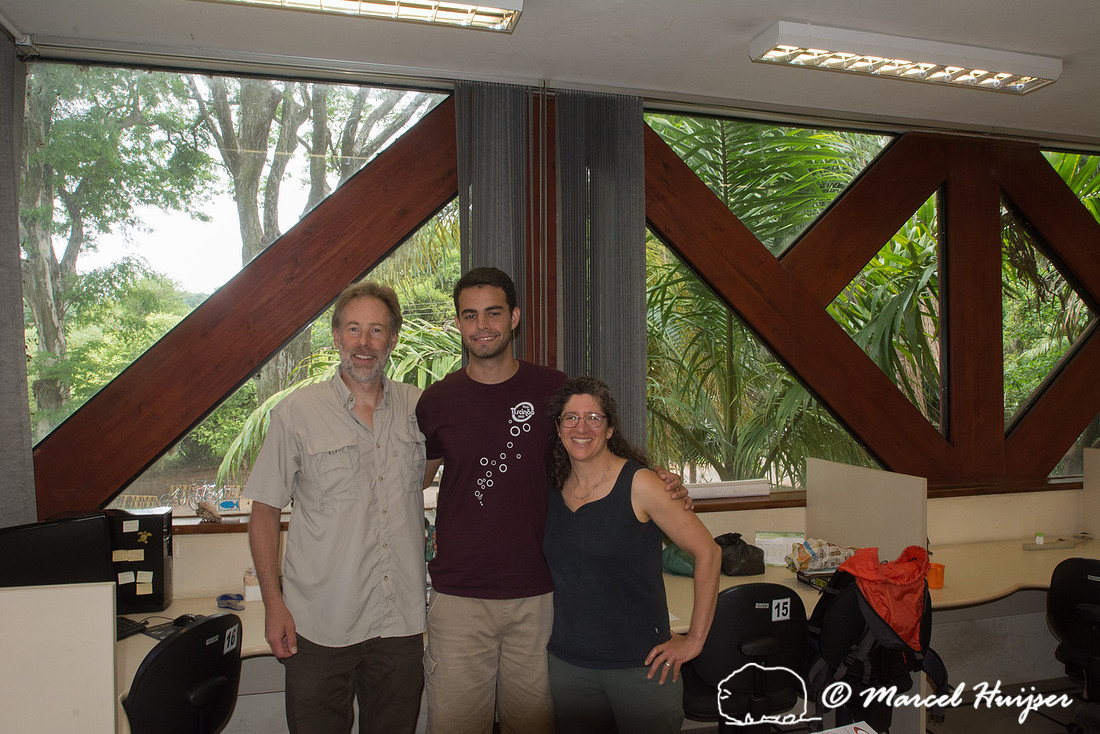
Our life in Brazil: Marcel Huijser, Alex Bovo and Bethanie Walder, Departamento de Ciências Florestais, Escola Superior de Agricultura Luiz de Queiroz, Universidade de São Paulo, Piracicaba,Brazil.
Brazilian wildlife: Pampas deer doe, Parque Nacional das Emas, Goiás
Brazilian wildlife: Pampas deer doe (Ozotoceros bezoarticus), Parque Nacional das Emas, Goiás, Brazil. Near threatened (IUCN 2015).
Click here for more images pampas deer.
Some large format prints (limited edition) are now for sale at Freshwater Studio & Gallery in Missoula, Montana.
Like Marcel Huijser Photography on Facebook
All content © 2015 Marcel Huijser


Road ecology blog: Retaining wall at land slide site, Rio de Janeiro, Brazil
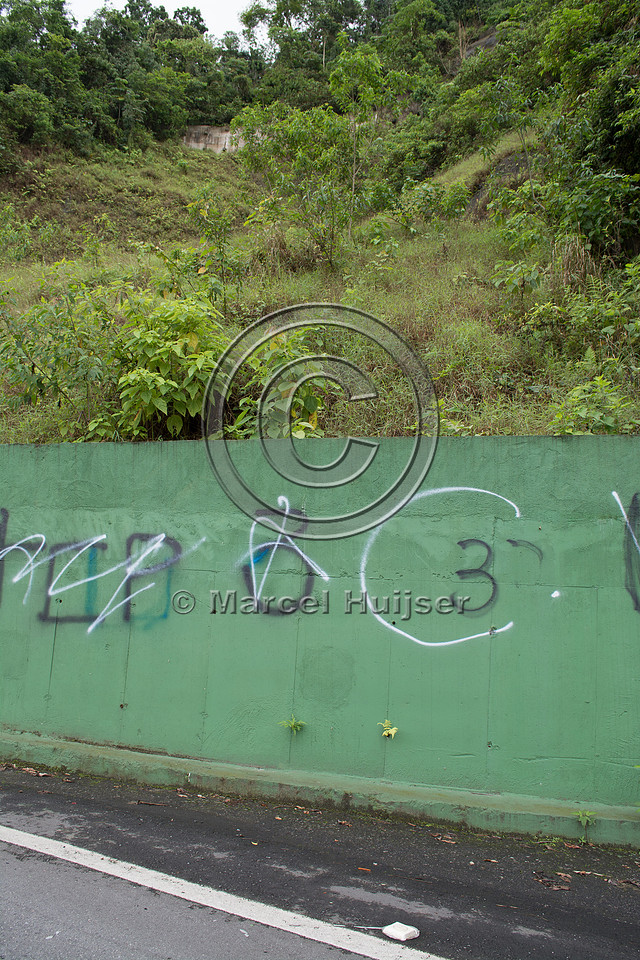
Road ecology blog: Retaining wall at a site where land slides used to occur, -park road- (estrada-parque) Capelinha-Mauá (RJ-163), near Resende, Rio de Janeiro, Brazil
Click here for more images of retaining walls.
Click here for more images related to erosion or erosion control.
Some large format prints (limited edition) are now for sale at Freshwater Studio & Gallery in Missoula, Montana.
Like Marcel Huijser Photography on Facebook
All content © 2015 Marcel Huijser
Brazilian wildlife: Pampas deer (Ozotoceros bezoarticus), Parque Nacional das Emas, Goiás
Brazilian wildlife: Pampas deer buck (Ozotoceros bezoarticus), Parque Nacional das Emas, Goiás, Brazil. Near threatened (IUCN 2015).
Click here for more images pampas deer.
Some large format prints (limited edition) are now for sale at Freshwater Studio & Gallery in Missoula, Montana.
Like Marcel Huijser Photography on Facebook
All content © 2015 Marcel Huijser


Road ecology blog: Canopy crossings for arboreal mammals (RJ-163) Rio de Janeiro, Brazil
Road ecology blog: Canopy crossings for arboreal mammals, "park road" (estrada-parque) Capelinha-Mauá (RJ-163), near Resende, Rio de Janeiro, Brazil
Road ecology blog: This road was recently upgraded from an unpaved road to a paved road. The road goes through a protected area in the "Serra da Pedra Selada" mountain range, and was designed as a "park road" (estrada-parque) with a low design speed, low posted maximum speed, wildlife warning signs and crossing structures for terrestrial animals and arboreal mammals. The road goes through Atlantic Forest (Mata Atlântica).
There are several large metal canopy crossing structures across the road. They are about 10 m wide, 6 m high, and they span the entire width of the road. They are by far the largest canopy crossing structures I have ever seen, and they are designed to provide safe crossing opportunities for arboreal mammals (e.g. brown howler monkey (Alouatta guariba), black capuchin monkey (Sapajus nigritus), marmosets (Callithrix sp.), white-eared opossum (Didelphis albiventris) and Brazilian porcupine (Coendou prehensilis)). The structures are sturdy and should be able to support vines and epiphytes when these plants colonize the structures. However, while the structure shown in the images below is at canopy level, the structure provides no or very limited connectivity to the crowns of the surrounding trees. This could be easily retrofitted by attaching several ropes or cables between the structure and perhaps five or more trees on each side of the structure.
Click here for more images of canopy crossings for arboreal mammals.
Some large format prints (limited edition) are now for sale at Freshwater Studio & Gallery in Missoula, Montana.
Like Marcel Huijser Photography on Facebook
All content © 2015 Marcel Huijser


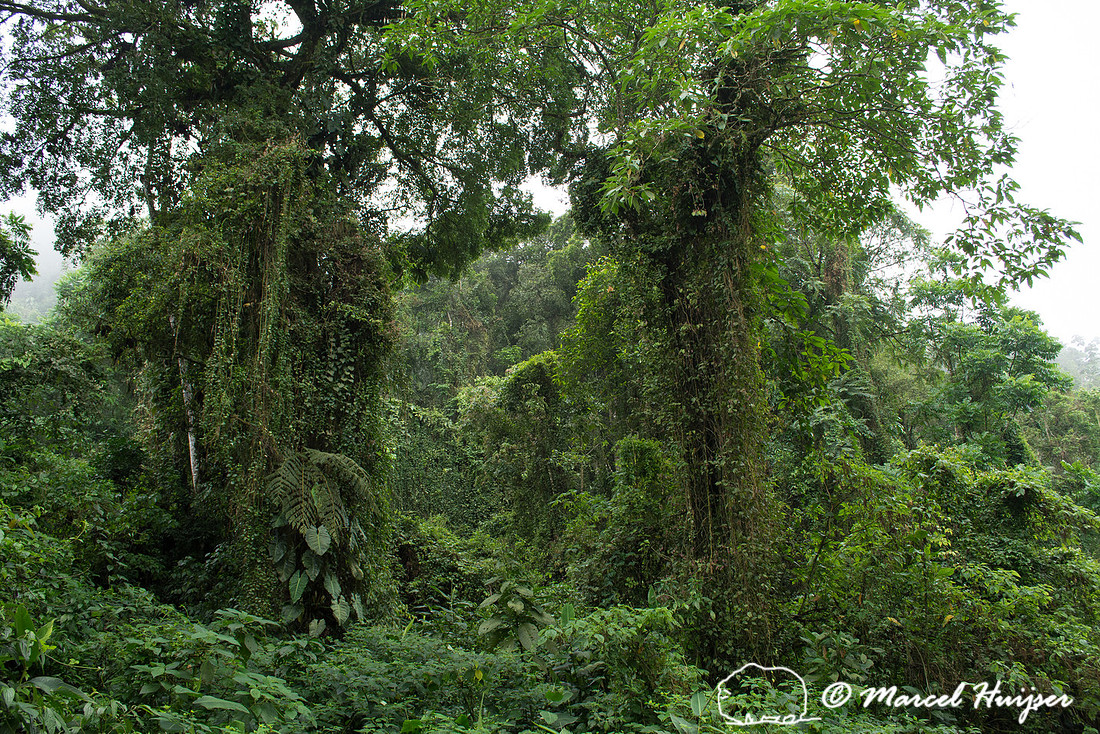
Brazilian landscapes: Atlantic forest, near Resende, Rio de Janeiro, Brazil
Brazilian landscapes: Atlantic forest (Mata Atlântica) along "park road" (estrada-parque) Capelinha-Mauá (RJ-163), near Resende, Rio de Janeiro, Brazil.
Click here for more images of the Atlantic forest.
Some large format prints (limited edition) are now for sale at Freshwater Studio & Gallery in Missoula, Montana.
Like Marcel Huijser Photography on Facebook
All content © 2015 Marcel Huijser

Road ecology blog: wildlife fencing and wet and dry culverts, Rio de Janeiro, Brazil
Road ecology blog: wildlife fencing and wet and dry culverts, Culvert under -park road- (estrada-parque) Capelinha-Mauá (RJ-163), near Resende, Rio de Janeiro, Brazil.
The wildlife fencing only covers a few hundred meters with a wet and a dry culvert in the middle. For large ungulates, specifically Cervidae, wildlife fencing is most effective in reducing collisions if at least 5 km of road length is fenced. While the minimum recommended length may be shorter for South American mammals, a few hundred meters appears really short and it is unlikely to result in a substantial reduction of large mammal-vehicle collisions.
The wet and dry culvert indicate that hydrology, aquatic wildlife and terrestrial wildlife may all have been considered during the design stage. However, rather than having one structure for wet habitat and a second structure for dry habitat, it is better to provide one larger structure that is not only designed for hydrology and aquatic wildlife, but also for semi-aquatic and terrestrial wildlife. A larger structure can allow for extreme precipitation events, reduce the probability that the culvert will be blocked by debris, and it can provide aquatic, riparian and terrestrial habitat for a wide range of species. It is best to have a bottomless culvert or bridge that allows for natural stream dynamics and natural habitat inside the culvert or under a bridge. In addition, it is important to specify the target species and design the dimensions of the crossing structures accordingly. For example, should tapir (Tapirus terrestris) have been among the target species, the size of the structures below is completely inadequate; tapirs would not even remotely fit in the culverts.
Click here for images of wildlife fencing.
Click here for images of multifunctional underpasses.
Click here for images of wildlife underpasses.
Like Marcel Huijser Photography on Facebook
All content © 2015 Marcel Huijser


Image below: dry culvert on upper left, wet culvert on lower right.


