Click here to view more images of "the making of the sandhill cranes".
Like Marcel Huijser Photography on Facebook
All content © 2016 Marcel Huijser

Marcel Huijser Photography Home
This is where I show the most recent images and talk about how they were made. The images typically relate to landscapes and wildlife, but I also blog about photos of highways and mitigation measures for wildlife or road ecology in general. Please contact me if you would like to use any of the images.
All content © Marcel Huijser
The making of the sandhill crane migration images, Rowe Sanctuary, Nebraska. I spent a night in a blind on the banks of the Platte River during the spring migration of the sandhill cranes. In the spring about 600,000 cranes come through here to refuel before flying further north; a true spectacle. A guide brings you to the blind at the end of the afternoon and he or she will also pick you up the next morning after the birds are gone. During the day the cranes feed on croplands in the area, mostly corn that was left on the fields. At night they sleep while standing in the shallow water of the river. You cannot leave the blind until the birds have left and the guide tells you it is OK to do so... otherwise thousands of birds may lift off, waste energy, and potentially crash into power lines, especially in the dark. This meant that I spent about 16 hours in this very small space. I found it extremely rewarding though.
Image below: The view from the blind with sandhill cranes (Grus canadensis) at about 30 meters distance, Platte River, Nebraska, USA. The birds like spending the night standing in the shallow water as they can hear a predator coming. A million dollar view from my plywood shack!


Image below: Marcel Huijser in blind for sandhill cranes (Grus canadensis), Platte River, Nebraska, USA. I wore dark clothing to reduce my visibility at dusk when the cranes flew in... they landed about 30 meters in front of my blind. I don't mind looking like a ninja when I get to experience thousands of cranes from such short distance!

Image below: Marcel Huijser in blind with low power red light to reduce disturbance for sandhill cranes (Grus canadensis), Platte River, Nebraska, USA. Only after it became too dark to photograph I closed the hatches and turned on the red light. Some light may still be visible through the cracks; white light, smartphones and other light sources are prohibited as it may cause thousands of cranes to lift off in the dark. The bit of red light was sufficient to clear an area for my mattress and sleeping bag so I could sleep. Though the cranes never stopped talking, I slept pretty well, except for the rodent, that tried to break into the blind around 4 am! :)

Click here to view more images of the sandhill cranes.
Click here to view more images of "the making of the sandhill cranes".
Like Marcel Huijser Photography on Facebook
All content © 2016 Marcel Huijser
Muskoxen (Ovibos moschatus) return to confront person who disturbed them, Dovrefjell, Norway.
Click here for the story that explains who caused the disturbance.

Click here to view more images of muskoxen.
Click here to view more images of "the making of the muskoxen photos".
Click here to view more images of Norwegian landscapes and abstracts.
Like Marcel Huijser Photography on Facebook
All content © 2016 Marcel Huijser
European wildlife: Muskoxen (Ovibos moschatus) herd running away, Dovrefjell, Norway.
Click here for the story that explains why the animals were running.


Click here to view more images of muskoxen.
Click here to view more images of "the making of the muskoxen photos".
Click here to view more images of Norwegian landscapes and abstracts.
Like Marcel Huijser Photography on Facebook
All content © 2016 Marcel Huijser
Irresponsible photographer gets too close to Muskoxen (Ovibos moschatus) Dovrefjell, Norway.
This person approached up a gully in a snow storm, out of view of the muskoxen. He then crawled up the slope to within about 10 m from some of the animals who were resting on the ridge. The animals got up, ran away, but then came back and appeared to prepare and charge him. Then the person got up and simply walked away. The animals ran away again for several hundreds of meters. The animals were out of their normal routine for hours that day.
There were many things wrong with the behavior of this person:
1. He walked and crawled directly towards the animals. He did not gradually approach, which would have allowed the animals to get used to his presence and make clear that he did not pose a threat.
2. He approached the animals mostly out of sight and the animals did not see him until he was extremely close. This really startled the animals.
3. He crawled, similar to a predator would.
4. He caused the animals to run in winter, which caused them to spend valuable energy.
5. He caused the animals to be out of their normal routine for many hours after the incident.
6. He put himself in serious danger.
7. He could have put my friend Niels and me in danger as well, but fortunately the animals did not run our way and did not take it out on us.
8. He was not courteous to us, his fellow photographers, by placing himself in between us and the animals we were photographing, and he also caused a disturbance to the situation we were photographing.
In summary, don't be this person!


Click here to view more images of muskoxen.
Click here to view more images of "the making of the muskoxen photos".
Click here to view more images of Norwegian landscapes and abstracts.
Like Marcel Huijser Photography on Facebook
All content © 2016 Marcel Huijser
European wildlife Muskoxen (Ovibos moschatus) standing close together in a defensive position after having been disturbed, Dovrefjell, Norway. More later on who and what caused the disturbance.

Click here to view more images of muskoxen.
Click here to view more images of "the making of the muskoxen photos".
Click here to view more images of Norwegian landscapes and abstracts.
Like Marcel Huijser Photography on Facebook
All content © 2016 Marcel Huijser
The making of the muskoxen images: Getting the camera equipment ready, Dovrefjell, Norway. Note the muskoxen in the background, just left of the camera. The tripod legs are spread very wide because of the strong winds. This way the wind cannot blow over the tripod and camera equipment when you let go of the tripod. In addition, the lens opening is turned opposite of the wind direction. Otherwise the snow will "blast" the lens surface and snow and ice will accumulate on the lens... which can be very hard to remove when it freezes to the lens surface.


Click here to view more images of muskoxen.
Click here to view more images of "the making of the muskoxen photos".
Click here to view more images of Norwegian landscapes and abstracts.
Like Marcel Huijser Photography on Facebook
All content © 2016 Marcel Huijser
European wildlife: Muskox (Ovibos moschatus) resting in snow storm, Dovrefjell, Norway.


Click here to view more images of muskoxen.
Click here to view more images of "the making of the muskoxen photos".
Click here to view more images of Norwegian landscapes and abstracts.
Like Marcel Huijser Photography on Facebook
All content © 2016 Marcel Huijser
Third camp, Dovrefjell, Norway.

Click here to view more images of muskoxen.
Click here to view more images of "the making of the muskoxen photos".
Click here to view more images of Norwegian landscapes and abstracts.
Like Marcel Huijser Photography on Facebook
All content © 2016 Marcel Huijser
European wildlife: Muskox bull (Ovibos moschatus) resting in winter, Dovrefjell, Norway.

Click here to view more images of muskoxen.
Click here to view more images of "the making of the muskoxen photos".
Click here to view more images of Norwegian landscapes and abstracts.
Like Marcel Huijser Photography on Facebook
All content © 2016 Marcel Huijser
The making of the muskoxen images: Niels Kooyman digs his sled out of the snow at third camp, Dovrefjell, Norway.


Click here to view more images of muskoxen.
Click here to view more images of "the making of the muskoxen photos".
Click here to view more images of Norwegian landscapes and abstracts.
Like Marcel Huijser Photography on Facebook
All content © 2016 Marcel Huijser
Muskox bull (Ovibos moschatus) in winter, Dovrefjell, Norway. Note the ice ball that has formed in its hair. It is not its tail!

Click here to view more images of muskoxen.
Click here to view more images of "the making of the muskoxen photos".
Click here to view more images of Norwegian landscapes and abstracts.
Like Marcel Huijser Photography on Facebook
All content © 2016 Marcel Huijser
The making of the muskoxen images: Second camp, Dovrefjell, Norway.

Click here to view more images of muskoxen.
Click here to view more images of "the making of the muskoxen photos".
Click here to view more images of Norwegian landscapes and abstracts.
Like Marcel Huijser Photography on Facebook
All content © 2016 Marcel Huijser
Muskoxen (Ovibos moschatus) group in winter, Dovrefjell, Norway.


Click here to view more images of muskoxen.
Click here to view more images of "the making of the muskoxen photos".
Click here to view more images of Norwegian landscapes and abstracts.
Like Marcel Huijser Photography on Facebook
All content © 2016 Marcel Huijser
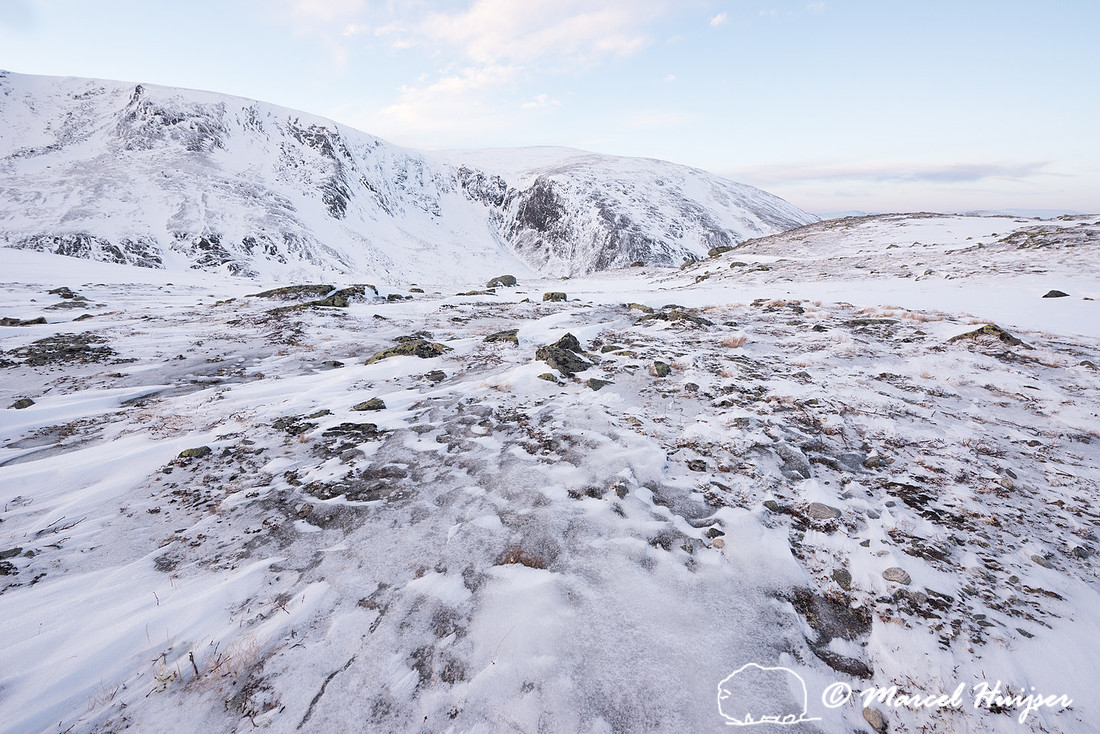
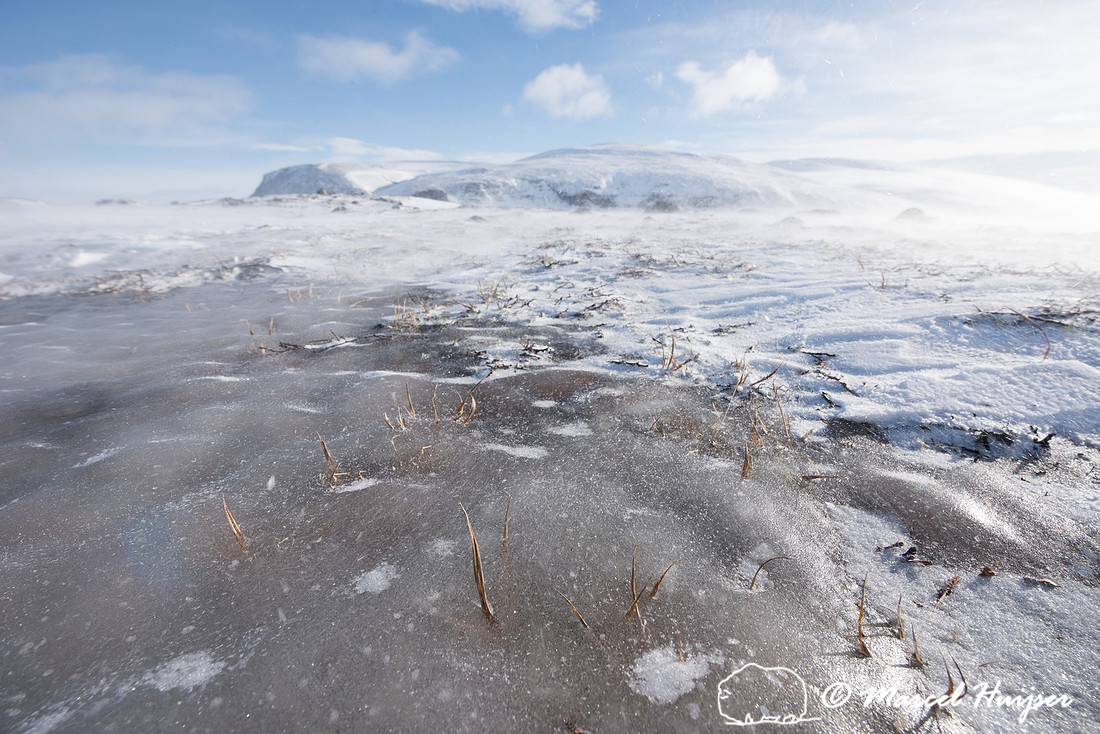
Icy layer making access to food difficult for muskoxen (Ovibos moschatus), Dovrefjell, Norway. Thaws and subsequent freezing can lock up the vegetation, making it inaccessible for ungulates such as reindeer and muskoxen. This thaw happened in early February. If the food gets locked up earlier in the winter the animals are less likely to be able to survive because spring with new green vegetation is further away. This is one of the things that is associated with climate change.
When we were there the muskoxen were on the move... several times we would move camp to be closer to where we had seen the animals only to find them gone the next morning. It may be that they were trying to find places where they could still access food. When we finally found animals that stayed put it turned out to be both bulls and cows and calves. My friend Niels had not ever seen that during the previous six winter trips; not these rapid and frequent movements, not the mixed gender groups. The bulls typically live separate from the cows and calves except during mating season. I was sitting on a rock thinking about this... to the casual observer it may all look "normal" ... there is snow, and it is cold. It is only when you dig deeper that you find the food is inaccessible because of the icy layer, the animals may be moving around more to find places where the vegetation is not locked in the ice, and the animals now forage in mixed groups because there are only so many places that don't have the icy layer... Cold weather and more snow later in February don't even out that early thaw... if the icy layer persists, then that is what matters for the animal's survival.
Click here to view more images of muskoxen.
Click here to view more images of "the making of the muskoxen photos".
Click here to view more images of Norwegian landscapes and abstracts.
Like Marcel Huijser Photography on Facebook
All content © 2016 Marcel Huijser
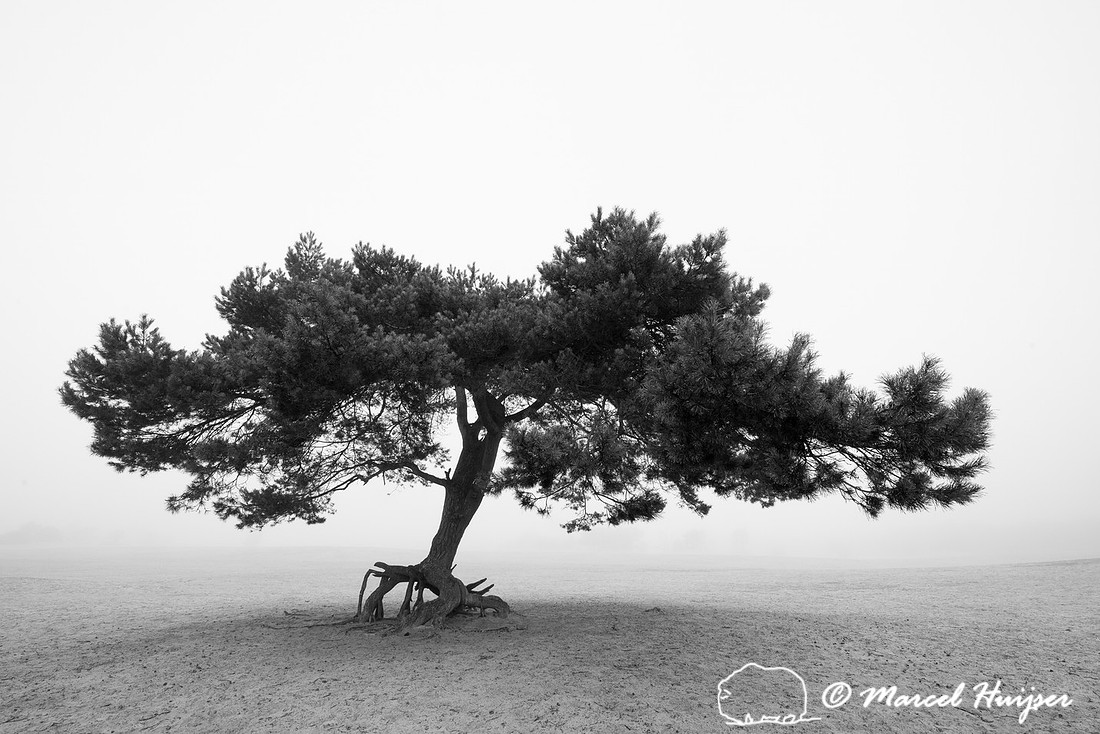
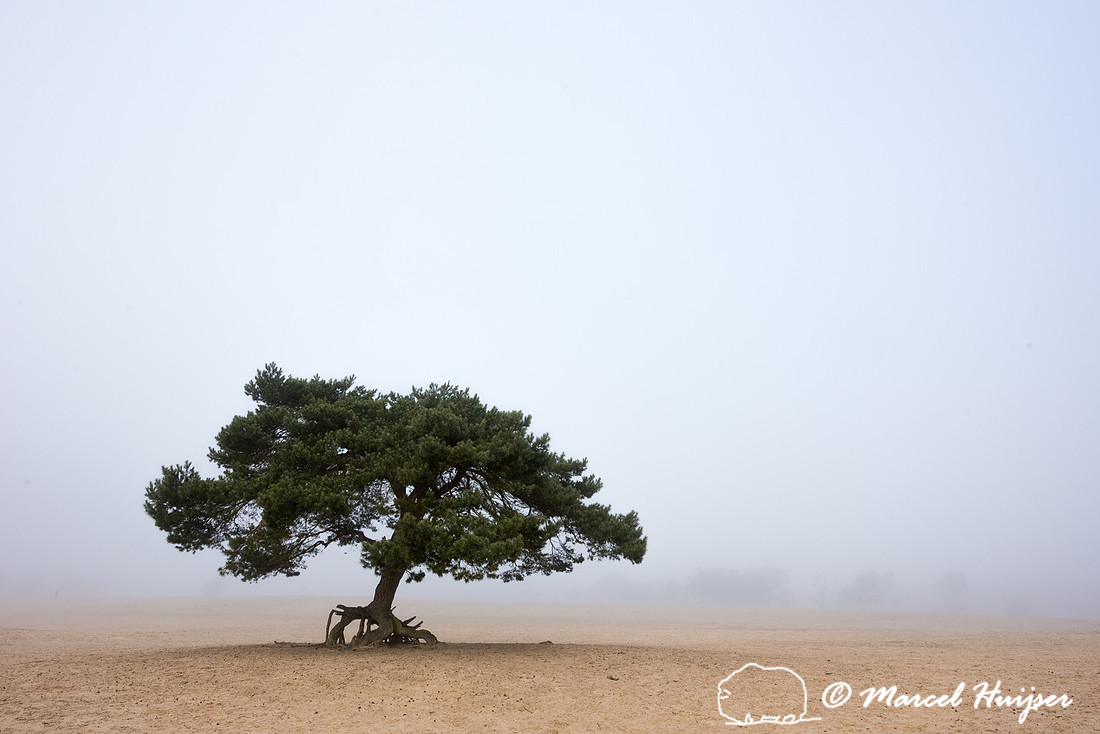
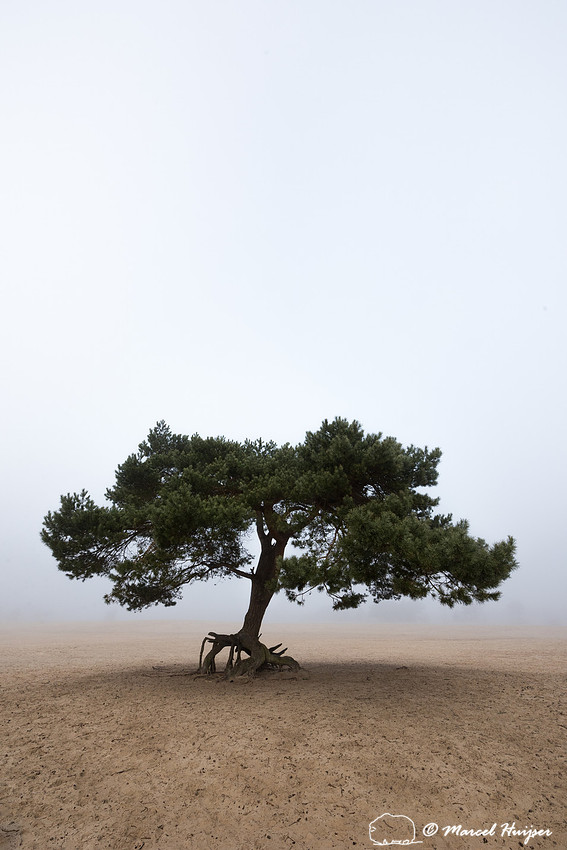
Lone scots pine (Pinus sylvestris) tree in the fog in inland sand dunes, The Netherlands. I had been picturing this situation in my head for days. The morning before I left The Netherlands I woke up and it was foggy. I ran from the breakfast table to make the shots... fortunately the fog lasted just long enough.