
Road ecology blog: create a gradual approach for wildlife to underpasses

It is best to construct wildlife crossing structures in such a way that it allows wildlife that approaches the road to see the sky and vegetation on the other side of the road through or across the structure. This means that the approach for wildlife should preferably be level; avoid steep slopes at the approaches shown in the images below. In a situation where there is a divided highway with a median and two separate crossing structures for the two directions of travel, design the two structures as one wildlife crossing structure with a good line of sight for wildlife.
Image below: Wildlife underpass (concrete box culvert), along SP-225, near Brotas, São Paulo, Brazil. This structure is along the “old” highway (now only one travel direction). The two "new" lanes are behind the photographer and are for traffic going in the other direction. However, the “new” roadbed is higher than the old roadbed. Thus the structure for the “old” highway (depicted in the image below) is substantially lower than the structure under the new roadbed. This does not allow wildlife to see through both structures when they approach the highway, and it requires wildlife to descend into a dark cave (when coming from this direction).
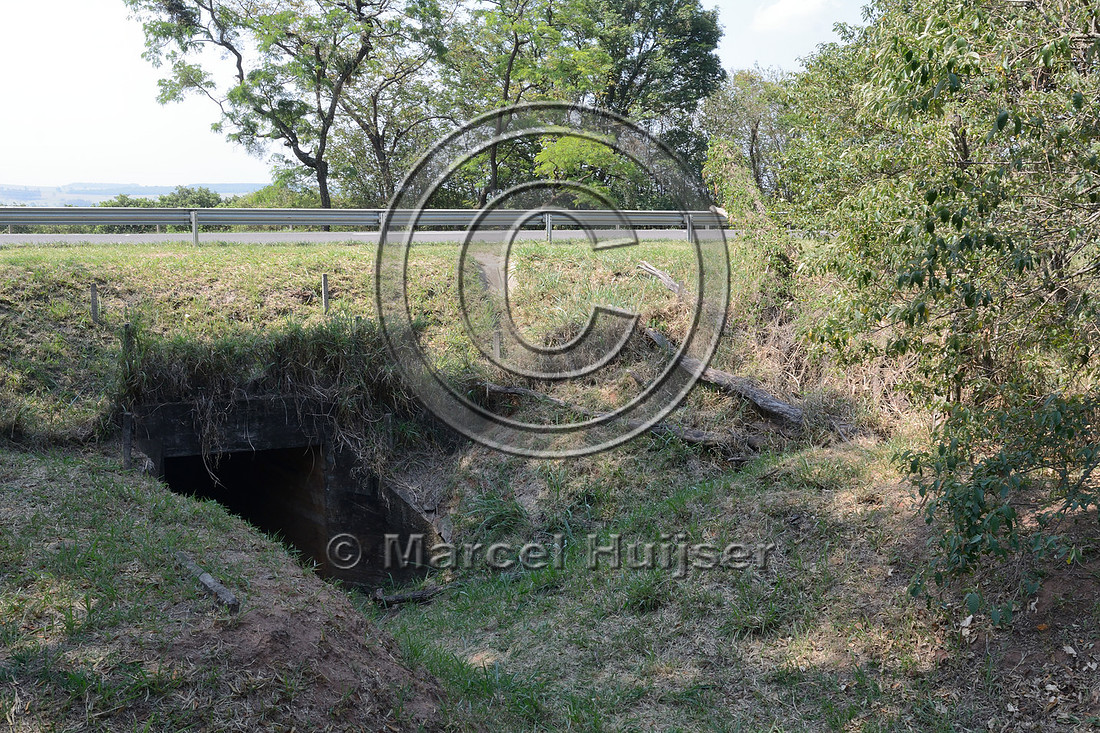 Wildlife underpass with a steep slope angled down towards the structure, SP-225, near Brotas, BrazilWildlife underpass with a steep slope angled down towards the structure, SP-225, near Brotas, Brazil. It is considered best if wildlife can see the vegetation on the other side of the structure as they approach the structure. Here the animals have to be close to the structure before they can see the structure, but they have to walk down a steep slope and towards a dark space before they can potentially see the vegetation on the other side.
Image below: Wildlife underpass (concrete box culvert), along SP-270, about 70 km south east from Presidente Prudente, São Paulo, Brazil. There is a uphill slope towards the right of the image. It would be best to have a level approach for wildlife when they approach the structure (no slope). Here the wildlife fencing that would keep the animals off the highway and direct them to the underpass has not been constructed (yet).
 Box culvert for wildlife, SP-270, about 70 km south east from Presidente Prudente, São Paulo, BrazilBox culvert for wildlife, SP-270, about 70 km south east from Presidente Prudente, São Paulo, Brazil. Note that the wildlife fencing is not installed yet. While the approach has been re-contoured, the slope is still relatively steep. When possible, it is best to have a very gradual approach on both sides of a wildlife crossing structure. It is considered best if the animals can see the vegetation on the other side when they approach the strcuture.
Suggestions:
-
When duplicating a highway (i.e. making a 2-lane highway into a 4-lane highway), consider the structures for the two travel directions as one wildlife crossing structure rather than as two separate ones. This implies that the type and dimension of the crossing structures for the two travel directions should generally match, and that the structures should be at the same level allowing wildlife to see through both structures when they approach the highway.
-
Create a very gradual, preferably level, approach for wildlife when approaching wildlife crossing structures. Avoid steep slopes (uphill or downhill), allow wildlife to see the sky and vegetation through or across the structure.
Click here for more images of wildlife underpasses.
Click here for images of multifunctional underpasses.
Like Marcel Huijser Photography on Facebook
All content © 2015 Marcel Huijser