
Road ecology blog: Livestock fence with plastic tube over top wire, SR 260, Arizona, USA

Road ecology blog: Livestock fence with plastic tube over the top wire, SR 260, west of Kohl's Ranch, Arizona, USA.
The PVC tube makes the fence and especially the top wire more visible to wildlife (e.g. elk and deer), and the animals are less likely to injure themselves or get entangled when they cross the fence. This particular livestock fence is in front of a wildlife underpass designed for elk and deer. Naturally this is where it is desirable to have elk and deer cross livestock fences easily. The second image shows a mule deer (Odocoileus hemionus) entangled in a livestock fence. The animal is still alive at this point, but exhausted with broken leg and dying. The Arizona Game and Fish Department euthanized the animal shortly after discovering this terrible situation. Fortunately more and more ranchers adopt wildlife friendly livestock fencing. Measures include alternative fence types, a smooth bottom wire that is further off the ground, and a smooth top wire, potentially with a plastic tube.
Examples of guides on wildlife friendly livestock fences.
A landowner's guide to wildlife friendly fencing, Montana Fish, Wildlife & Parks
Wildlife friendly fencing, Montana Department of Transportation.
Click here for other images of livestock fencing, problems and mitigation.
Click here for more images of wildlife fencing.
Like Marcel Huijser Photography on Facebook
All content © 2013 Marcel Huijser
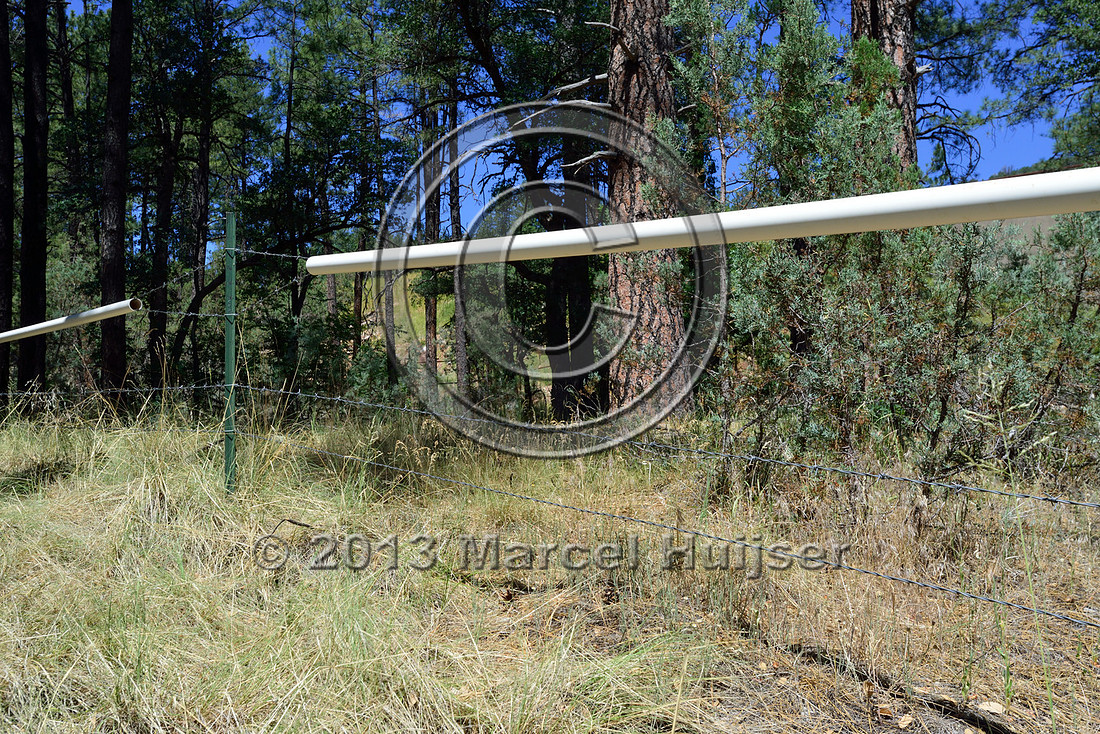 Livestock fence with plastic tube over the top wire, SR 260, west of Kohl's Ranch, Arizona, USA
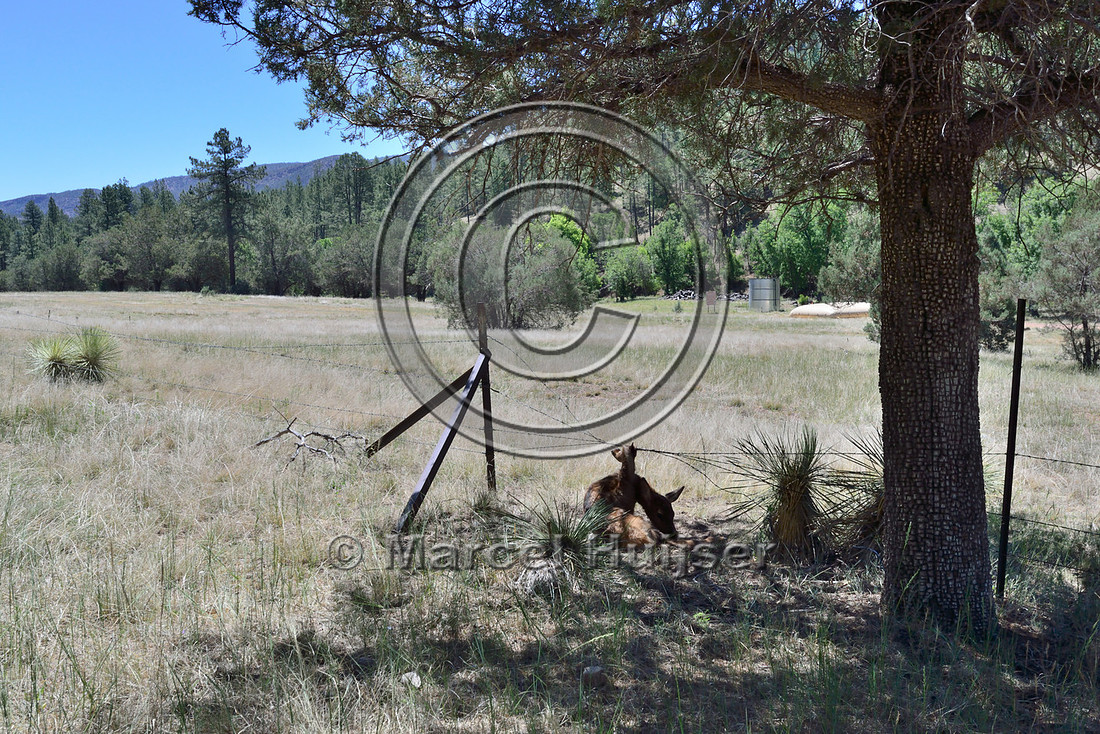 Mule deer (Odocoileus hemionus) entangled in a livestock fence, still alive, but exhausted and dying, Arizona, USA